


Japanese green tea is shaped by a sequence of quick, deliberate decisions made between the field and the finished leaf. Harvest timing, shading, heat, rolling, drying, and final sorting each leave a mark on the tea in your cup.
Japanese green tea processing turns fresh leaves into distinct styles. It begins with rapid handling after harvest. Steaming then halts oxidation, rolling shapes and distributes moisture, and drying creates stability. Finishing steps sort or blend the tea. The sequence branches along the way: tencha is dried without rolling before becoming matcha, while hojicha receives a roasting step after standard green tea processing.
To understand why these teas differ, begin at the moment the leaves leave the plant. What happens next determines which possibilities remain open for the stages that follow.
Explore Sorate's Japanese green teas
What Happens Immediately After Harvest?
The work does not pause when the tea leaves are picked. Fresh leaves are transported for processing, and the next decisions are made with the condition of those leaves in mind. Unlike a dried agricultural ingredient that can wait for a later production run, newly harvested tea is still changing. The producer therefore plans the handoff from field to factory as part of the tea itself, not as a separate logistical detail.
Harvest timing is one of the first distinctions. A spring harvest, a later flush, and a particular picking standard can lead to different raw material before any machine is turned on. The term first-harvest ichibancha, for example, refers to tea gathered during the first harvest of the season. It is a way of describing when the leaves were collected, not a substitute for explaining the rest of the process. The leaf still needs to be handled promptly and processed according to the style the tea maker intends to create.
Some styles also begin with a deliberate step before picking: shading. Tea plants may be covered to reduce sunlight exposure and influence how the leaves develop before harvest. This practice is associated with selected styles, including shaded teas such as gyokuro and the leaves destined for matcha. It is not a universal step for every Japanese green tea. The timing, duration, and method of covering belong to the specific production plan. So shading should be understood as a branch in the process rather than a standard stage for all teas.
Once the leaves arrive at the processing facility, the first heat treatment is a decisive transition. Japanese green tea makers use steaming to help prevent oxidation and preserve the leaves' green color and fresh character. The purpose is not simply to warm the harvest. It is to stabilize the leaf before later stages shape, dry, and finish it. In practical terms, the producer is moving quickly from a fragile, freshly picked material to a leaf that can be worked with more predictably. This field-to-factory sequence is one reason Japanese green tea processing is best understood as a chain of connected choices.
Cooling follows steaming before rolling and drying. That order matters because each stage prepares the leaf for the next one. Rolling can shape the leaf, break down its structure, and help distribute moisture, but it is not the first response to the harvest. The leaves must first pass through the appropriate heat step and transition into a workable condition. From there, the later route may diverge. A rolled leaf tea follows one path, while tencha for matcha is dried flat rather than rolled. The sequence is therefore process-dependent from the beginning: harvest timing, pre-harvest shading, heat, cooling, and the intended final style all influence what happens next.
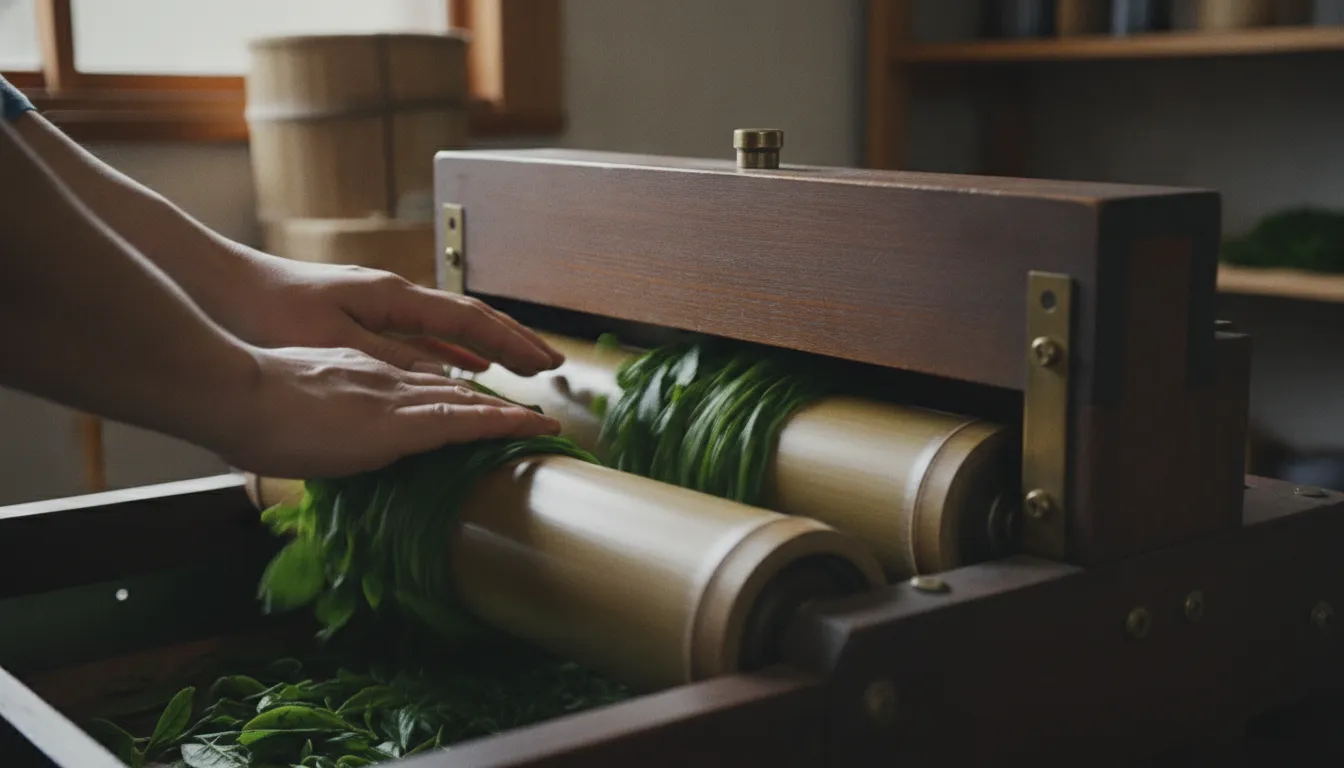
How Japanese Green Tea Processing Shapes the Leaf
Japanese green tea processing is a sequence of carefully timed stages rather than one single transformation. After harvest, fresh leaves move from the field to a factory, where heat, cooling, pressure, and drying gradually turn a fragile leaf into a stable tea. The choices made at each stage affect the leaf's shape, handling, and eventual appearance in the cup.
Steaming stops the leaf from changing
Steaming is the first major manufacturing step for many Japanese green teas. The fresh leaves are exposed to steam, which helps prevent oxidation and preserve their green color and fresh character. This heat treatment sets the direction for the rest of the process. The length and intensity of steaming can vary, so the leaf may remain more intact or become more delicate and broken later on. What matters here is that the leaves receive heat before natural changes after picking carry them in a different direction.
Cooling prepares the leaf for rolling
Once steaming is complete, the leaves are cooled before they enter the rolling and drying stages. Cooling gives the softened leaves a chance to lose excess heat while keeping the manufacturing sequence controlled. This is a short but important transition: the leaves are no longer fresh from the field, yet they are not finished tea. They are ready to be shaped and worked.
Rolling shapes and opens the leaf
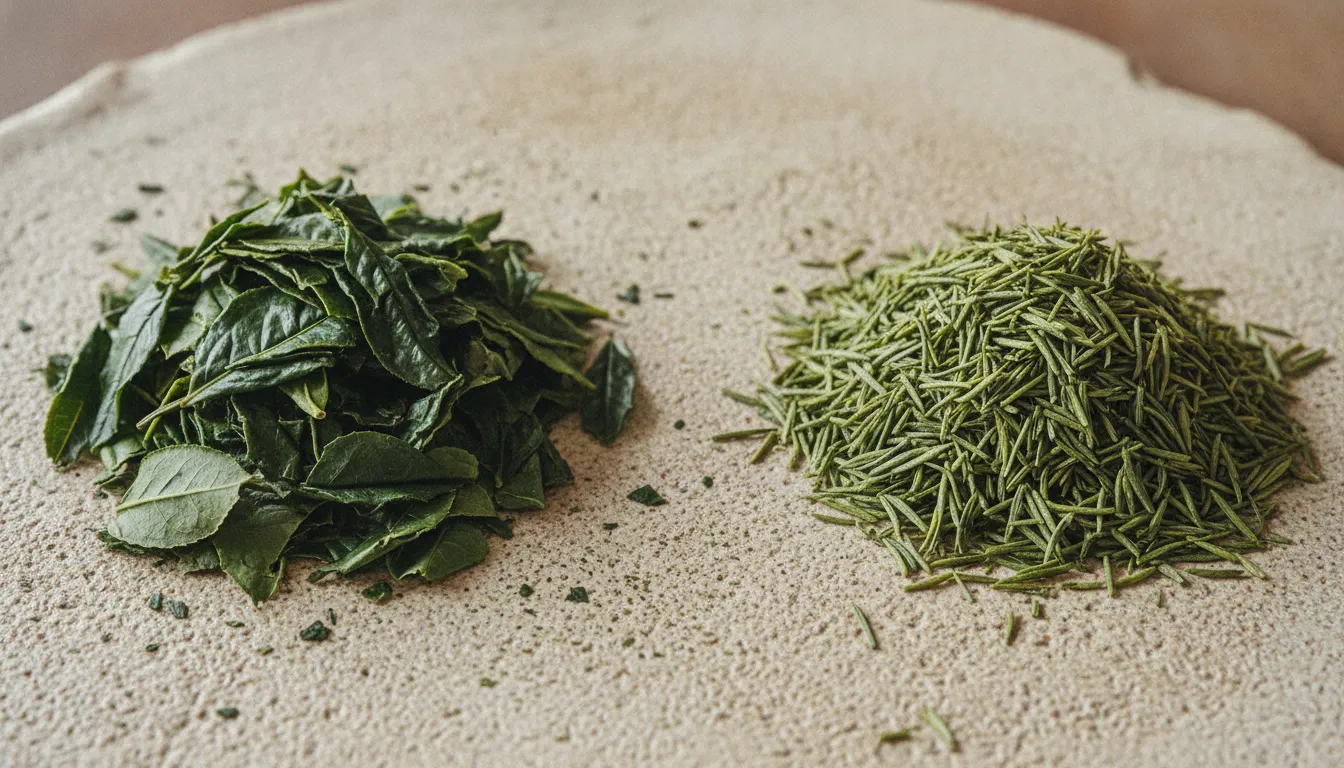
Rolling does more than create the familiar appearance of many Japanese teas. It breaks down the leaf structure, shapes the tea, and helps distribute moisture through the material. Repeated rolling stages can draw the leaves into slender forms while working moisture more evenly from the interior toward the surface. The result is a leaf that is easier to dry and handle, with its final appearance reflecting how it was worked. Deep-steamed leaves may be less structurally intact, while other teas retain a more recognizable needle-like form. These differences come from processing choices, not from a separate category of leaf.
Drying creates aracha
Drying reduces moisture so the tea can be stored and handled. After the primary steaming, cooling, rolling, and drying sequence, the tea is often described as aracha, or rough tea. Aracha is an intermediate product, not necessarily the finished tea a customer buys. Its leaves and stems still need to be evaluated and prepared for the final product. Thinking of aracha as a midpoint makes the manufacturing path easier to follow: the primary process preserves and stabilizes the leaf. While the finishing process refines what comes next.
Shiage gives the tea its finished form
The finishing stage, often called shiage, follows aracha. Tea is sorted and may be blended to create a consistent finished product. Sorting can separate material by size and type, while blending brings selected lots together according to the maker's intended profile. Final quality-control steps precede packaging. In this way, shiage is not simply decorative cleanup. It is the stage that turns rough tea into a deliberate, stable product ready to be presented and enjoyed. The full sequence is outlined in Ito En's overview of Japanese green tea production.
Why Is Steaming Central to Japanese Green Tea?
Steaming is the first major heat treatment that gives many Japanese green teas their distinctive direction. Once fresh leaves are harvested, they begin changing. Applying steam helps prevent oxidation and preserves the leaves' green color and fresh character before the leaves move into cooling, rolling, and drying. In that sense, steaming is not a finishing flourish. It is the decision that establishes the path for much of the tea that follows.
The goal is not to make every leaf identical. Tea makers adjust the depth of steaming according to the style they want to create. The condition of the harvested leaves, and the desired balance between leaf appearance and liquor character. Lighter steaming keeps more of the leaf intact. Deeper steaming softens the leaf more thoroughly, so it breaks apart more readily during the later rolling stages.
Light steaming preserves leaf structure
With lighter steaming, the leaves retain greater structural integrity as they move through production. The finished tea is more likely to show recognizable, needle-like pieces, and the brewed liquor may appear clearer. This style places more emphasis on the appearance of the dry leaf and on a clean, defined expression in the cup. Rolling still shapes the leaf and distributes moisture, but the leaf has not been softened to the same degree as a deeply steamed tea.
Deep steaming creates a different leaf and liquor
Deep steaming changes the physical behavior of the leaf. Because the leaves are more thoroughly softened, rolling can produce smaller, more broken fragments. Those fragments are a familiar feature of fukamushi sencha, along with a liquor that may look cloudier and feel more substantial. The result is not simply a stronger version of a lightly steamed tea. It is a different balance of leaf integrity, appearance, and infusion character. For a closer look at this style, read Sorate's guide to deep-steamed fukamushi sencha.
After steaming, the leaves are cooled before rolling and drying. Those later stages build on the condition created by the heat: rolling shapes the tea and helps distribute moisture, while drying reduces moisture for storage and handling. This sequence shows why Japanese green tea processing is best understood as a chain of connected choices. Steaming establishes the leaf's condition, and the rest of the process responds to it. The finished tea reflects that continuity, from the first application of heat to the final sorted leaf.
How Do Major Japanese Tea Styles Diverge?
Once the shared sequence is clear, the differences between Japanese tea styles become easier to see. Most leaf teas are steamed, cooled, rolled, and dried, but each style takes a different branch at one or more points. The result may be a tightly shaped leaf, a deliberately unrolled leaf, a roasted finished tea, or a powder made from the leaf itself. The useful question is not only which plant the tea came from, but what happened to the leaf after harvest.
| Style | Distinctive processing branch | Resulting leaf or form |
|---|---|---|
| Sencha | Fresh leaves are steamed to stop oxidation, then cooled, rolled, shaped, and dried. The steaming level can be lighter, medium, or deeper, creating meaningful differences within sencha itself. | Rolled leaves, commonly shaped into slender needles. Deeper steaming can break the leaves more extensively, as with deep-steamed fukamushi sencha. |
| Gyokuro | The plants are shaded before harvest, changing the cultivation stage before the leaves enter the usual steaming and rolling sequence. The finished tea remains a leaf tea rather than a powder. | Shaped, rolled leaf with the identity of a shaded tea. Shading is the key branch, not roasting or grinding. See Sorate's guide to shaded gyokuro tea. |
| Tencha and matcha | Shade-grown leaves are steamed and dried flat instead of being rolled. The dried material is then de-stemmed and de-veined. For matcha, that prepared tencha is ground into powder. | Tencha is a flat, unrolled leaf material. Matcha is the fine powder produced from it. Read more about how tencha becomes matcha. |
| Hojicha | Hojicha begins with green tea that has already gone through standard processing, then takes an additional roasting step. Roasting is the defining finishing branch. | Roasted leaf pieces with a brown appearance. It is not simply a separate cultivar or an unprocessed leaf; its identity comes from the later heat treatment. |
| Genmaicha | Green tea is finished as a leaf tea and then blended with roasted rice. The distinctive step happens after the tea itself has been processed. | A blend of green tea leaves and roasted rice. The rice is an added component, so genmaicha is defined by blending rather than by a different steaming or rolling system. |
| Bancha | Bancha can be understood within the ordinary leaf-tea route: steaming, cooling, rolling, and drying, without the shading-to-tencha or post-processing roasting branch described above. | A finished leaf tea rather than a powder or a rice blend. Its place in the process map shows that a style can be distinguished by what it does not add as much as by a dramatic extra step. |
These branches also explain why the phrase Japanese green tea processing covers more than one fixed recipe. Sencha, gyokuro, and bancha can remain recognizable leaf teas while differing in cultivation choices, steaming, or leaf material. Tencha takes a decisive turn by avoiding rolling, while matcha continues beyond leaf finishing into de-stemming, de-veining, and grinding. Hojicha adds roasting, and genmaicha adds a blend. Comparing the sequence makes those distinctions more precise than treating every style as a simple flavor category.
For Sorate, this process-led view also keeps provenance in its proper place. The company maintains direct relationships with family farms in Uji, Kyoto. The processing branch still determines whether a tea becomes rolled leaf, flat tencha, matcha powder, roasted leaf, or a rice blend. The same broad tea tradition can therefore produce different forms while remaining connected to careful cultivation and craft.
From Aracha to a Finished Tea
After the first rounds of steaming, cooling, rolling, and drying, the tea has reached an important intermediate stage called aracha. The word is often translated as rough tea. It describes tea that has been processed into a stable, recognizable leaf product but has not yet gone through the final sorting. Blending, and finishing steps that prepare it for a particular market or presentation. In other words, the work is not over when the leaf leaves the dryer.
Aracha gives the producer a useful foundation for evaluating the lot. Leaves, stems, fragments, and other parts of the processed material do not necessarily have the same size or shape. Sorting separates these components and grades the tea according to characteristics relevant to the finished product. Size is one factor described in accounts of Japanese green tea processing. The broader goal is to create a consistent blend and remove material that does not belong in that particular tea. These steps are part of the practical craft of turning a field harvest into a dependable finished product, not simply cosmetic polishing.
Sorting and blending shape the final lot
Once the tea has been sorted, a producer may blend selected portions to create the intended balance for a finished tea. A blend can bring together material with compatible processing and character, helping a product remain recognizable from one lot to the next. The important distinction is that blending does not mean every Japanese green tea follows one universal formula. Each tea has its own raw material, harvest conditions, processing decisions, and intended style. Sorting and blending are finishing choices applied with that context in mind.
Final firing or finishing is the last controlled adjustment before the tea is ready for storage and handling. Drying reduces remaining moisture, and the finished tea is packaged after manufacturing and quality-control processes. The exact sequence and equipment can vary by producer and tea style. It is more accurate to describe the general purpose than to assign one fixed temperature or duration to every tea. The objective is a stable product that can be handled and kept in suitable condition until it reaches the person preparing it.
Where provenance fits into the process
Processing also helps explain why provenance should be discussed carefully. Sorate's direct relationships with family farms in Uji, Kyoto provide context for the teas connected to those relationships, including the people and place behind their production. You can learn about Sorate's Uji origins to understand that part of the story. That provenance should not be stretched into a claim that every Japanese tea, or every tea in a broad category, comes from Uji. A finished tea carries both its origin and the decisions made after harvest, from aracha through sorting, blending, and final finishing.
What Does Processing Change in the Finished Tea?
Processing determines how the leaf looks, smells, and behaves in the cup long before a drinker evaluates its flavor. The same fresh material can lead to a very different tea when the maker changes the first heat, the treatment of the leaf, or the finishing stage. This is why Japanese green tea processing is best understood as a series of choices rather than a single standard method.
Steaming is the first major sensory turning point. By applying heat soon after harvest, the maker prevents oxidation and helps retain the leaf's green color and fresh character. The intensity of that steaming also affects the leaf's physical integrity. Lighter steaming generally leaves a more recognizable, needle-like leaf and a clearer liquor. Deeper steaming breaks the leaf down further, so the finished tea may contain smaller fragments and produce a more opaque appearance. The visual difference is not merely cosmetic. It reflects how much the leaf structure has changed during manufacture. Sorate's deep-steamed fukamushi sencha guide explores that style-specific branch in greater detail.
After steaming, cooling creates a pause before the leaf is rolled and dried. Rolling shapes the tea and breaks down its structure, helping moisture move through the leaf more evenly. It also influences how the finished leaf releases its aroma and flavor when it meets water. A tightly shaped leaf presents a different appearance from a more broken leaf, while the degree of cell disruption can change how quickly the tea's character emerges. These are process effects, not added flavorings or separate ingredients.
Drying then reduces moisture so the tea can be handled and stored. This stage stabilizes the finished leaf and helps preserve the character established by steaming and rolling. A final firing or gentle heating step may further develop aroma while removing remaining moisture. The resulting dry leaf can be assessed by its shape, color, fragrance, and degree of uniformity before it is ever prepared.
Processing branches create the familiar range of Japanese teas. Tencha is dried flat rather than rolled, then de-stemmed and de-veined before it is ground into matcha. Hojicha takes a different route by roasting tea after standard green tea processing, shifting its appearance and aroma toward a warmer, toasted profile. Genmaicha combines green tea with roasted rice, adding a distinct nutty, roasted note through blending rather than through a change to the tea leaf itself.
These contrasts offer a useful way to explore Japanese green tea varieties: each style is partly a record of what happened to the leaf. Shape, color, clarity, aroma, and texture are visible results of heat, pressure, drying, roasting, and finishing. Learning to notice those signals makes the finished tea feel less mysterious and connects the cup to the craft that produced it.
Frequently Asked Questions
Why are Japanese green tea leaves steamed soon after harvest?
Steaming is the first major heat step. It helps halt enzymatic oxidation, preserving the leaves' green color and fresh character before they move into cooling, rolling, and drying. Timing matters because freshly picked leaves continue changing after harvest. Learn more about the production sequence.
What does rolling do to Japanese green tea leaves?
Rolling performs more than one job. It breaks down the leaf structure, shapes the finished tea, and helps distribute moisture evenly. That is why rolling is central to the appearance and handling qualities of styles such as sencha, rather than being merely a cosmetic step.
How does matcha processing differ from regular Japanese green tea?
Matcha follows a distinct branch of the process. The leaves are shade-grown, steamed, and dried flat instead of being rolled. The resulting tencha is then de-stemmed, de-veined, and ground into powder. Sorate documents its matcha as made from shade-grown tencha and stone-ground: see the matcha collection.
When does hojicha become roasted tea?
Hojicha begins with green tea that has already undergone standard processing. Roasting comes afterward as a finishing step, changing the leaf's color and creating a toasted aromatic profile. Genmaicha takes a different route: it is made by blending green tea with roasted rice, rather than roasting the finished tea itself.
Ready to Explore Japanese Green Tea
Processing gives each tea its own character, from the first heat through the final finishing steps. Comparing styles side by side is a simple way to notice how those choices shape the leaves and the cup. Explore Sorate's collection of Japanese green teas and matcha to find a style that fits your tea ritual.


