


Gyokuro rewards a slower pour and a smaller serving than many everyday teas. The goal is not to make the ritual complicated, but to give the leaves enough space for their aroma, texture, and lingering finish to come forward.
To understand how to serve gyokuro at home, begin with a small vessel and modest cups. Cool freshly boiled water before it reaches the leaves, then pour with intention and allow the infusion time to develop. Serve evenly so each cup receives the same character. As you drink, notice the dry leaves, wet leaves, liquor color, aroma, texture, and finish. These simple sensory details turn preparation into an attentive way to meet the tea.
A calm setup makes each of those choices easier. With the vessel, cups, water, and leaves arranged before you begin, serving gyokuro becomes a measured ritual rather than a race against the kettle.
How to Serve Gyokuro With a Calm Setup
Gyokuro is best served in a small setting where the tea, water, and vessels can receive your full attention. Begin by choosing a compact brewing vessel and small cups rather than a large pot and oversized mug. A shiboridashi is a shallow, handleless vessel designed for precise, low-volume brewing. A kyusu is a Japanese teapot with a built-in strainer and handle, making it a practical choice when you want a little more capacity. A yuzamashi is not a brewing pot at all. It is a cooling vessel that gives hot water room to reach a gentler temperature before it meets the leaves.
Warm the cups and, if appropriate for your vessel, preheat the pot as well. Small cups help keep the serving intimate and make it easier to notice the tea's aroma, color, texture, and finish. Marukyu Koyamaen's serving guidance, for example, warms three 30 ml cups before brewing. You do not need to copy that exact service size. But the principle is useful: warm the receiving cups so the first pour is not immediately cooled by cold ceramic. Choose a tea kettle that lets you pour steadily and control the water without rushing.
Set everything within easy reach before you begin: the leaves, vessel, cups, a way to cool the water, and a timer if you use one. If you do not have a yuzamashi, move the water between heat-safe cups or another clean vessel and allow it to cool before preparing the tea. The exact temperature and timing belong to the recipe you are following, so this section is about creating control rather than adding another formula.
For a reliable serving ritual, keep the key variables consistent: the vessel, amount of leaf, type of water, water temperature, and steeping time. The University of Hawaii's tea evaluation guidance recommends this kind of uniformity when comparing samples. At home, consistency gives you a clear baseline. Once you know how the tea behaves, adjust one element at a time and notice what changes.
Choose the Vessel, Water, and Leaves
Serving gyokuro begins with a small, intentional setup. A shiboridashi, a kyusu, or another small teapot gives you control over a concentrated serving without asking the leaves to fill a large pot. Choose cups that suit the volume and warm them gently if you like. The vessel is not a test of formality; it should make it easy to pour cleanly and notice the tea.
| Vessel | Best for | Focus |
|---|---|---|
| Shiboridashi | Compact pouring | Control. |
| Kyusu | Handled brewing | Steady grip. |
| Yuzamashi | Cooling water | Temperature. |
Measure the leaves for the serving
For a practical starting point, O-Cha suggests about 1 gram of dry leaf for every 30 ml of water. That is a reference ratio, not a Sorate guarantee or a rule that every gyokuro must follow. If the first serving feels too light, increase the leaf amount gradually on a later attempt. Weighing the leaves is more reliable than estimating by spoon, since leaf shape and density vary. Keep the serving modest so the tea can be shared in small cups without losing its concentrated character.
Cool the water before it reaches the leaves
Freshly boiled water is too hot for this style of preparation, so build cooling into the serving ritual. One traditional approach is to move the water from a kyusu into a yuzamashi, a vessel used to cool hot water. Maiko notes that this transfer can lower the temperature by about 10 degrees, while Kiyosen describes using a yuzamashi until the water reaches a cooler range. These are useful reference methods, not fixed requirements. A thermometer can help while you learn, but the key is to avoid pouring boiling water directly onto the leaves.
For more equipment ideas, browse Sorate's tea accessories and choose the pieces that make your own serving routine comfortable. The goal is consistency: use the same vessel, approximate leaf amount, and cooling approach while you learn how each change affects aroma, texture, and finish.
Pour Gyokuro So Each Cup Tells the Same Story
Once the water has cooled, pour it over the leaves and give the infusion about two minutes to develop. Maiko's preparation guidance recommends adding water at approximately 50 C, then allowing the tea to infuse for about two minutes. These are useful reference points, not rigid rules. Your vessel, leaf quantity, and preferred strength will all affect the pace of the pour.
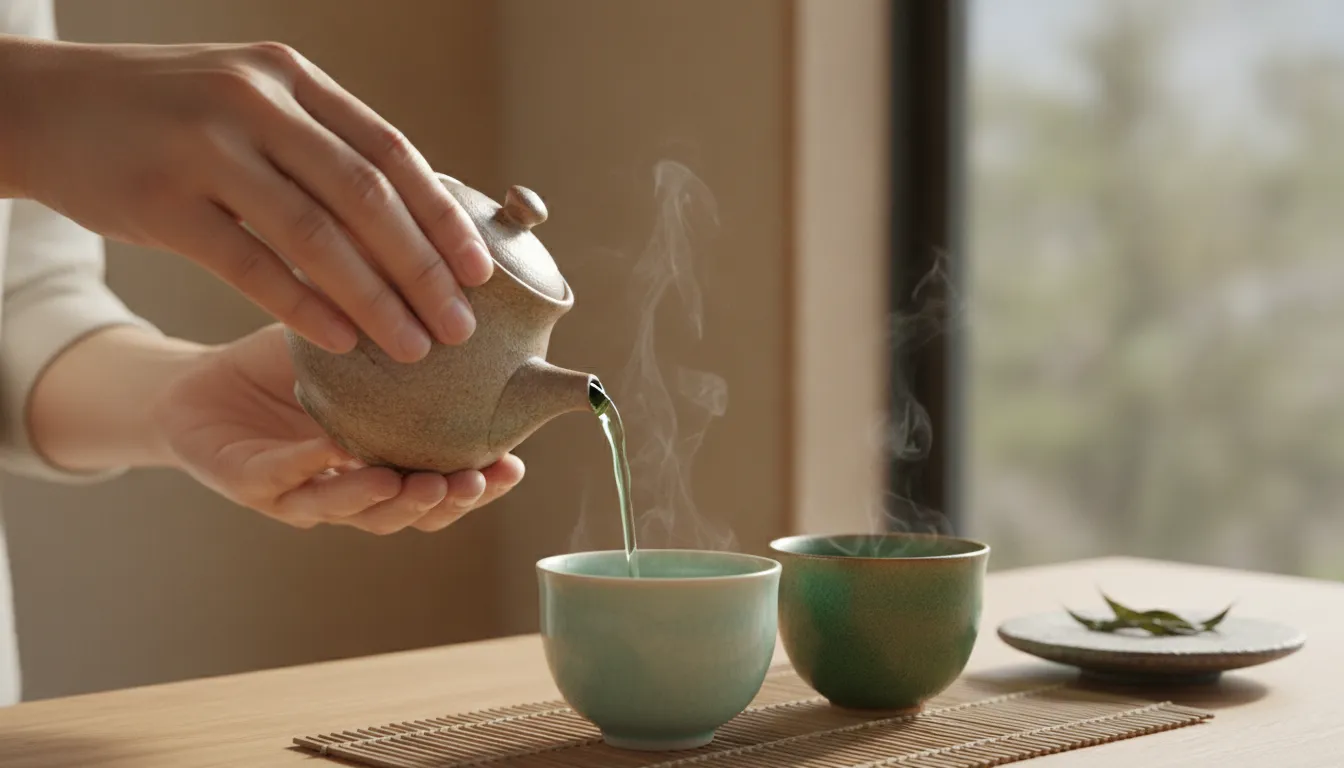
When serving one person, aim the stream steadily into the cup and empty the pot fully. A careful final pour matters because the liquor that remains around the leaves can be especially concentrated. Tilt the pot gently at the end, but avoid shaking it aggressively or pressing the leaves. The goal is to collect the infusion cleanly while keeping the ritual calm.
- Warm the receiving cup, then place it close to the vessel.
- Pour steadily and stop briefly if you need to reset your grip.
- Tip the vessel gently to collect the last of the infusion.
- Pause before drinking so the aroma and temperature settle.
Share the infusion evenly
For two or more cups, do not fill the first cup completely before moving to the next. Instead, pour a little into each cup in sequence, then continue with another round. Maiko recommends this alternating method because the richer liquor at the bottom of the pot is distributed among all the servings rather than ending up in one cup.
With three cups, for example, move from cup one to cup three, then reverse the order from cup three back to cup one. This back-and-forth pattern helps balance the strength of each serving. Keep the cups close together so the pour stays controlled, and pause briefly if you need to adjust your grip.
Serving is also an invitation to notice the tea together. For a relaxed gathering, you can pair this measured approach with Sorate's guide on how to host a Japanese tea tasting at home. Let each guest receive a small cup, then compare the aroma, color, texture, and finish before preparing another infusion.
What Should Gyokuro Smell and Taste Like When Served?
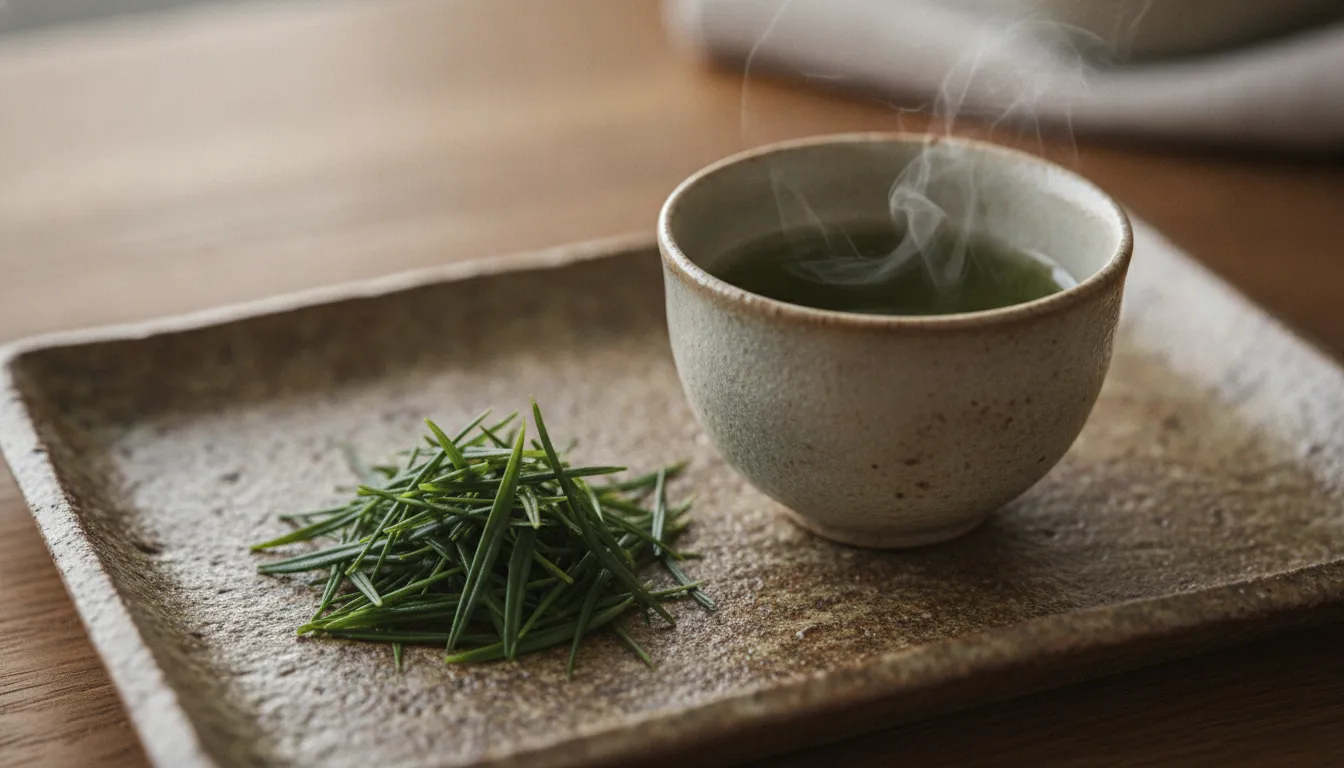
Serving gyokuro gives you several chances to notice the tea before you take a sip. Begin with the dry leaves. Look for their color, shape, and overall condition, then bring them close enough to notice their quiet, fresh aroma. After water has opened the leaves, pause again. The fragrance may feel deeper and more expressive than it did when the leaves were dry.
This simple sequence follows a useful sensory-evaluation practice: consider the dry leaves, the wet leaves, and the liquor as separate observations rather than judging the cup all at once. The University of Hawaii's guide to tea evaluation recommends noting aroma and appearance at each of these stages. You can read the sensory evaluation reference for the full framework.
Notice the liquor, texture, and finish
Once poured, observe the liquor's color and clarity in the serving cup. Gyokuro may present a deep green appearance, but color alone does not tell you whether the preparation suits your taste. Smell the cup before drinking, then take a small sip and let the texture register. A well-served cup can feel rounded and silky, with a concentrated savory quality often described as umami. That character should sit alongside a gentle sweetness, not replace it.
Pay attention to what remains after swallowing. Does the flavor fade quickly, or does a clean sweetness and fresh tea aroma linger? A pleasant finish does not need to be loud. If the cup seems thin, harsh, or overly bitter, consider the serving conditions before judging the leaves. Water temperature, leaf quantity, vessel, and steep time all shape the result, so change one variable at a time.
For a fuller vocabulary and a repeatable way to compare aroma, flavor, mouthfeel, and finish, use Sorate's guide to Japanese tea tasting cues.
How to Serve the Later Infusions
The first serving leaves the leaves ready for another moment of attention. Rather than discarding them immediately, return to the same leaves for several more hot infusions. O-Cha notes that gyokuro leaves may be infused four or five additional times, with shorter waits after the first infusion. Its general guide gives a range of about 30 seconds to one minute for subsequent infusions: use that as a starting point. Then adjust according to the aroma and flavor in the cup.
For the second infusion, add water at a somewhat higher temperature than you used for the first. Kiyosen specifically recommends hotter water for its second infusion, while Marukyu Koyamaen gives a second-infusion example of 55 to 60 C with a 30-second steep. These are reference points, not rules that every gyokuro will follow. The leaf quantity, vessel, water, and first infusion all affect how quickly the next cup develops.
Let each cup change
Watch the liquor and smell the wet leaves before pouring. The first infusion may feel especially concentrated, soft, and savory. A later cup can open into a clearer aroma, a lighter body, or a more delicate sweetness. If the second infusion tastes faint, allow a little more time. If it seems overly intense or drying, shorten the next steep or use slightly cooler water. Small adjustments are part of learning how your tea behaves.
Pour each infusion completely so the leaves do not continue extracting between servings. When serving more than one person, divide the liquor in alternating small pours and reverse the order on the return pass. This helps distribute the stronger liquid that settles near the bottom of the vessel. For a broader look at water choices and preparation principles, see Sorate's guide to choose water for green tea.
Keep the later infusions hot and serving-focused. The aim is not to force the leaves into a fixed number of rounds, but to notice when their character has gently faded.
Make the Gyokuro Ritual Your Own
Once the water, leaves, and timing are in place, let the serving itself slow you down. Gyokuro does not need to be presented as a performance. A clean surface, a few small cups, and a moment without distraction are enough to make the tea feel intentional.
As an optional starting point, Marukyu Koyamaen recommends preheating the pot before preparing gyokuro, then allowing the water to cool until it is ready for the leaves. Its instructions also warm the serving cups first and identify 50 to 55 C as a ready temperature. These details are not a test you have to pass. They are a useful way to notice how your vessel and room affect the heat of the water. Read the reference instructions.
Warm the cups with hot water, empty them, and arrange them where each guest can reach them comfortably. If you are serving from a shiboridashi or kyusu, pour slowly and keep the vessel steady. With more than one cup, alternate small pours so the liquor is shared evenly. Then pause before drinking. Notice the color, aroma, texture, and finish while the tea is still warm, rather than rushing to the next task. Sorate's guide to Japanese tea tasting cues can help you put those observations into words.
The ritual can also be a quiet connection to place. Sorate's relationship with family farms in Uji, Kyoto gives its tea story a living point of reference, not just a label on the package. Explore Sorate's Uji tea heritage. Then serve a cup of Sorate Gyokuro Karigane Superior with the same attention you would bring to any carefully made food or drink. Prepare thoughtfully, taste openly, and adjust the next infusion to your own table.
Explore tea accessories for serving
Frequently Asked Questions
What vessel should I use to serve gyokuro?
A small shiboridashi or kyusu works well because it supports a measured, attentive serving ritual. Pair it with small cups and warm them before pouring so the tea stays inviting from the first sip. The vessel matters less than using one that lets you control the water, infusion, and pour consistently.
How can I cool the water before brewing?
Let freshly boiled water cool before it reaches the leaves. You can transfer it through a kyusu into a yuzamashi, a vessel designed for cooling water. One traditional guide estimates that this transfer lowers the temperature by about 10 degrees Celsius, while published gyokuro instructions commonly bring the water toward roughly 50 to 60 degrees Celsius. Treat those figures as starting points and adjust to your tea and setup.
How do I pour gyokuro evenly into several cups?
Pour in small amounts, alternating among the cups rather than filling one cup at a time. This helps distribute the richer tea that settles near the bottom of the pot. After moving from the first cup to the last, reverse the order and pour back toward the first, as described in Maiko's serving guidance.
What should I do with the leaves for later infusions?
Keep the leaves in the vessel and serve another hot infusion while they are still open and fragrant. Later infusions generally need less time than the first. O-Cha suggests about 30 seconds to one minute and notes that the same leaves may be infused several more times. Taste each round and adjust the water or timing rather than treating the schedule as rigid.
Ready to Continue the Gyokuro Ritual?
Serving gyokuro at home becomes more rewarding when each detail invites you to slow down and pay attention, from the warmth of the vessel to the final pour. Choose a tea and accessories that make this quiet ritual easy to return to, whether you are preparing a cup for yourself or sharing it with someone special.


