


Matcha begins with a shade-grown leaf called tencha. Following its journey from field to stone mill reveals why matcha differs from steeped Japanese green teas.
Explore Sorate's matcha collection and experience the finished expression of tencha.
Tencha is the shade-grown Japanese green tea leaf used specifically as the base for making matcha. Unlike other green teas like sencha, tencha leaves are covered for three to four weeks before harvest to boost flavor and color. This process creates a deep green leaf and a sweet taste while lowering bitterness. After harvest, workers steam and air-dry the leaves rather than rolling them. This allows the stems and veins to be removed easily before grinding. According to the Sorate brand guide, tencha is never rolled before it is ground into the fine powder we know as matcha. This careful farming sets tencha apart from standard brewed teas. It is the key part of an authentic Japanese tea ritual.
To understand the tea ritual, first look at the life of the leaf itself. Answering "what is tencha?" shows why its processing differs from a typical steeped green tea.
What is tencha?
In short: Tencha is shade-grown Japanese green tea leaf material that is steamed, dried without rolling, de-stemmed, and de-veined before it is ground into matcha.
Tencha is the name for the green tea leaves used to make matcha. It starts as a leaf grown under the shade for several weeks. Before these leaves become the fine powder we know as matcha, they go through a very special process. This method sets tencha apart from other types of green tea like sencha. Most people only know the end product, but the leaf itself has a rich story and a unique flavor.
You can think of tencha as the raw leaf for matcha. While most green teas are rolled into needles, tencha stays in its flat, dried form. It is the pure leaf parts that stone mills grind into ceremonial-grade matcha. Because it is meant for high-quality tea, farmers grow these leaves with great care in the Uji region of Kyoto.
The raw leaf for matcha powder
Most tea drinkers never see tencha because it is usually ground right after it is made. But when it is not ground, you can brew the leaves on their own. As a brewed tea, tencha has a light and sweet taste with a soft, green scent. It lacks the strong punch of matcha but offers a very light flavor with clear green notes.
Uji has a long history of tea cultivation and processing. Sorate's connection to a family-owned farm in Uji gives readers a direct link between the leaf, its place of origin, and the Japanese tea ritual.
A unique shade-growing process
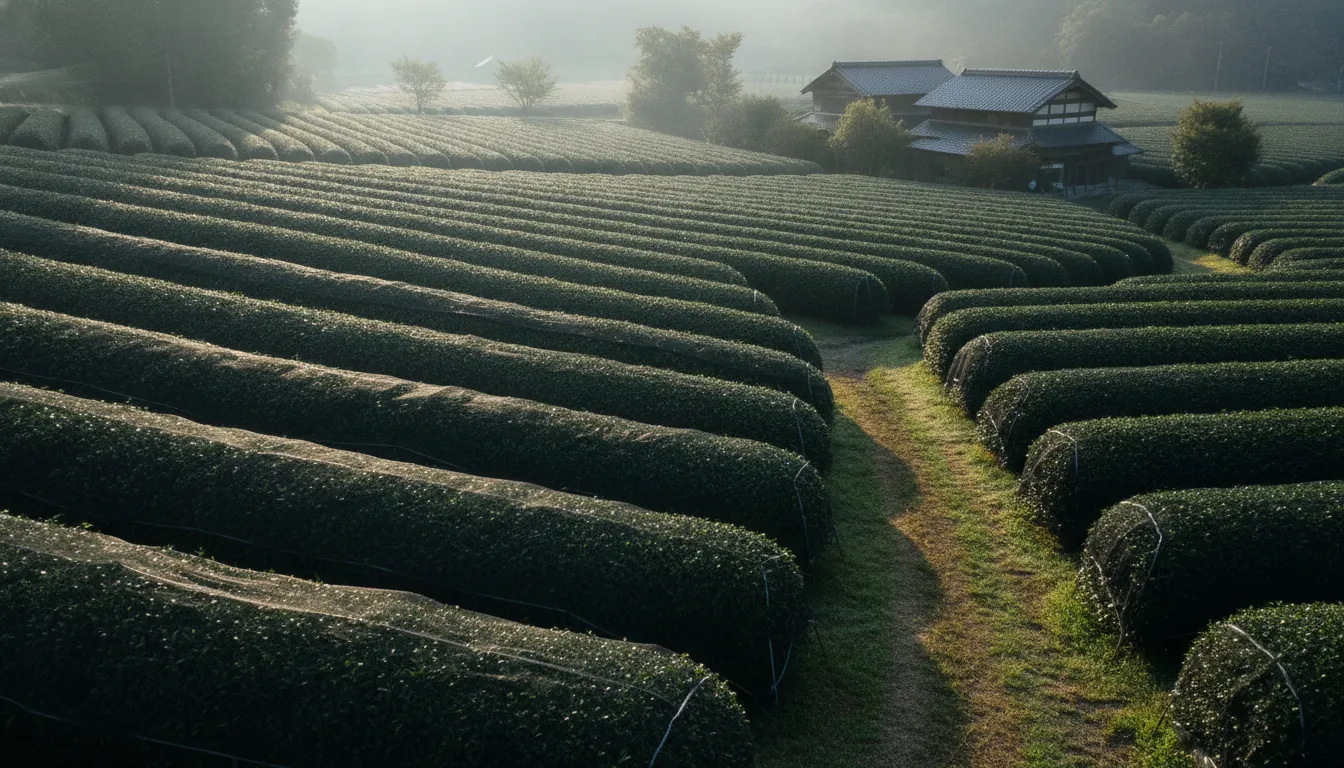
One of the most vital steps for tencha is how it grows. About three to four weeks before the harvest, farmers cover the tea bushes. This shade blocks out most of the sunlight from reaching the leaves. By growing in the dark, the leaves produce more chlorophyll and a special amino acid called L-theanine.
Shading changes the leaf's chemistry and is associated with the savory-sweet character often described as umami. The exact flavor still varies with cultivar, harvest, processing, and preparation.
How tencha is made
The step-by-step tencha process is simple but needs a lot of care. First, workers steam the fresh leaves to stop them from turning brown. Then, they dry the leaves in a large oven. Unlike other teas, workers never roll tencha leaves. This keeps the leaf flat and easy to clean.
Next, a machine removes the stems and veins from the dried leaves. Only the soft part of the leaf remains. This pure material is what we call tencha. Once the leaves are clean, they are sorted by grade. This careful work makes sure only the best parts of the plant are ground into the final bright green powder.
How is tencha cultivated and processed?
In short: Farmers shade tea plants before harvest, then steam and air-dry the leaves without rolling them. Removing stems and veins produces the flat flakes called tencha.
The journey from a fresh tea leaf to high-grade tencha is a careful process. It begins in the fields of Uji, Kyoto, where traditional farming methods have existed for centuries. To understand what is tencha, you must first look at how the tea plants are raised. The most vital part of this craft is the use of shade before the harvest begins.
The role of shade
About three to four weeks before harvest, farmers cover the tea bushes. They use mats or nets to block out most of the sunlight. This lack of light forces the plant to change. It produces more chlorophyll to catch what light remains, which turns the leaves a deep, vibrant green. This step also boosts the levels of L-theanine, an amino acid that gives the tea its rich umami flavor.
By shading the plants, farmers also reduce the amount of catechins in the leaves. Catechins can make tea taste bitter. The result is a leaf that is sweet and full of nutrients. Once the leaves reach the right color and age, they are picked and sent to the factory for the next steps.
From harvest to dry leaf
The transition from a fresh leaf to tencha involves several precise steps. Unlike other green teas, tencha is never rolled. This helps keep the leaf flat and makes it easier to remove the parts that are not needed for fine tea powder. Following Uji tencha processing in the factory preserves the quality of the harvest.
- Steaming: Within hours of being picked, the leaves are steamed. This stops the oxidation process and keeps the green color and fresh flavor.
- Cooling: The hot leaves are blown through a tall cage. This cools them down and removes surface water so they do not stick together.
- Drying: The leaves go through a large brick oven. They are dried slowly until they become crisp. At this stage, the tea is known as aracha.
- Sorting: Special machines or skilled workers remove the stems and veins. Only the soft part of the leaf remains.
- Cutting: The final leaf pieces are cut into small, uniform flakes. This pure leaf material is what we call tencha.
Preparing for matcha
Once the processing is complete, the tencha is ready for its final use. Most of it will be ground into a fine powder. This is the step-by-step tencha processing that turns raw leaves into the base for ceremonial matcha. Some people also enjoy brewing the flakes as a whole-leaf tea, which offers a light and delicate taste.
By focusing on these traditional steps, farmers in Uji ensure the tea has a unique profile. The lack of rolling and the use of shade make tencha distinct from all other Japanese teas. It is the vital link that makes authentic matcha possible.
How does tencha become matcha?
In short: Makers slowly grind finished tencha between granite stones. The resulting fine powder is matcha, so tencha and matcha describe two stages of the same leaf.
Tencha is the base leaf used to make matcha. It starts with a unique way of growing in the shade. This step builds up L-theanine, which is a key part of the tea. In areas like Uji, Kyoto, farmers take great care to keep the quality high. They steam and dry the leaves after the harvest. Once the leaves are dry, they go through more steps to become the fine green powder known as matcha.
Removing stems and veins
The first step to change the leaf into powder is cleaning. Workers must remove the stems and veins from the dry leaves. This leaves only the soft parts of the leaf. These pure pieces are the best parts for grinding. If the stems stayed in, the tea would taste bitter and feel like sand in your mouth. Removing these parts ensures the tea stays smooth and sweet.
This part of the path from shaded leaf to matcha is what sets it apart from other teas. Most green teas are rolled while they are being made. This rolling process breaks the leaf cells to release flavor. But tencha is never rolled. This keeps the leaf flat and easy to sort. By the end of this stage, the prepared leaf material is ready for the stone mill.
Stone grinding
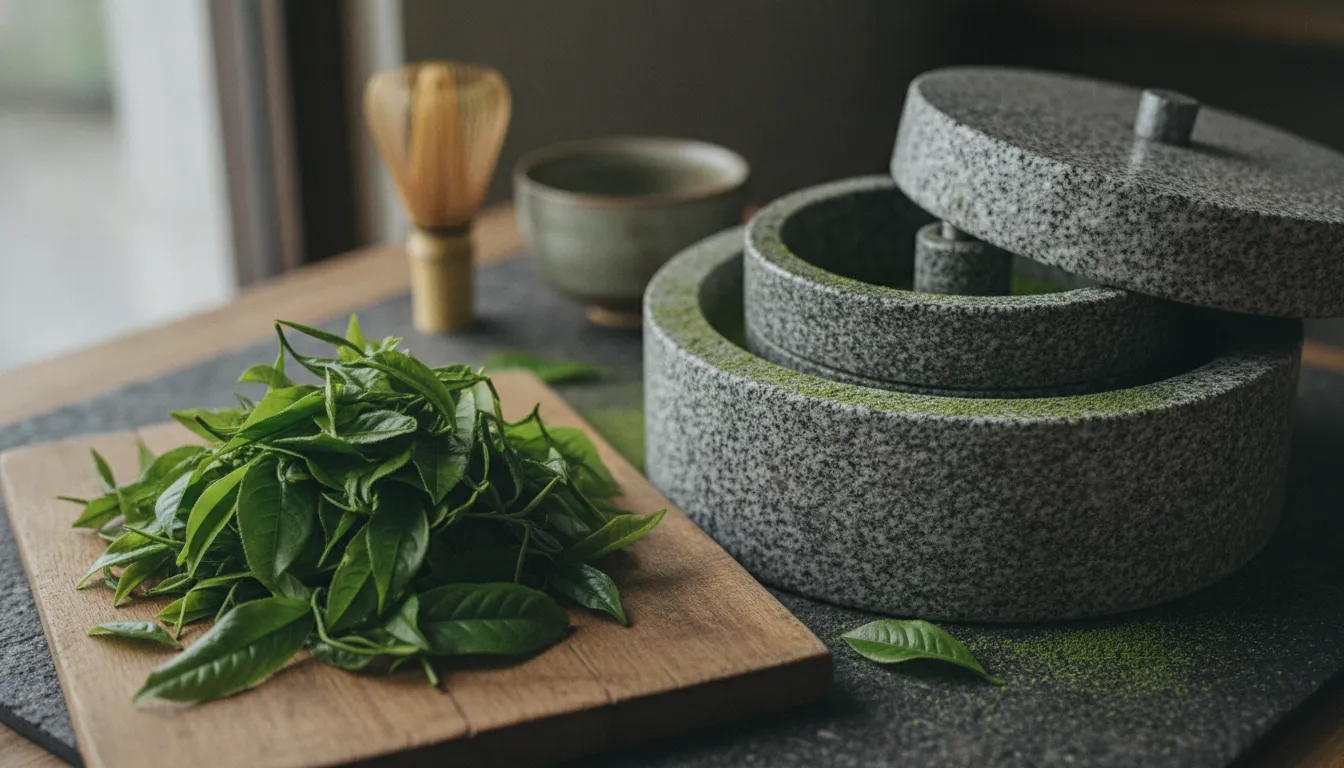
To make high-grade matcha, makers use large granite stones. These stones grind the leaf into a very fine dust. The stones have lines that help push the powder out as they turn. This method has been used for hundreds of years in Japan. It is the best way to get the right feel for a smooth cup of tea. It takes a lot of skill to set the stones just right.
The grinding must be done in a cool, dark room. This protects the bright green color of the tea. If the room is too light or warm, the tea can lose its fresh look. This step helps create the rich taste of what is matcha. The final powder should have an umami taste and a sweet smell.
The need for a slow pace
Stone mills turn very slowly. It can take one hour to grind just a small amount of tea. This slow speed is key for the best results. If the stones move too fast, they get hot. Heat is the enemy of good matcha. It can burn the leaves and turn the powder a dull yellow color. High heat also takes away the fresh smell and ruins the taste of the tea.
Slow grinding keeps the tea cool. This helps preserve the soft scent and sensory character of the leaf. It also makes a powder that is fine enough to float in water. When you whisk the tea, this fine grind helps make a thick foam. This process shows the skill and time needed to make a true cup of tea. Every gram of powder shows the hard work of the tea makers.
How does tencha compare with other Japanese green teas?
In short: Tencha is shaded and left unrolled for grinding. Sencha is generally sun-grown and rolled for steeping, while gyokuro is shaded but still rolled for steeping.
To know what is tencha, you must see how it differs from other teas. Tencha is a unique step in the tea life. It starts like other fine teas but ends up in a new form. Most people know sencha or hojicha as leaves you steep in water. But tencha is a raw base that mostly becomes matcha powder. It acts as the middle stage in the life of the tea plant.
Tencha and sun-grown sencha
The biggest change is how the plants grow. Sencha grows in full sun until the harvest. Tencha stays under shade for three to four weeks before picking. This shade makes the leaves dark green and full of flavor. Because it grows in the dark, tencha has high levels of L-theanine. L-theanine is a natural part of tea that helps the brain feel calm and alert (Saeed et al., 2022).
The way workers handle the leaves also sets them apart. After steaming, workers roll sencha leaves into thin needles. This breaks the cell walls so the flavor comes out in hot water. Tencha is never rolled. Instead, it is dried flat and cut into small flakes. This keeps the leaves light and crisp. It makes them easy to grind into powder later on.
From tencha to matcha
You can think of tencha as the soul of matcha. Without tencha, you cannot make true matcha. After the leaves are dry, machines remove the stems and veins. This leaves only the soft part of the leaf. This pure leaf base is the tencha. It is the key part of the step-by-step tencha processing that leads to the final whisked drink. It has a mild, sweet taste that works well in many foods.
Matcha is what you get when you grind those tencha flakes into a fine dust. Tencha flakes are hard to brew like normal tea because they are not rolled. They float on top of the water instead of sinking. This is why tencha is rarely sold for steeping in a pot. Its main job is to wait in cold storage. It stays there until it is time to become fresh matcha powder.
| Tea Type | Look | Shaded? | Last Step. |
|---|---|---|---|
| Tencha | Flat flakes | Yes (3-4 weeks) | Stems removed. |
| Matcha | Fine powder | Yes (3-4 weeks) | Stone ground. |
| Sencha | Rolled needles | No | Kneaded leaf. |
| Gyokuro | Rolled needles | Yes (3 weeks) | Kneaded leaf. |
| Hojicha | Loose leaf | Varies | Roasted brown. |
Differences with gyokuro and hojicha
Gyokuro is the most like tencha because both grow in the shade. Both can express a rich, savory taste known as umami. But gyokuro is rolled like sencha and meant for steeping in a cup. Hojicha is very different from these green teas. It is tea that has been roasted at a high heat. This turns the leaves brown and gives them a smoky scent. While tencha is fresh and green, hojicha is warm and toasty.
Each of these teas has a place in Japanese tea culture. Tencha stands out as the hidden star. You rarely see it, but you taste its quality in every bowl of matcha. It gives the base for the bright green color and sweet flavor people love. By picking the right tencha, makers make sure the best results for the final tea.
What does tencha taste like?
In short: Brewed tencha is typically delicate, lightly sweet, and savory, with a fresh green aroma. Matcha tastes fuller because the entire ground leaf is suspended in water.
Many tea lovers ask what is tencha when they learn about the craft of tea. Tencha has a taste that is rare to find. In Japan, these leaves are mostly saved for the stone mill. But when you brew the whole dry leaf, it offers a clean and light taste. It does not have the thick or heavy body of whisked matcha. Instead, it shows a clear, pale green color and a soft feel on the tongue. This tea is a quiet look at the heart of the leaf before it becomes a powder.
A profile of sweet umami
The taste of tencha is noted for its sweet and deep notes. This flavor comes from the way the tea plants grow in the shade for weeks. This method boosts the levels of L-theanine in the leaves. L-theanine is a pure amino acid that gives the tea a rich flavor. Many people call this taste umami. Since the leaves do not get full sun, they do not have the bitter bite of other green teas. You will find a rich and smooth taste that stays on your tongue. It is a gentle sweetness that feels both fresh and calm.
Fresh scent and light texture
Tencha has a fresh and grassy scent. It often smells like a lush forest or a field after a spring rain. Since the leaves are not rolled when they are made, they keep a light and airy shape. This makes the brewed tea feel thin and crisp in the cup. You might pick up soft hints of nuts or sweet garden peas. The lack of rolling means the flavors come out slowly into the water. This leads to a cup that is easy to drink. It provides a moment of peace that is a key part of the tea ritual.
How it differs from matcha
Tencha is the source of matcha, but the two taste unlike each other. Matcha is a fine dust that you whisk into hot water. You drink the whole leaf, which makes the flavor bold and very creamy. Tencha is a leaf tea that you steep in a pot. The taste of tencha is much more soft and shy. It lacks the heavy punch of matcha but offers a wide range of light notes. Many find tencha to be a great way to enjoy high-grade tea in its most raw and pure form. It is a link to the farm in Uji, Kyoto where the leaves are grown with care.
Why are tencha, Uji, and the Japanese tea ritual connected?
In short: Uji is closely associated with Japanese tea craft, and tencha is the agricultural and processing foundation of matcha used in the tea ritual.
Uji is a special place in the heart of Japan. It is known for its deep past with green tea. For a long time, this place has shaped the way people enjoy the tea ritual. To know this ritual, one must ask: what is tencha? This leaf is the base of the best tea. It starts as a raw plant in the fields of Uji. Then, it goes through a slow and careful path to become the fine powder used in tea rites.
The roots of Uji tea
Sorate works with small family farms in Uji, Kyoto. This place is one of the best tea-growing spots in the world. The soil and mist there create the right home for tea plants. We source our leaves directly from these farms to keep the old ways alive. You can learn more about our farm in Uji and how it supports our goal. By staying close to the source, we make sure every cup shows the true spirit of Japan. The farmers there have spent years learning how to grow the best leaves for each season.
The past of Uji is tied to the tea ritual itself. Monks and lords once came here to find the best green tea. Today, the land still holds a top rank for its craft. The plants grow in a way that respects the land. This care shows in the taste of the tea. It is not just about a drink. It is a bond with the earth and the past.
How tencha is grown and made
The journey of the leaf begins in the shade. Farmers cover the plants for three to four weeks before harvest. This shade boosts the level of L-theanine in the leaves, which adds a sweet umami taste. It also makes the leaves a bright green color. These leaves have more L-theanine than teas grown in the sun, like sencha. This boost in flavor is what makes the tea so rich and smooth.
After picking, the leaves are steamed and dried in a large oven. Unlike other teas, tencha is never rolled. This keeps the leaf flat and open. Then, workers remove the stems and veins from the dry leaves. This leaves only the soft parts of the leaf. You can see the full Uji tea-making process process to see why this step is so vital. Removing the veins ensures the tea is not bitter. It also helps it grind into a very fine silk.
The ritual of the tea leaf
The tea ritual is a quiet time for focus and peace. Tencha plays a key role in this moment. Once the leaves are clean and dry, they are ready to be ground into matcha. This final step turns the whole leaf into a fine dust using stone mills. Because the leaves were never rolled, they keep their pure oils and flavor. This makes the tea taste smooth and full. It creates a drink that is both calm and deep.
The ritual reminds us to slow down and value the now. By using fine leaves from Uji, the ritual stays true to its roots. Every step, from the field to the bowl, matters. The way the leaf is grown changes the way you feel when you drink it. It is a slow craft that connects the farmer to the person holding the cup.
How can tencha knowledge help you choose tea?
In short: Understanding tencha helps you read matcha descriptions more carefully by focusing on origin, shading, processing, freshness, and intended preparation.
Knowing what tencha is changes how you see tea labels. It moves you from a casual shopper to a tea expert. Most people buy matcha without knowing the craft behind it. When you learn about the tencha stage, you can find the best grade in a crowded market.
Read tea labels with ease
Tea labels can be hard to read. Many brands use big words but say very little, yet knowing that tencha is the base for matcha helps you find the right signs. High-grade tea starts with leaves grown in the shade for three to four weeks. This step boosts amino acids like L-theanine, which adds a sweet umami taste.
If a label does not mention shading or the place of birth, it might be a lower grade. Real Japanese tea often comes from Uji, Kyoto. This area is famous for its past and perfect soil. By looking for tencha facts, you ensure you get the rich taste you expect from the best tea.
Pick the right brew for your mood
Learning traditional tencha production helps you pick between a whisked bowl and a steeped cup. Tencha is steamed and dried but never rolled, which keeps the leaf flat and saves its soft parts. If you want a full, creamy feel, choose matcha because it is tencha ground into a fine silk.
If you want a lighter cup, you might look at teas like sencha. Sencha leaves are rolled during the drying stage to break the cell walls and change how the taste enters the water. When you know the gap in the step-by-step tencha making, you can better guess the feel of your tea. This fact helps you choose the right tea for your daily habit.
Spot grade in every leaf
The best way to use this fact is to find red flags. Low-grade matcha often uses leaves that were not shaded long enough, and it might also use leaves that still have stems and veins. True tencha has these parts removed before the grind, which is why good matcha tastes smooth and never gritty.
When you shop, look for these signs of high-grade tencha:
- A bright green color from high chlorophyll.
- A fine, silk-like feel in the powder.
- A sweet, umami scent without a sharp bite.
By knowing the work that goes into the leaf, you can value the craft in every sip. You are not just buying a drink; you are buying a way of life that spans many years.
Frequently Asked Questions
What is tencha?
Tencha is the name for shade-grown Japanese green tea leaves that have been steamed and dried but not yet ground. Farmers grow the plants under black nets for three to four weeks before harvest to boost chlorophyll and amino acids. This process shapes the leaf's color, aroma, and flavor profile. According to Sorate, tencha is the base used to make matcha after the stems and veins are removed.
How is tencha different from matcha?
The main difference between tencha and matcha is the final form of the tea leaf. Tencha refers to the dried, flat leaves that have been de-veined and de-stemmed. Matcha is the fine powder made when those tencha leaves are stone-ground. While tencha stays as a whole leaf, matcha is a powder that you whisk into water. Both come from the same shade-grown plants and share a rich, savory flavor profile known as umami.
Can you drink tencha as a brewed tea?
Yes, you can brew tencha as a whole-leaf tea, though it is less common than drinking matcha. When steeped in hot water, tencha leaves produce a pale green liquor with a very mild and sweet taste. Since the leaves are not rolled during processing, they need a longer steep time than other green teas. Brewing tencha allows you to enjoy the delicate flavor of the leaves without the strength of a whisked matcha bowl.
What compounds are associated with tencha?
Tencha contains L-theanine, an amino acid naturally found in tea. Shading affects the balance of amino acids and catechins in the leaf. A review indexed by the National Library of Medicine examines research on L-theanine and brain function. Individual experiences vary, and tencha is best understood first through its cultivation, processing, and flavor.
Bring the tencha story into your tea ritual
Understanding tencha adds context to every bowl of matcha, from the shaded leaf to the final stone-ground powder. It also makes the contrast with steeped Japanese teas easier to appreciate.
Ready to explore authentic Japanese matcha? Explore Sorate's matcha collection and choose a tea for your own ritual.


