


Japanese tea ceremony vs Chinese tea ceremony is not a contest between one formal ritual and one casual one. Japanese chanoyu often centers on a carefully shaped gathering in which matcha is prepared and served through a sequence of considered gestures. Chinese gongfu tea practice often centers on skillful brewing and sharing successive small infusions. Both include many regional, historical, and personal variations, so the most useful comparison is about common approaches—not hard rules.
Explore Japanese tea and matcha
What do people mean by chanoyu and gongfu tea?
Chanoyu, often called the Japanese tea ceremony or the Way of Tea, refers to Japanese practices of preparing and sharing matcha in a gathering. Its forms have been cultivated through different lineages and settings. A formal tea gathering may involve a host, guests, a designated space, utensils chosen for the occasion, and a carefully paced sequence. Everyday matcha preparation can be much simpler, and not every bowl of matcha is a ceremony.
Gongfu cha (also written gongfu tea) describes a Chinese approach to tea preparation in which attention and practiced technique are used to make and share tea. The expression is not a single universal script. Methods vary with region, tea, equipment, family custom, and the kind of gathering. A small teapot or gaiwan and several short infusions are common in many gongfu-style sessions, but they are not required everywhere.
These labels describe related but distinct cultural practices, not exhaustive descriptions of either country’s tea life. Japanese tea culture includes many ways to prepare and enjoy leaf tea, while Chinese tea culture spans an enormous range of local practices. Some gatherings are formal; others are relaxed. A host’s choices matter as much as a broad label.
How do their purposes and rhythms differ?
In chanoyu, the gathering itself is part of the practice. The host considers the season, occasion, guests, room, and objects as they prepare. The sequence can give the meeting a clear shape: guests arrive, the host attends to the hearth and utensils, matcha is prepared, and the bowl is presented and received. In a formal setting, each action can feel deliberate. The point is not simply to get a drink, but to meet one another through a shared moment of attention.
Gongfu tea practice tends to make the brewing process especially visible. The host measures leaves, warms vessels, adds water, and pours tea in repeated rounds. Guests can notice how each infusion changes in aroma, texture, and flavor. Rather than one serving being the whole event, tea may be offered in a succession of small cups. The pace can be unhurried and conversational, though the host may use highly practiced movements.
That contrast is a useful starting point, not a dividing line. Chanoyu can include conversation and hospitality; gongfu tea can be quiet and carefully choreographed. Both can ask participants to slow down, notice what is in front of them, and treat service as an act of care. A brief home tea session may borrow an idea from either practice without claiming to reproduce a formal tradition.
What changes in the preparation?
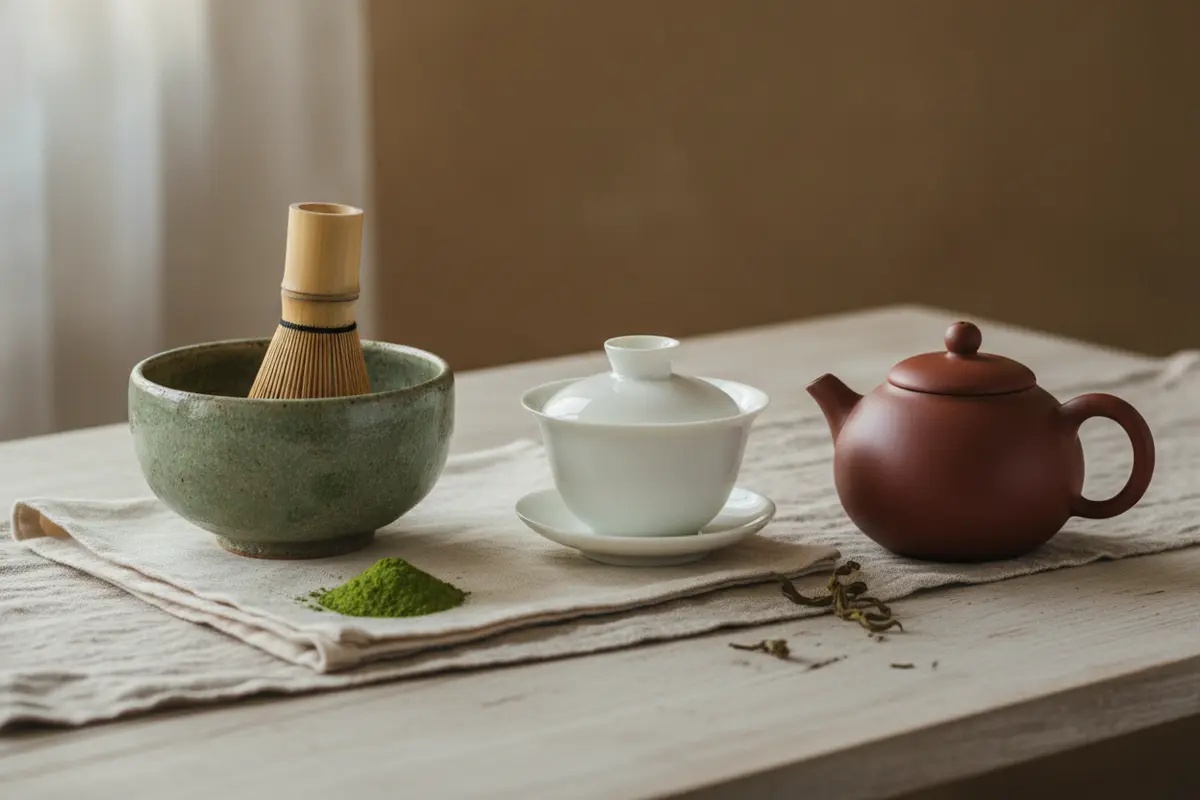
The most visible practical difference is often how the leaves are prepared. In chanoyu, matcha is finely milled tea suspended in water. A host places matcha in a bowl, adds hot water, and uses a bamboo whisk to mix it. Depending on the style and gathering, the result may be prepared as a more concentrated serving or a lighter one. The bowl is then offered to a guest as part of the gathering’s sequence.
In many gongfu-style sessions, whole tea leaves steep in a small vessel such as a gaiwan or teapot. The host controls the amount of leaf, water temperature, and steeping time, then pours the infusion into small cups. The process is repeated, often adjusting the steep as the leaves open and the flavor develops. There is no single brewing schedule that applies to every tea or household.
So the difference is not simply “powder versus leaves.” Chanoyu is a particular Japanese practice associated with preparing matcha in a gathering, while gongfu cha is a brewing approach commonly used with loose-leaf teas. Neither describes every way people in Japan or China drink tea. Japanese green tea, for example, is also steeped as loose leaves; Chinese tea is prepared in many ways beyond gongfu-style brewing.
For an accessible home comparison, keep the tasting modest. Prepare a bowl of matcha with a whisk, then prepare a loose-leaf tea in a gaiwan or small pot. Notice how the tools shape the movements: matcha asks you to whisk, while successive infusions invite you to pour and taste again. The aim is observation rather than staging a ceremony you do not know.
Which utensils and settings are typical?
A Japanese tea gathering may use a tea bowl, bamboo whisk, bamboo scoop, tea container, kettle, and other utensils selected for the occasion. The host may make choices about the room and objects that speak to the season or gathering. A formal setting can include a dedicated tea room or another carefully arranged space, but a ceremony is not defined only by architecture. A knowledgeable host and the relationship with guests matter too.
Gongfu tea setups often include a gaiwan or small teapot, a means of pouring, and small cups. Some hosts use a tray to catch water, rinse vessels, or manage the sequence of infusions. Equipment differs: a simple setup can be effective, and a large collection of specialized tools is not a prerequisite. The table may be shared closely, with guests watching the leaves and receiving several pours.
The surroundings can influence the feeling of each gathering, but they do not create a universal rule. Chanoyu is not always conducted in a historic tea house, and gongfu tea is not limited to a particular kind of table or teapot. For a practical overview of Japanese tea vessels and serving pieces, see this guide to arranging a tea service set. If you are building a home setup, choose equipment for the tea and preparation you actually want to practice; a selection of tea accessories can be a starting point rather than a checklist.
How do host and guest roles compare?
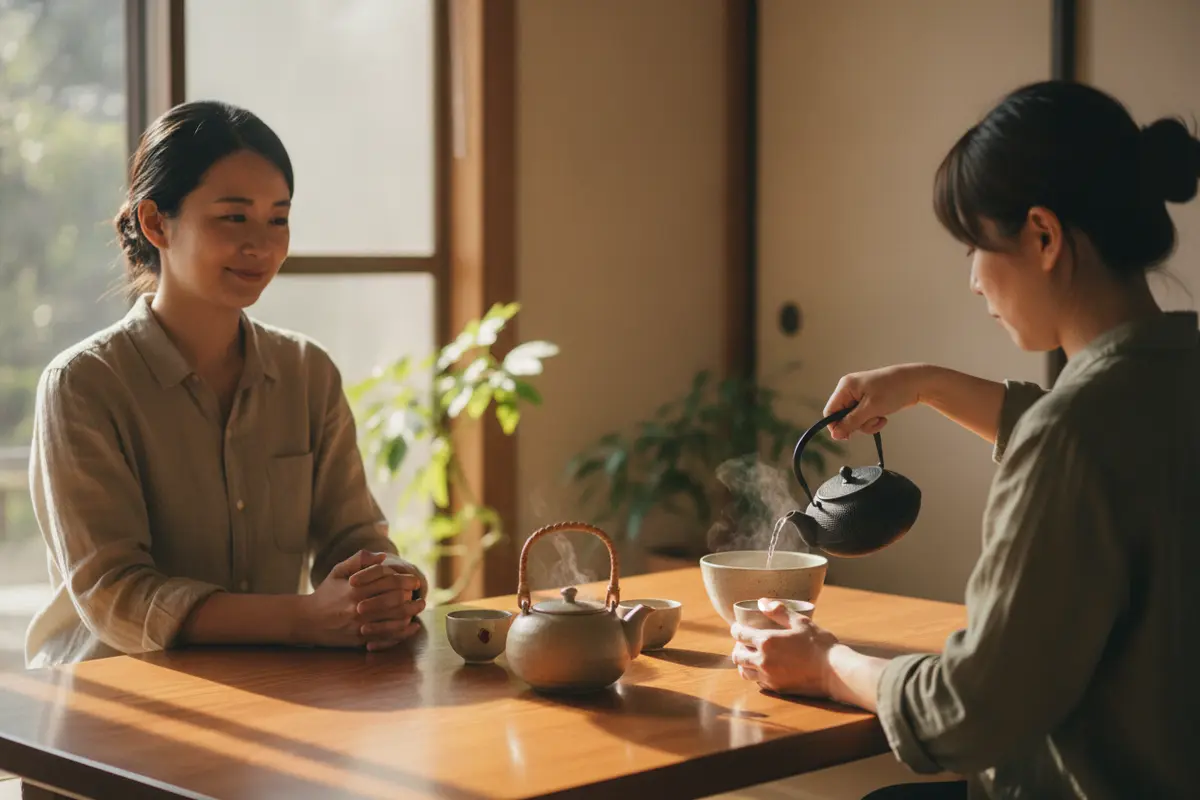
Both practices are built around hospitality, but the interaction can take a different form. In chanoyu, host and guests share a structured encounter. The host prepares and presents tea; guests receive it with attention to the setting and the care behind the serving. In a formal gathering, the order of events and the use of utensils help participants understand what is happening. This structure can make small gestures feel especially meaningful.
In gongfu tea, guests may have a closer view of brewing and the changing infusions. The host may pour tea around the table, refill cups, and invite guests to compare what they notice from one round to the next. Conversation can flow alongside the preparation. In some settings, participants may take turns brewing; in others, one host guides the session. There is no single guest role for every gathering.
For either practice, curiosity and attentiveness are better guides than trying to memorize a universal etiquette list. Follow the host’s lead, wait for a cue if you are unsure, and ask a sincere question at a suitable moment. If invited to handle an object or taste a particular way, do so carefully. Avoid treating gestures from one tradition as interchangeable with those from another.
Japanese tea ceremony vs Chinese tea ceremony at a glance
This comparison describes common patterns, not requirements. The people hosting, the occasion, and the specific lineage or local custom can change the experience.
| Aspect | Japanese chanoyu | Chinese gongfu tea practice |
|---|---|---|
| Common focus | A shaped gathering centered on preparing and sharing matcha | Careful brewing and sharing tea, often across multiple infusions |
| Tea preparation | Matcha is whisked with water in a bowl | Loose leaves are steeped in a small vessel in many common gongfu-style sessions |
| Often-seen tools | Tea bowl, bamboo whisk, scoop, tea container, and kettle | Gaiwan or small teapot, small cups, and sometimes a tray or pouring vessel |
| Typical serving rhythm | A sequence of host actions leads to a serving of matcha for a guest | Several short pours may be served and tasted in succession |
| Guest experience | Participates in a gathering shaped by the host’s preparation and presentation | Often observes or shares in the brewing, tasting successive cups |
| What varies | Lineage, formality, occasion, utensils, and setting | Region, tea, equipment, steeping choices, and household custom |
What is the best way to learn about each practice?
Begin by being specific about what you want to understand. Are you curious about how matcha is whisked, how a host arranges a formal gathering, or how a tea changes over repeated infusions? Each question points to a different kind of lesson. A short demonstration can introduce basic tools, while a guided gathering offers more context about sequence and host-guest relationships.
For chanoyu, look for instruction from a practitioner or organization that names the tradition or school it represents. Ask whether the experience is a demonstration, a hands-on introduction, or a formal gathering. Those are not interchangeable. If preparing matcha at home, start with a bowl and whisk and learn the basic motions before trying to imitate a formal sequence. This beginner’s guide to making matcha can help with the preparation itself, while it is not a substitute for learning chanoyu from a teacher.
For gongfu tea, ask the host what tea and brewing approach they are using, and pay attention to how the infusion changes from cup to cup. If practicing at home, one gaiwan or small pot and a few cups are enough to learn how pouring, timing, and leaf quantity affect the tasting. Keep notes in plain language: what aroma stands out, how the texture feels, and what seems different in the next infusion.
Good cultural sourcing matters. An academic discussion of the Japanese tea ceremony through a semiotic perspective can be useful for thinking about how objects and actions communicate meaning, though it is one study and not a complete account of chanoyu: Semiotic Perspective of the Japanese Tea Ceremony. For either tradition, favor sources that identify the author or practitioner, explain the context, and avoid presenting a single version as the only authentic one.
How can you try a thoughtful tea session at home?
You do not need to recreate a formal ceremony to borrow its attentiveness. You can set aside a few minutes, clear a place to prepare tea, and focus on each step. If comparing approaches, keep the setup simple and use separate sessions so you can notice each method on its own terms.
- Choose one preparation to begin. For matcha, gather a bowl and whisk. For loose-leaf tea, use a gaiwan or small teapot and cups. Start with tools you have rather than buying a full set.
- Prepare the space. Make room for the vessel, water, and cups. A calm, clean surface is more useful than decorative details meant to imitate a tea room.
- Pay attention to the process. Notice how whisking differs from pouring an infusion. Work at a comfortable pace, and follow reliable preparation directions for the tea you have.
- Taste without rushing to judge. Notice aroma, texture, and how the flavor develops. With loose leaves, compare more than one infusion if the tea and instructions suit it.
- Reflect on hospitality. Consider what made serving or receiving the tea feel attentive. That reflection is more meaningful than claiming the session was a formal ceremony.
If you are new to Japanese tea, exploring a few styles can give you context for how differently tea can be prepared and enjoyed. Sorate’s Japanese green tea collection includes options such as sencha, gyokuro, and hojicha. For matcha tools, this bamboo whisk is designed for whisking matcha; using the right tool can make the preparation more comfortable, without turning a home practice into a formal ceremony.
Browse tea tools and accessories
Frequently asked questions
Is gongfu tea a Chinese tea ceremony?
Gongfu cha is a Chinese tea preparation and sharing practice, often involving attentive brewing and multiple infusions. Calling it a “ceremony” can help convey that it may be intentional and social, but it should not suggest there is one standardized ritual used across China.
Is Japanese tea ceremony always formal?
Chanoyu includes formal gatherings and different levels of practice, but everyday matcha preparation is not automatically a tea ceremony. A formal gathering has context and a shaped sequence that go beyond whisking a bowl of matcha.
Do Japanese and Chinese tea practices use the same tools?
Some objects may look similar or have overlapping uses, but common setups differ. Chanoyu is associated with a matcha bowl and bamboo whisk; gongfu-style brewing often uses a gaiwan or small teapot and small cups. Tools depend on the host, tea, and occasion.
Which practice should a beginner try first?
Choose based on what interests you. If you want to learn how matcha is whisked, begin with a simple matcha preparation. If you want to observe how flavor shifts between pours, try a loose-leaf tea session with successive infusions. To learn either cultural practice in depth, seek knowledgeable instruction rather than relying on a home experiment alone.
Continue learning through the tea itself
Japanese chanoyu and Chinese gongfu tea practice each connect preparation, hospitality, and attention in distinctive ways. Understanding their common patterns is a useful start, as long as you leave room for the variety within each tradition and learn from people who can explain its context.


