


A cast iron teapot brings a grounded, steady presence to the tea table. Its thick body holds warmth, its textured surface gives the ritual a tactile quality, and its weight can make each pour feel deliberate. The important first step is knowing what kind of vessel you have: most modern cast iron teapots are made for steeping and serving tea, not for heating water on a stove.
Explore Sorate's tea accessories
This guide covers how to choose a cast iron teapot, how lining and capacity affect everyday use, and how to clean and dry it without inviting rust. It also explains the difference between a brew-only teapot and a purpose-built cast iron water kettle, so you can use the piece in front of you with confidence.
What is a cast iron teapot, and how is it different from a tetsubin?
A cast iron teapot is a heavy vessel designed to hold tea leaves and hot water while the tea steeps. A tetsubin is traditionally a cast iron water kettle used to heat water. In modern English, the two names are often mixed together, and some product listings use tetsubin as a broad style label. The safest approach is to check the maker's instructions, interior finish, and stated purpose rather than relying on the name alone.
A contemporary cast iron teapot commonly has a protective enamel interior and a removable infuser or built-in strainer. It belongs on the tea table after water has been heated elsewhere. A purpose-built kettle has different construction and heating instructions. If a listing does not clearly say that a vessel is safe for direct heat, treat it as a brew-only teapot.
The distinction has a long craft history. Japan's national cultural property database describes the Nambu ironware tradition in the Morioka area and explains how iron tea kettles developed from smaller tea-heating vessels. That history helps explain why the same family of forms can be associated with both water heating and tea serving, while modern products still need different handling.
For the water-heating side of the setup, Sorate's tea kettle guide covers electric and stovetop kettles, capacity, temperature control, and pouring. This article stays focused on the cast iron vessel that receives the prepared water and serves the finished tea.
How does cast iron construction affect tea brewing?
Cast iron affects the tea ritual mainly through heat retention, weight, and handling. A thick iron body warms gradually and releases heat slowly compared with a thin glass or lightweight ceramic vessel. That can make a cast iron teapot comfortable for a longer serving session, especially when you plan to pour several small cups. It does not make one tea universally better, and it does not replace the water, leaf, time, and temperature choices that shape an infusion.
Heat retention can support a slower serving rhythm
When you prewarm the pot and then add prepared water, the iron body helps limit abrupt temperature loss. The practical benefit is a steady-feeling pour from the first cup to the last. If you prefer very quick, small infusions or want the vessel to cool rapidly between rounds, a lighter teapot may feel more responsive. Think of heat retention as a serving preference, not a quality ranking.
Weight and balance matter more than appearance alone
A cast iron teapot can feel substantially heavier once it is filled. Check the handle, lid, spout, and base as one system. The handle should give your fingers room, the lid should sit securely while you pour, and the base should feel stable on a heat-safe surface. If you shop in person, lift the empty pot and imagine adding water. Online, look for the stated capacity and photos that show the handle and lid clearly.
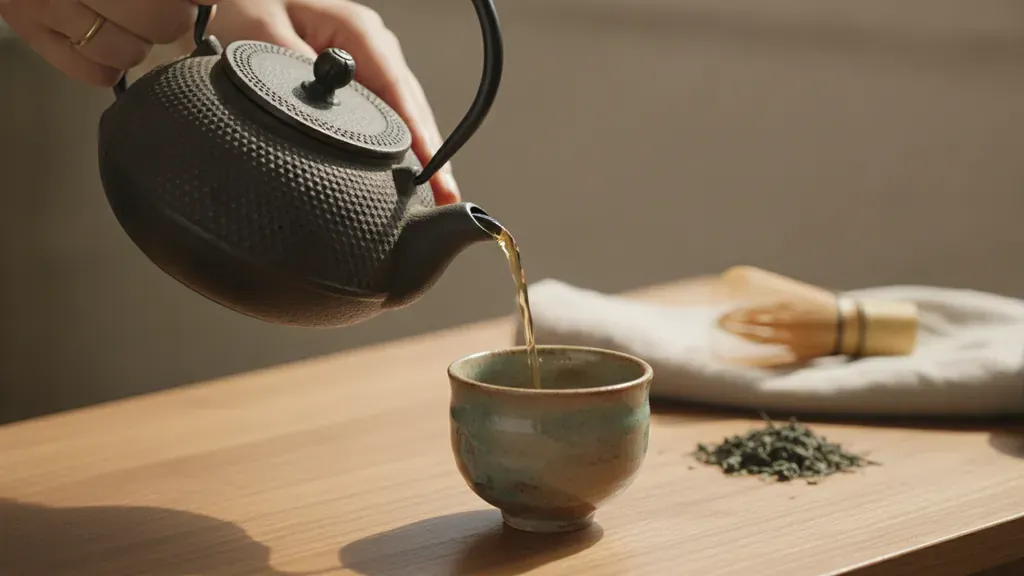
Texture and finish are part of the experience
The raised exterior pattern found on many cast iron teapots is both visual and tactile. It can make the vessel feel at home in a quiet Japanese tea setting, whether you are brewing for yourself or sharing a pot with guests. Look beyond decoration, though. A beautiful exterior cannot compensate for a lid that shifts, a spout that drips, or care instructions that do not match your routine.
For a broader look at handles, filters, and ceramic forms such as kyusu and houhin, read Sorate's Japanese teapot guide. The decision here is narrower: whether cast iron's weight and thermal character fit how you serve tea.
Which interior lining should you choose?
The interior lining is one of the most important details in a cast iron teapot. Many brew-only models use a smooth enamel lining that separates the tea and water from the iron body. A lining can make the interior easier to rinse, but it does not make the pot suitable for a burner. Direct heat can stress the lining and damage the vessel, so the maker's heating instructions always take priority.
Enamel-lined interiors suit brew-only use
An enamel-lined teapot is designed for a simple sequence: heat water in a separate kettle, add tea to the teapot, pour in the prepared water, steep, and serve. The lining is a protective surface, not an invitation to heat the pot directly. Avoid metal tools that could scratch it, and do not assume that a dark exterior means the interior is bare iron.
When shopping, look for clear wording such as "enamel-lined interior," "for brewing only," or "not for stovetop use." Product photographs can help, but a photo is not a care manual. If the listing leaves the interior or heat source unclear, contact the seller before buying.
Unlined interiors need exact maker guidance
Some cast iron vessels are made with an unlined interior, and their care can differ from that of an enamel-lined teapot. Do not transfer instructions from one pot to another. Follow the manufacturer or artisan's guidance for cleaning, drying, heat, and storage. This is especially important when a piece is described as a kettle, a tea-heating vessel, or a traditional tetsubin rather than a brew-only teapot.
Do not treat a bare iron interior as a promise about what the tea will gain. The useful buying question is whether the construction matches the job you want the vessel to perform and whether you can follow the care routine consistently.
How do you choose the right size and filter?
Choose capacity by the amount of tea you usually serve, not by the largest number on a product page. A personal ritual may call for a compact pot, while a shared table may need more volume. Compare the maker's stated capacity with the cups you use and remember that leaves need room to open. A pot that is too large can make a solo pour awkward, while a pot that is too small can force repeated refills.
Use this comparison before you buy
| Feature | Brew-only cast iron teapot | Purpose-built cast iron water kettle | Question to ask |
|---|---|---|---|
| Main job | Steep and serve tea | Heat water | What does the maker say this vessel is for? |
| Interior | Often enamel-lined | May use a different interior construction | What finish is inside? |
| Direct heat | Usually not permitted | Only when the maker explicitly approves it | Is stovetop or electric heating documented? |
| Care priority | Rinse, dry, and protect the lining | Follow the kettle's heating and drying instructions | What care steps are supplied with this exact model? |
Match the filter to the leaves you brew
Cast iron teapots may include a removable stainless steel basket, an integrated filter near the spout, or openings built into the pot. A removable basket is convenient if you want to lift the leaves out after brewing. An integrated filter keeps the interior visually simple but may be harder to inspect. Fine leaves can behave differently from large, rolled leaves, so look at the filter opening and the available interior space.
The filter should let you pour without a rush and should be easy to rinse. Check whether it can be removed for drying, whether it sits securely under the lid, and whether it leaves enough room for the leaves to expand. A good fit is more useful than a universal claim about one filter style.
How do you use a cast iron teapot safely?
Using a cast iron teapot is straightforward when you keep heating and steeping separate. Warm the vessel, add your leaves, pour in water heated in a separate kettle, steep according to the tea's guidance, and decant the finished tea. Keep the pot on a trivet or heat-safe surface while you serve.
- Read the instructions first. Confirm whether the interior is enamel-lined and whether the vessel is brew-only. If the instructions are missing, do not place the pot over direct heat.
- Warm the pot gently. Rinse or fill it briefly with warm water, then empty it. Avoid a sudden temperature change, especially if the pot is cold.
- Add the tea. Use the leaves and amount suited to the tea you are preparing. Leave enough room for the leaves to open and for water to circulate.
- Pour in prepared water. Heat the water in a separate kettle and follow a tea-specific brewing guide for temperature and time. Pour steadily without overfilling the pot.
- Steep, then decant fully. Pour the tea into cups or a serving pitcher when the steep is complete. Do not leave the leaves and finished infusion sitting in the pot for hours.
- Let the pot cool before care. Do not run cold water into a very hot vessel. Handle the lid and basket carefully, since they may remain warm after the body is emptied.
Never put a brew-only enamel-lined cast iron teapot on a stovetop, hot plate, open flame, or induction surface. The heat can damage the lining, exterior finish, handle, or base. If you want a vessel for heating water, choose a kettle that is explicitly built and labeled for that use.
Pair your teapot with Sorate Japanese green tea
How do you clean and care for a cast iron teapot?
Cast iron teapot care is mostly about removing moisture before it becomes a problem. Empty the pot soon after serving, rinse it with warm water, and dry every part completely. A clean, dry interior, lid, infuser, and spout are more important than a complicated cleaning product.
Follow this after-brewing routine
- Empty the leaves and remaining tea. Do not leave wet leaves or standing tea in the pot overnight.
- Rinse with warm water. Swirl gently and rinse away loose residue. Unless the maker says otherwise, skip soap because it can leave an odor and may not suit the interior finish.
- Clean the infuser separately. Lift out a removable basket, rinse it, and check the mesh for trapped leaves. Do not force a tool against an enamel surface.
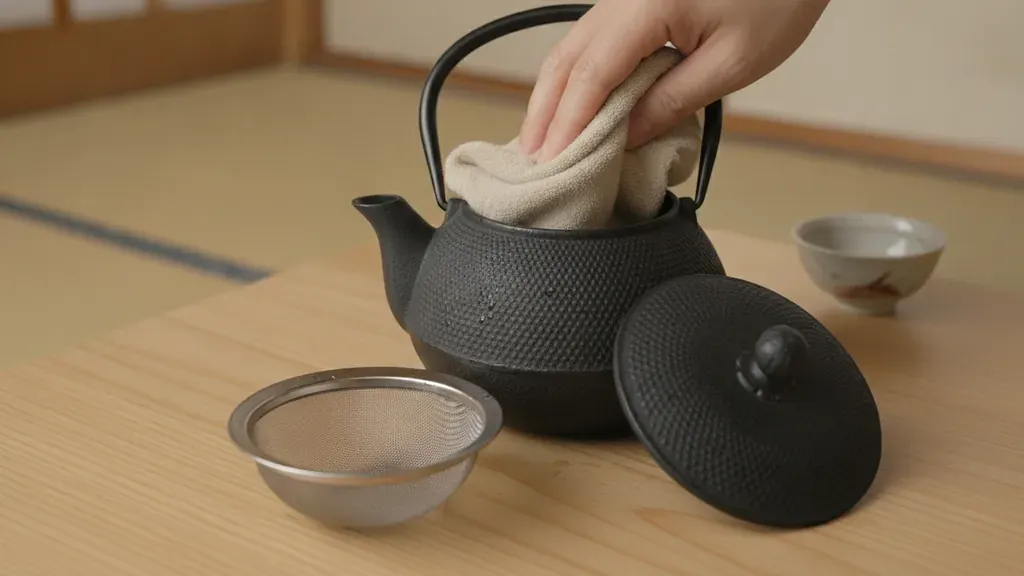
- Dry the interior. Turn the pot upside down briefly, then wipe reachable moisture with a soft, clean cloth. Leave the lid off so air can circulate.
- Dry the lid and exterior. Water can collect under the lid, around the handle fittings, and near the base. Wipe those areas before storing the pot.
- Store it open and dry. Do not seal the lid on a damp pot or store it in a closed cabinet while moisture remains inside.
Do not place a cast iron teapot in a dishwasher, soak it for a long time, or scrub it with abrasive pads. Avoid sudden temperature changes, which can stress a hot vessel and its lining. If the maker supplies different instructions for the exact model, use those instructions instead of a general routine.
The Canadian Conservation Institute notes that water films and humid conditions accelerate corrosion on iron objects. A household teapot is not a museum artifact, but the same practical principle applies: reduce lingering moisture and inspect the surface regularly. Read the Canadian Conservation Institute note on caring for iron for general corrosion context.
What should you do if rust appears?
First, stop and identify where the rust is. A small spot on an exterior surface is different from flaking material, orange powder, a damaged enamel lining, or corrosion inside the part that touches tea. Do not scrape aggressively or apply an unverified repair before checking the maker's instructions. A rough fix can damage the finish and make the condition harder to assess.
For light exterior spotting, contact the maker or seller for model-specific advice. If rust is inside an enamel-lined teapot, if the enamel is cracked or lifting, or if the pot sheds powder, stop using it for tea until a qualified source tells you whether it can be repaired safely. Replacement may be the more responsible choice when the lining or structure is compromised.
Prevention is simpler than recovery. Empty the pot promptly, rinse gently, dry all surfaces, keep the lid off during storage, and avoid leaving the pot in a humid or sealed space. Inspect the base, lid edge, spout, handle fittings, and infuser instead of looking only at the main body.
A simple cast iron teapot buying checklist
Before adding a cast iron teapot to your tea table, use this checklist:
- Purpose: Confirm that the piece is for steeping tea, or choose a separately labeled kettle if you need direct heat.
- Interior: Check whether it is enamel-lined and read the exact care instructions.
- Capacity: Match the stated volume to your usual cups and serving pattern.
- Filter: Choose a basket or built-in filter that suits the leaves you brew and that you can rinse easily.
- Balance: Look for a secure lid, comfortable handle, stable base, and controlled spout.
- Care space: Make sure you have a dry place to store the pot with its lid off.
- Tea match: Choose the teas you enjoy, then adjust leaf amount, water, and time using a tea-specific guide.
A cast iron teapot is at its best when its physical character supports your routine rather than complicates it. If you are building a considered tea table, browse Sorate's tea accessories and explore Japanese green teas to pair with your vessel.
Find accessories for a thoughtful tea ritual
Frequently asked questions
What is a cast iron teapot?
A cast iron teapot is a heavy vessel used to steep and serve tea. Many modern models have an enamel-lined interior and are designed for brew-only use. They should receive water heated in a separate kettle unless the maker explicitly says the pot is safe for direct heat.
Can a cast iron teapot go on the stove?
Usually not. A brew-only cast iron teapot, especially one with an enamel-lined interior, should not go on a stove, hot plate, open flame, or induction surface. Use a separate kettle for heating water. Only heat a cast iron vessel directly when its instructions clearly identify it as a purpose-built kettle.
How do you use a cast iron teapot?
Warm the pot, add tea leaves, pour in water heated separately, steep according to the tea's instructions, and decant the finished tea fully. Keep the pot on a heat-safe surface while serving, then empty and rinse it after the session.
How do you clean a cast iron teapot?
Empty the leaves and tea, rinse the pot with warm water, clean the infuser separately, and dry the interior, lid, and exterior completely. Unless the maker says otherwise, avoid soap, abrasive pads, soaking, and the dishwasher. Store the pot with the lid off while it finishes drying.
How do you prevent a cast iron teapot from rusting?
Keep moisture from lingering. Empty the pot promptly, rinse it gently, dry every part, and store it open in a dry place. If rust, flaking, a damaged lining, or powder appears, stop using the pot and ask the maker for model-specific guidance.
Is cast iron good for a teapot?
Cast iron can be a good choice if you enjoy a weighty vessel that retains warmth and you are comfortable with careful drying. It is not the best fit for every routine. Compare weight, capacity, lining, filter design, and care instructions before choosing.
How do you choose the right cast iron teapot size?
Choose a capacity that matches the number of cups you usually pour, with room for leaves and a comfortable lift when full. A smaller pot can suit a personal session, while a larger one can make shared serving easier. Use the maker's stated capacity rather than a category assumption.
The right cast iron teapot should make tea feel more settled, not more complicated. Choose a vessel with a clear purpose, use prepared water, and make complete drying part of the ritual. With those habits in place, its warmth, weight, and quiet texture can earn a lasting place on your tea table.


