


Why Is My Matcha Clumpy? 7 Fixes That Work
If you are asking, "why is my matcha clumpy," the powder is usually reacting to moisture, compaction, or the way liquid is introduced. Matcha is exceptionally fine, so its particles can gather during storage and shipping. A damp spoon, skipped sifting, or a full pour of water all at once can turn those small clusters into stubborn lumps.
Shop House Matcha for your next smooth bowl
The reliable fix is a sequence, not a single magic tool: keep the powder and equipment dry. Sift matcha into the bowl, work a small amount of water into a smooth paste, then add the rest gradually. Finish with a brisk W-shaped motion from a bamboo whisk rather than a slow circular stir.
If you are making a latte, smooth the matcha before adding milk. Lumps are harder to break apart once they are dispersed in a larger drink. Below, I will trace the most common causes and walk through seven practical fixes. The goal is not a flawless bowl by force. It is a calmer, more repeatable preparation that lets the powder become evenly suspended.
Why Is My Matcha Clumpy? Start With the Powder
Short answer: Matcha clumps most often start with compacted powder, moisture, or uneven contact with water. Check the powder before brewing, keep the bowl and tools dry, and use sifting to separate loose clusters. This first diagnosis tells you whether to change storage, preparation, or whisking technique.
Clumps often begin before the whisk touches the bowl. Matcha is a finely milled powder, and very small particles can compact against one another. That is why a fresh scoop may fall in a soft mound instead of scattering freely. Fine particles also respond quickly to moisture. A container opened in a humid kitchen, a lid left loose, or condensation introduced by a cold storage spot can give the powder enough dampness to bind.
Static and friction from milling can contribute to how the powder gathers, too. This is a texture and handling issue, not a simple quality test. Clumps do not automatically mean that matcha is good or bad. Instead, look at what happens when you press a little powder through a dry, fine-mesh sifter. Loose clusters that separate easily are usually a preparation problem. Hard, damp-looking spots suggest that the powder has absorbed moisture and needs closer attention to storage.
Next, check the tools. A wet bamboo scoop, damp teaspoon, or bowl with water droplets can make powder stick immediately. Even a whisk that was rinsed but not drained can transfer moisture into the mix. The result may look like small beads on the surface or paste stuck to the bowl before whisking begins.
Clumpy powder versus clumpy preparation
There is also a difference between dry clumps and a drink that feels grainy. Dry clumps are visible before water is added. Preparation clumps form when the liquid hits the powder unevenly. If you pour a large amount of water onto a compact mound, the outside can wet first while the center stays dry. Slow stirring may move the wet outside around without breaking the center apart.
That distinction makes troubleshooting easier. If the powder is compact, start with storage and sifting. If it is smooth before water but lumpy after the pour, change the slurry step. If it is evenly mixed but still feels coarse, inspect the powder itself and your whisking motion rather than simply adding more water. The seven fixes below follow that order, so you can change one variable at a time.
| What you notice | Likely cause | First adjustment |
|---|---|---|
| Clumps before water. | Compaction or moisture exposure. | Sift and review storage. |
| Clumps after a full pour. | Powder was wetted unevenly. | Make a small slurry first. |
| Clumps during whisking. | Slow motion or damp tools. | Use dry tools and brisk W strokes. |
Fix 1: Sift Matcha Before Water Touches It
Quick fix: Sift matcha through a clean, dry fine-mesh strainer before adding any water. This separates compacted particles while they are still dry, so the whisk does not have to break apart a wet ball. A gentle tap is usually enough. If hard pieces resist the mesh, inspect storage and moisture exposure instead of forcing them through.
Sifting is the simplest way to stop small dry clusters from becoming wet lumps. Place a clean, dry fine-mesh strainer over the bowl. Add the measured matcha, then press or tap it through with a dry scoop. The powder should land as a loose, even layer rather than a compressed pile.
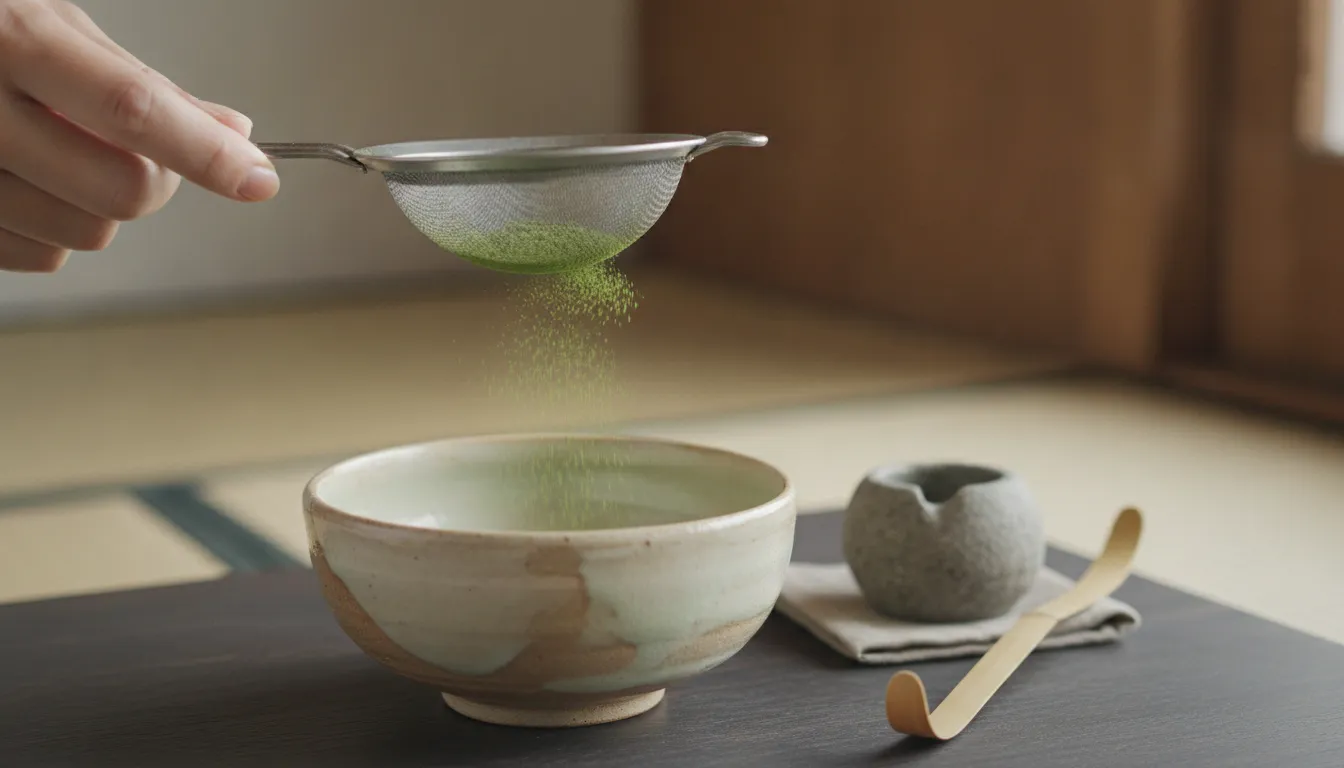
Do not force large, hard pieces through the mesh with excessive pressure. Break them gently against the screen, or set them aside and inspect the powder. A little tapping is enough for normal compacting. The point is to separate the particles before they meet water, not to grind the powder again.
Sift directly into the bowl you will use. Moving the powder between containers creates another opportunity for it to collect on a damp surface. Make sure the bowl is fully dry, especially if it was rinsed just before preparation. A wide bowl gives the whisk room to move and makes it easier to see whether the first paste is smooth.
When to sift twice
One pass handles most everyday clumps. A second light pass can help if the container has been open in humid weather or if the powder looks visibly compacted. Keep the motion gentle. If the matcha resists the strainer, do not assume more force is the answer. Moisture may be the underlying issue, so the better long-term fix is a tighter lid and a drier storage routine.
Sifting will not replace good whisking, but it removes the first obstacle. Once the powder is loose. You can add a small amount of water and work it into a paste instead of trying to dissolve a dry ball in a full bowl. If you want the complete fundamentals, the guide to proper matcha whisking technique covers the wider preparation sequence. This article stays focused on what to inspect when that sequence produces clumps.
Fixes 2 and 3: Build a Smooth Slurry and Add Water Gradually
Quick fix: Start with a small amount of water and whisk it into a smooth slurry before adding the rest. The concentrated paste lets you find and break up dry pockets while you can still see them. Once the slurry is even, pour gradually and keep the whisk moving. This sequence is the most reliable response to clumps that appear after water hits the powder.
After sifting, resist the urge to cover the powder with the full amount of water. Begin with a small splash. The exact amount depends on how much matcha you are preparing, but it should be enough to moisten the powder without flooding it. Use the whisk to press and blend until the mixture resembles a smooth, thin paste.
This slurry stage gives every particle a chance to hydrate evenly. If you add all the water at once, a dry pocket can hide inside a wet shell. A spoon or slow stir may move that shell around the bowl without reaching the center. By contrast, a small initial amount lets you see and work out the lumps before the mixture becomes thin.
How to rescue the bowl during the first pour
If you have already added too much water, pause before adding anything else. Tilt the bowl slightly and use the whisk to press visible lumps against the bottom with light, controlled contact. Then whisk across the surface in short strokes. Do not scrape aggressively against the bowl. The aim is to disperse the clumps while preserving the whisk and the bowl.
Once the slurry looks even, add the remaining water in a controlled pour. Keep the whisk moving as the liquid level rises. This is especially useful for a latte. Prepare a smooth, concentrated matcha base first, then combine it with milk. Do not expect milk to dissolve a dry cluster that was never mixed into water.
Why a paste is different from a thick, dry ball
A good slurry is fluid enough to move under the whisk. A dry ball resists the tines and rolls around the bowl. If the mixture is too thick to move, add a few drops of warm water and continue working it. If it is already thin but still dotted with lumps, return to shorter, faster strokes instead of pouring more liquid.
This two-stage method also makes the process easier to diagnose. A smooth slurry means your powder and water are cooperating. If it will not become smooth, check whether the tools were damp, whether the matcha was stored with moisture exposure, and whether the initial powder was sifted. Change one variable at a time so you know which adjustment helped.
Fixes 4 and 5: Whisk in the Right Motion and Use the Right Temperature
Quick fix: Whisk the slurry with short, brisk W or M strokes, using hot water that is not boiling. Keep the whisk near the surface and use a light touch. Fast lateral movement separates the mixture more effectively than slow circles, while a consistent water temperature helps you compare one preparation with the next.
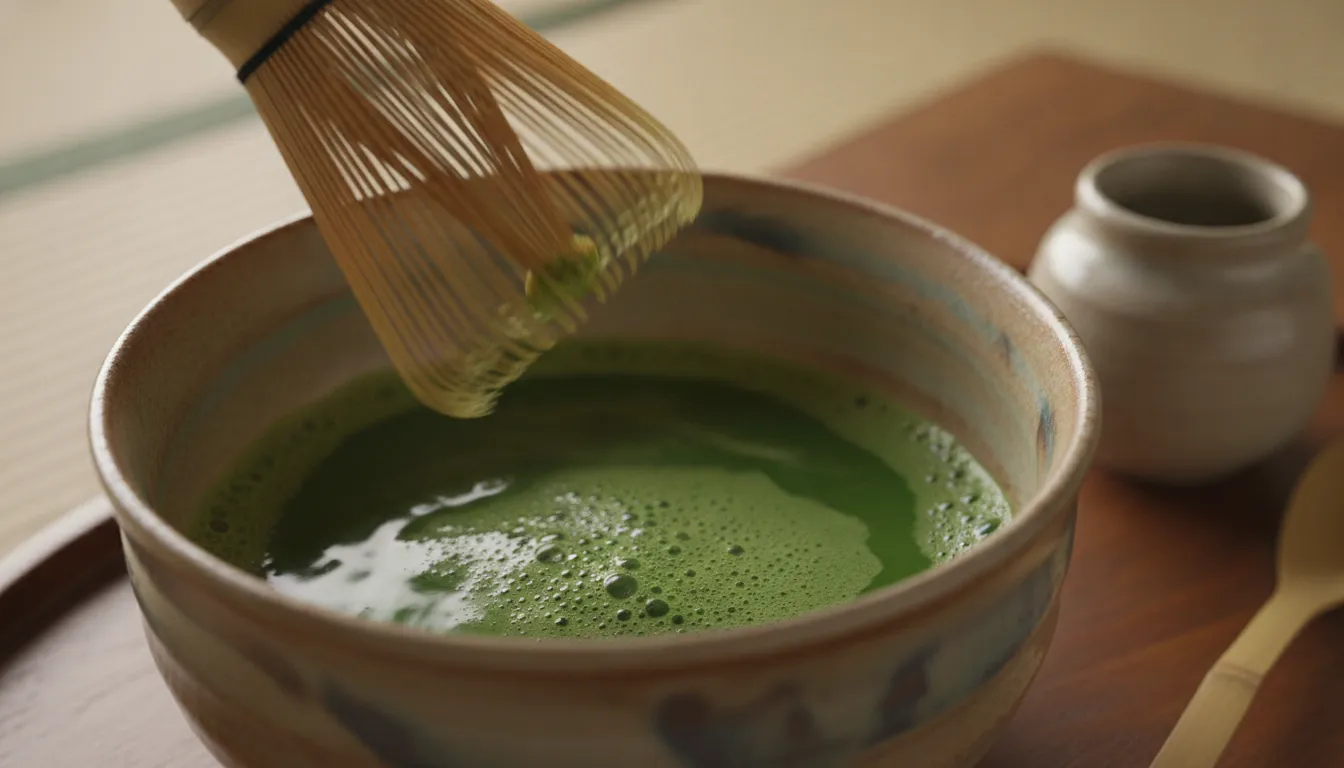
Matcha does not become smooth through a leisurely stir. Once the slurry is ready, use a bamboo whisk to move briskly from side to side in a W or M pattern. Keep the whisk close to the surface and let the fine tines separate the mixture. Small, quick strokes are more useful here than a wide circular motion that simply pushes the liquid around the bowl.
The whisk should move freely without being pressed hard into the ceramic. A light touch protects the whisk and helps create an even suspension. Continue until you no longer see dry specks or obvious lumps. A smooth surface with a delicate layer of foam is a practical visual cue, but do not chase foam at the expense of texture.
What water temperature changes
Use hot water that is not boiling. Water that is too aggressive can make the preparation harder to enjoy, while water that is too cool may make the powder feel less cooperative. Temperature is not a guarantee against clumps, but it is a useful variable when your method is otherwise consistent. If you are troubleshooting, use the same measured amount of matcha and water each time while adjusting temperature gradually.
For a focused troubleshooting test, prepare one bowl with sifted powder, a smooth slurry, and hot but not boiling water. Whisk with short W-shaped strokes. If that bowl is smooth, your earlier issue was likely the order of operations rather than the product. If it is still lumpy, inspect storage and tools next.
When a whisk is not the problem
A bamboo whisk can improve incorporation, but no tool can compensate for damp powder or a skipped slurry. Likewise, switching to a different grade does not guarantee a clump-free result. Technique matters because matcha remains suspended in the water rather than dissolving like sugar. Give the whisk a clean, dry starting point, then let its motion do the separating.
Fixes 6 and 7: Dry Your Tools and Store Matcha Well
Quick fix: Dry the bowl, scoop, strainer, and whisk before measuring matcha, then close the container tightly after use. Keep the powder away from steam, heat, and direct light. When clumps keep returning, moisture is a better place to investigate than the grade or brand alone. A dry setup creates a consistent baseline for every other technique.
One unnoticed drop of water can create a stubborn patch. Before measuring, check the scoop, strainer, bowl, and whisk. A bowl can look dry while a small bead remains in its curve. A strainer can hold moisture around the rim. Set each tool out early enough to air-dry, then touch the working surfaces with a clean, dry cloth if needed.
Keep wet tools away from the matcha container. Measure with a dry scoop, close the container promptly, and avoid reaching into the powder after handling water. If you prepare matcha beside a kettle, arrange the dry tools first and pour second. That small change keeps the workflow from introducing moisture at the moment it matters most.
Lay out the dry bowl, scoop, strainer, and whisk before you begin. This simple setup keeps moisture away from the powder and makes the troubleshooting sequence easier to repeat.
Protect the powder from humidity
Close the container tightly after every use and store it away from heat, steam, and direct light. A cool, dry cupboard is often more practical than a shelf beside the kettle or stovetop. If you use a refrigerator, avoid opening a cold container in a warm, humid room where condensation can form. Letting the sealed container come to room temperature before opening can reduce that risk.
Do not store matcha in a loose pouch or leave the lid ajar while you prepare another drink. Fine powder can compact over time when exposed to the surrounding air. If the powder has developed hard, damp spots, sift what remains and pay close attention to the next opening and closing cycle. A better seal may solve the recurring problem.
Equipment as a troubleshooting clue
If the same clumps appear only with one bowl or spoon, inspect that tool first. A smooth, dry bowl and a clean fine-mesh strainer provide a more consistent baseline. If you need a bamboo whisk for the process, Sorate's high-quality bamboo whisk is a relevant equipment option. The tool supports the motion, but the sequence still matters: dry tools, sifted powder, small slurry, then gradual water.
What If Matcha Is Still Clumpy After Sifting and Whisking?
Reset the process: If matcha is still clumpy, change one variable at a time. Examine the dry powder, confirm that every tool is dry, repeat the small-slurry step, and watch the texture before adding more water. This method separates storage problems from pouring and whisking problems, so you can correct the cause instead of endlessly changing equipment.
Run a simple reset instead of changing everything at once. First, examine the dry powder. Does it sift easily, or are there hard pieces that resist the mesh? Next, inspect every surface that touches the powder. Is the scoop dry? Is the bowl free of droplets? Then repeat the slurry method with a small amount of hot, non-boiling water. Watch the mixture before adding more.
- Clumps before water: focus on moisture exposure, storage, and sifting.
- Clumps immediately after the pour: use less initial water and build a smooth paste.
- Clumps that break apart with whisking: keep the brisk W or M motion and avoid slow stirring.
- Graininess after visible clumps are gone: check the powder and preparation variables rather than adding unlimited water.
- Lumps only in a latte: make the matcha slurry separately before combining it with milk.
A little settling at the bottom is not always the same as a dry clump. Matcha is suspended in water, so some movement in the bowl is expected. If the texture improves when you swirl or whisk briefly, the issue may be settling rather than a preparation failure. If large pieces remain, return to the earlier steps.
Also remember that a clumpy bowl is not a reason to make dramatic claims about quality. Fine powders can gather for ordinary physical reasons, and even careful preparation may need a small adjustment. Keep notes on the powder's storage location, the dryness of your tools, the order of the pour, and the whisk motion. That short record can reveal a pattern after two or three bowls.
For a different preparation, you can apply the same principle to a smooth iced matcha latte: make the base smooth first, then add the remaining ingredients. The troubleshooting guide is deliberately narrower than a general beginner recipe. It is here for the moment when your usual routine produces an unexpected texture.
Shop House Matcha and practice a smoother preparation
Frequently Asked Questions About Clumpy Matcha
Why is my matcha clumpy?
Matcha can clump because its fine particles compact during storage, attract moisture, or gather on a damp spoon, bowl, or strainer. Skipping the sifting step and adding a large amount of water at once can make those dry clusters harder to break apart. Sift into a dry bowl, make a small slurry first, then add the remaining water gradually while whisking briskly.
Are matcha clumps a sign of low quality?
Not by themselves. Clumps are often a handling or preparation issue, so their presence does not prove that matcha is low quality or exceptionally high quality. Look at the texture of the dry powder, how easily it passes through a fine mesh. And whether it becomes smooth when you use a dry bowl, a small slurry, and a consistent whisking motion.
How can I prevent matcha from clumping?
Use seven habits together. Store the powder tightly sealed away from moisture and keep every tool dry. Sift before adding water. Begin with a small splash and work a smooth slurry. Add the rest gradually and whisk in a fast W or M motion. This sequence removes the most common points where dry powder gathers or becomes unevenly wet.
Can I fix clumpy matcha after it is already in a latte?
It is easier to prevent the problem than to correct it after milk has been added. If the latte is already made, try a brief whisk or a fine strainer if the drink format allows it. For the next preparation, whisk the matcha with a small amount of water until smooth, then add milk. A smooth base gives you more control than trying to disperse dry clumps in the finished drink.
How should I store matcha to avoid clumping?
Keep matcha in a tightly sealed container away from steam, heat, and direct light. Avoid leaving it open while you prepare a drink, and be mindful of condensation if you move a cold container into a humid kitchen. A dry, consistent storage routine helps the powder stay loose and makes the sifting step more effective.
A smoother bowl usually comes from a few quiet details: dry tools, sifted powder, a small slurry, gradual water, and brisk whisking. Once those steps become part of your routine, clumps are easier to diagnose and less likely to interrupt the ritual.
Choose a matcha you enjoy, prepare it patiently, and adjust one variable at a time. Explore Sorate House Matcha for your next bowl.


