


A smooth, frothy bowl of matcha requires more than pouring hot water over green powder. Authentic preparation depends on specific tools and a rhythmic whisking technique that honors centuries of Japanese tea tradition.
Learning how to make matcha begins with sifting one teaspoon of fine powder into a wide bowl, then adding 60-80 ml of water heated to 80 degrees Celsius. Whisk in a quick zig-zag motion until a creamy froth forms. This process produces a smooth, umami-rich bowl of usucha.
Ready to make your first bowl? Shop Sorate's traditional matcha tools to get started.
How To Make Matcha: What Tools Do You Need to Make Matcha at Home?
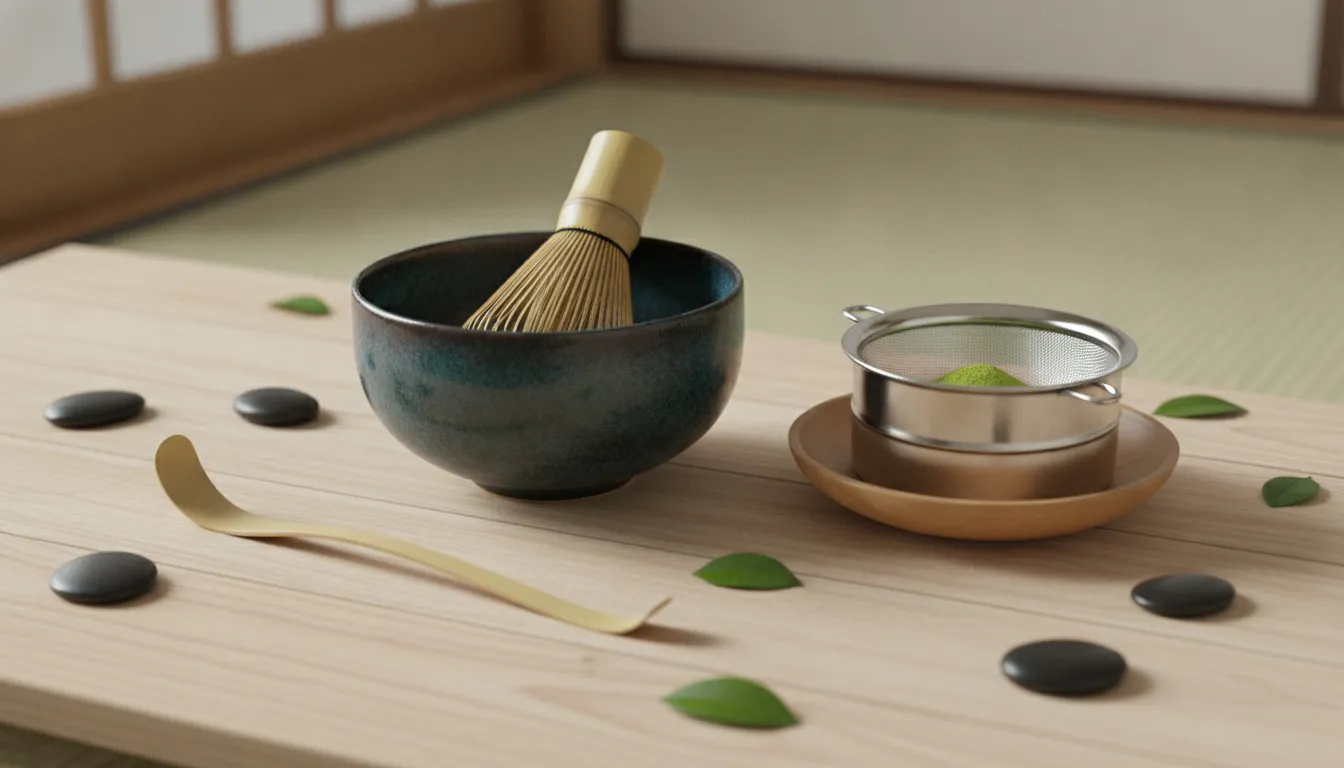
Making traditional usucha requires four essential tools: a chawan (wide tea bowl), a chasen (bamboo whisk), a chashaku (bamboo scoop), and a fine-mesh sifter. Each tool serves a specific purpose in creating a smooth, frothy bowl.
To make a real bowl of matcha, you need a few specialized tools rooted in the Japanese tea ritual. Each item has a clear function that helps you achieve the best taste and texture. Using the right equipment makes it much easier to learn how to make matcha at home.
Traditional tea tools
The two most vital items for usucha are the bamboo whisk and the bamboo scoop. A chasen is carved from a single piece of bamboo and features dozens of fine prongs that aerate the powder into suspension. A chashaku is a slender bamboo scoop calibrated to deliver a consistent serving of matcha for each bowl. Research confirms that preparation techniques, including tool selection and water temperature, directly affect the extraction of tea compounds during whisking.
Setting up your space
- The Chawan (Tea Bowl): This wide bowl gives you room to move the whisk without splashing. A traditional chawan from Sorate's accessories collection provides the ideal shape for whisking.
- The Chasen (Bamboo Whisk): This tool creates the creamy froth on top of your bowl. Its thin prongs break up clumps of powder as you whisk. Soak the tips in warm water before use to make the bamboo pliable.
- The Chashaku (Bamboo Scoop): Use this scoop to measure your matcha. Two heaping scoops deliver approximately one teaspoon, the standard serving for a single bowl of usucha.
- The Furui (Sifter): A fine-mesh sifter removes lumps before whisking. Matcha is an extremely fine powder that clumps during storage due to static and moisture. Sifting first makes whisking faster and produces a smoother drink.
Step 1: Sift Your Matcha Powder
Sifting matcha through a fine-mesh strainer removes clumps formed during storage. This step ensures the powder disperses evenly in water rather than forming dry lumps that ruin the texture of the finished bowl.
The first step in your ritual is to sift the powder. This simple act ensures your drink is smooth and free of dry clumps that resist whisking. Fine matcha powder naturally clumps in the tin due to static electricity and ambient moisture, and these clumps will not dissolve even with vigorous whisking. Sifting breaks them apart before water is added, ensuring the powder forms a stable suspension rather than sinking to the bottom.
The sifting process
- Place a fine-mesh strainer over your chawan. Ensure it sits securely.
- Measure your matcha using the bamboo scoop. For the correct proportions, refer to our matcha ratio guide.
- Gently tap the side of the strainer or use the scoop to push the powder through the mesh. The powder should fall as a fine, uniform dust into the bowl below.
Once the powder is sifted, you are ready for water. The temperature of that water is equally critical, as it determines whether the final flavor is sweet or bitter. Research shows that water temperature significantly affects how the tea releases its characteristic compounds during infusion.
Step 2: What Is the Right Water Temperature for Matcha?
The ideal water temperature for usucha is 175 degrees Fahrenheit (80 degrees Celsius). Water that is too hot scorches the delicate powder and produces a sharp, bitter taste, while cooler water fails to fully suspend the powder.
Water temperature is the most critical variable in a balanced bowl of matcha. Boiling water will burn the fine powder, releasing excessive bitterness and destroying the subtle sweetness that defines quality usucha. Water that is too cool, on the other hand, will not properly suspend the powder, leading to a thin, grainy texture. Scientific studies confirm that water temperature impacts tea quality more significantly than brewing duration.
The optimal temperature range
Heat your water to 175 degrees F (80 degrees C). This temperature is low enough to preserve the tea's natural sweetness and umami but warm enough to help the powder disperse evenly during whisking. If you lack a temperature-controlled kettle, bring water to a rolling boil, then let it rest for two minutes before pouring. This resting period allows the temperature to drop into the ideal range.
Water-to-matcha ratio
For usucha, the standard ratio is one teaspoon (approximately two grams) of matcha to 60-80 ml (two to three ounces) of water. This concentrated ratio allows the whisk to aerate the mixture effectively. Our matcha ratio guide provides detailed proportions for different serving styles.
Why water quality matters
Use soft, filtered water for the best results. Hard water contains minerals that can suppress the tea's delicate flavor and produce a flat, metallic taste. Since matcha's appeal lies in its layered notes of sweetness and umami, starting with clean water makes a measurable difference in the final cup.
Step 3: Whisk with an M or W Motion
The whisking step transforms matcha powder and water into a smooth suspension. Unlike steeped teas, matcha is consumed as a suspension of finely ground leaves in water, so proper whisking is essential for both texture and flavor delivery.
Whisking is where the powder and water become a unified, airy drink. Unlike teas that are steeped and strained, matcha remains suspended in the water as a fine emulsion. Because the leaf particles do not dissolve, the whisking technique directly determines the mouthfeel and froth quality of the final bowl.
How to use your wrist
Keep your upper arm and shoulder still while moving only your wrist. Using the whole arm creates fatigue and produces thin, flat foam. A light, fast wrist motion generates the thick crema that distinguishes a well-made bowl. The difference between usucha and koicha begins with how much air you incorporate during this step.
Master the zig-zag pattern
The most common beginner mistake is stirring the matcha in a circle. A circular motion fails to introduce the air needed for proper frothing. Instead, whisk in a zig-zag pattern that traces the letter M or W. This back-and-forth motion cuts through the liquid and pulls in air efficiently.
- Place the whisk: Set the chasen in the bowl so the prongs touch the bottom.
- Slow start: Gently stir to form a smooth paste from the powder and water.
- Increase speed: Lift the whisk slightly and begin the fast M-shaped motion.
- Wrist check: Keep your arm relaxed and let your wrist generate the speed.
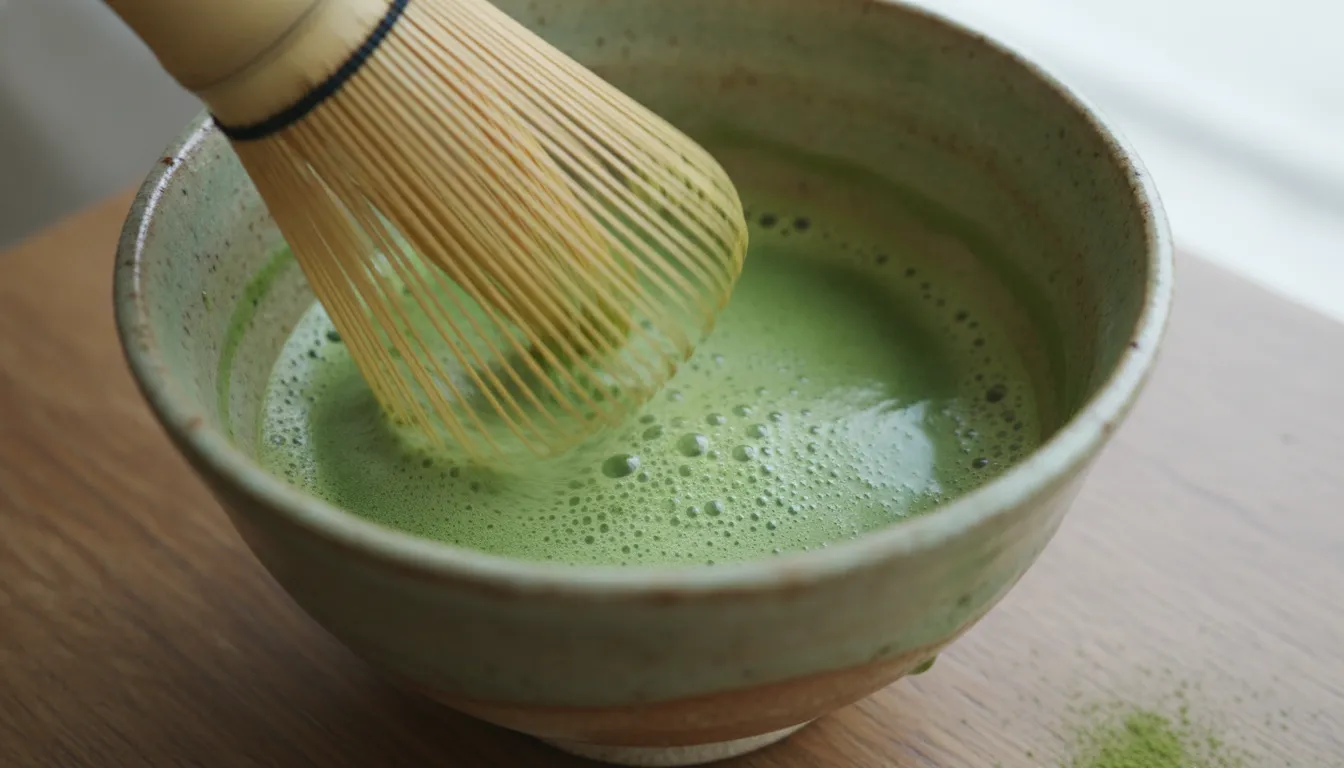
- Visual cue: Whisk until a fine, creamy froth covers the entire surface.
- Finish: Slow down and lift the whisk from the center, leaving a small peak of foam.
The finished froth should resemble the microfoam on a latte, with tiny, uniform bubbles rather than large, uneven ones.
Common Matcha Mistakes and How to Fix Them
The most frequent matcha mistakes are skipping the sifting step, using water that is too hot. Whisking in circles instead of a zig-zag, and using the wrong grade of matcha powder. Each has a simple correction.
Even experienced practitioners encounter issues when learning how to make matcha. Recognizing these common pitfalls will help you produce a consistently smooth, sweet bowl.
Fixing lumps and bitter notes
Lumps are the most frequent complaint from beginners. They form when unsifted powder meets water and the dry clumps resist dispersion. Sifting through a fine-mesh strainer before adding water solves this completely. Bitterness, meanwhile, is almost always a temperature problem. Water above 80 degrees C (175 degrees F) scorches the leaf particles and releases bitter compounds. Research on green tea infusions confirms that water temperature directly shapes the flavor profile and compound extraction.
Learning the whisk and ratio
Do not stir the tea in circles. Use a quick zig-zag motion for 20-30 seconds until you see small, uniform bubbles across the surface. If the foam looks rough or uneven, you may be whisking too slowly or using too wide a motion. The powder-to-water ratio also matters: too much water produces a thin, weak brew. Our matcha ratio guide provides the exact proportions for a balanced bowl.
Caring for your tools and tea
Rinse your bamboo whisk in warm water before use to soften the prongs. After each session, rinse it again and let it dry on a whisk stand to preserve its shape. Avoid pressing the whisk hard against the bowl, as excessive force can snap the delicate tines. Store matcha powder in a cool, dark place away from light and air. And aim to use it within two months of opening for the freshest flavor and brightest color.
What Is the Best Matcha for Beginners?
Ceremonial-grade matcha is the best choice for beginners making traditional usucha. It has a smooth, sweet flavor profile with pronounced umami, a vibrant green color, and a fine texture that whiskes into a creamy froth without effort.
Choosing the right matcha is the foundation of a successful first bowl. The grade you select directly determines the taste, color, texture, and froth quality of your drink. Many newcomers feel overwhelmed by the options, but understanding the basic categories makes the decision straightforward.
Ceremonial grade versus culinary grade
Matcha is broadly divided into two categories. Ceremonial grade is crafted for drinking as tea. It is made from the youngest tender leaves, stone-ground to an ultra-fine powder, and has a naturally sweet, umami-rich flavor with minimal astringency. Culinary grade is designed for cooking, baking, and blending into lattes or smoothies. It has a coarser grind, a more bitter taste, and produces minimal foam.
| Feature | Ceremonial Grade | Culinary Grade |
|---|---|---|
| Best use | Traditional usucha (drinking with water) | Baking, smoothies, lattes |
| Flavor | Smooth, sweet, umami-rich | Bold, bitter, astringent |
| Color | Vibrant bright green | Duller yellow-green |
| Texture | Fine, silky powder | Coarser grind |
| Froth quality | Thick, creamy foam | Minimal foam |
Sorate's ceremonial-grade matcha collection features stone-ground matcha sourced directly from Uji, Kyoto, where the Yamamori family farm has cultivated tea for generations.
Color and texture signs
High-quality matcha should have a deep, vibrant green color indicating high chlorophyll content from proper shade cultivation. A dull or brownish hue signals age or poor processing. The texture should feel silky and fine, like baby powder. This fine grind is essential for proper suspension in water and contributes to the creamy mouthfeel.
The savory umami profile
Ceremonial-grade matcha delivers a distinct umami taste, a savory richness derived from L-theanine, an amino acid concentrated in shade-grown tea leaves. When you use the appropriate grade, you will notice a sweet finish rather than a sharp, bitter bite. For more detail on evaluating matcha, read our guide on how to choose high-quality matcha.
Ready to try ceremonial-grade matcha? Explore Sorate's matcha collection sourced from Uji, Kyoto.
Frequently Asked Questions
What water temperature should be used for matcha?
The best water temperature for traditional usucha is 175 degrees Fahrenheit (80 degrees Celsius). Using water that is too hot will scorch the delicate powder and produce a bitter taste. If you do not have a thermometer, let boiling water rest for two minutes before pouring.
How much matcha powder should I use for one cup?
A standard serving of usucha uses about one teaspoon (approximately two grams) of matcha for every two to three ounces of water. Using a traditional bamboo scoop ensures a consistent serving size for each bowl.
Do I need a bamboo whisk to make matcha?
While an electric milk frother can work in a pinch, a bamboo chasen is essential for authentic preparation. The many fine prongs break up lumps and introduce the air needed for a light, creamy foam that a spoon or stirrer cannot achieve.
Does matcha need to be sifted before making?
Yes, always sift your matcha through a fine-mesh strainer before adding water. Matcha is an extremely fine powder that forms clumps during storage due to static and moisture. Sifting ensures a smooth texture without dry lumps.
What is the best way to whisk matcha?
Use a quick zig-zag motion in the shape of the letter M or W, keeping your wrist loose and your arm still. Proper technique creates a stable, creamy foam. Avoid whisking too hard, as excessive force can damage the bamboo prongs over time.


