


tea kettle choice shapes more than how quickly water reaches a boil. For Japanese green tea, the right tool helps you heat, hold, and pour water with enough control to suit delicate leaves and your own pace.
A tea kettle heats water; a teapot holds the leaves and water while they steep. Choose a tea kettle for dependable heating and pouring, then use a separate teapot, kyusu, or brewing vessel to extract the tea. The best setup leaves room to adjust temperature, volume, and timing because sencha, gyokuro, hojicha, and matcha each call for a different approach.
From stovetop simplicity to electric temperature control, the details matter. Start by looking at the features that make a kettle useful for Japanese green tea, rather than assuming one style fits every ritual.
Explore Japanese tea accessories
What Makes a Tea Kettle Right for Japanese Green Tea?
A good tea kettle heats water; it does not steep the leaves. That distinction matters. The kettle prepares water, while a teapot, kyusu, or other brewing vessel holds the tea and controls contact between water and leaves. Choose the kettle around the teas you drink, the way you prepare them, and the pace you want the ritual to take.
Six details to consider before choosing
- Material: Stainless steel is a practical, neutral choice for everyday use. Glass can make the water level and heating process visible, while enamel or other finishes may appeal if the kettle will remain part of your serving space. Focus on durability, easy cleaning, and whether the material suits your cooktop or counter.
- Capacity: Match the volume to your usual session rather than buying the largest kettle available. A smaller household setup can favor less leftover water and a more direct routine. If you regularly serve several people, choose enough capacity to heat the required water without repeated cycles.
- Heat source: A stovetop kettle fits a kitchen where direct cooktop heating feels natural. An electric kettle can keep the process contained at the counter. Check compatibility with your cooktop and make sure the handle, lid, and controls feel secure in daily use.
- Temperature control: Japanese green teas do not all call for the same brewing conditions. Sencha, gyokuro, and other teas can respond differently to water temperature and steeping time. An adjustable kettle can make those changes easier. But a kettle without presets can still work when you use a thermometer or cool the water in a separate vessel.
- Pour control: Consider how steadily the spout delivers water. A controlled pour helps when you are filling a small teapot or dividing water between cups. A narrow spout may suit careful preparation, while a faster flow can be convenient for larger servings. The right choice is the one you can direct comfortably without splashing.
- Ritual fit: The best kettle should make preparation feel easier, not turn it into a search for settings. Look for controls you will actually use, a shape that feels balanced, and a design that supports a calm sequence from heating to pouring. Your equipment should leave attention for the aroma, color, and texture of the tea.
Think of the kettle as the beginning of the brewing process, not the brewing vessel itself. Once the water is ready, the teapot or other vessel determines how the leaves steep. For a considered home setup, browse Sorate's Japanese tea accessories alongside the tea you plan to prepare, then choose the kettle that supports your preferred pace and level of control.
Electric or Stovetop: Which Tea Kettle Fits Your Ritual?
The best heat source is the one that gives you the kind of attention and control your tea routine needs. Electric and stovetop kettles can both produce excellent brewing water, but they create different experiences around the cup. One favors repeatable settings and a quick start, while the other makes heat, timing, and movement part of the preparation.
Compare the daily experience
| Consideration | Electric tea kettle | Stovetop tea kettle |
|---|---|---|
| Control | Some models offer temperature presets or adjustable settings, which can make repeated brewing easier. | Heat is controlled through the cooktop and your timing. A separate thermometer can help when precision matters. |
| Speed | Often provides a straightforward, dedicated way to heat water without turning on the stove. | Heating time depends on the cooktop, kettle, water volume, and heat level. |
| Setup | Needs a nearby outlet and a clear, dry surface for the base. | Works wherever you have a compatible cooktop, with no separate electrical base. |
| Portability | Convenient in a kitchen or office with compatible power, but less flexible away from an outlet. | Useful in kitchens with a suitable heat source and easier to pack when the destination includes a cooktop. |
| Pouring | Many designs emphasize easy filling and pouring, though the spout shape varies widely. | Offers the same range of spout designs, with the added need to handle a hot kettle from the cooktop. |
| Ritual fit | Suited to a quiet, efficient routine and consistent repetition. | Suited to a slower ritual where watching the heat and handling the kettle are part of the experience. |
Choose an electric kettle if you brew at different temperatures, prepare tea throughout a busy day, or value a simple repeatable process. Temperature presets can be useful, but they should be treated as starting points. Different Japanese green teas respond to adjustments in water temperature and steeping time, so your palate remains the final guide.
A stovetop tea kettle may feel more natural if you already cook with gas, induction, or another compatible surface and enjoy staying close to the preparation. The visual and sensory cues of heating water can make the pause before pouring feel intentional. It also suits a shared tea table where the kettle is part of the setting rather than something stored away after use.
Neither option is automatically better. Consider where you brew, how often you change teas, how much control you want, and whether convenience or ceremony matters more at that moment. Then pair the kettle with Japanese green teas whose character gives you a reason to keep adjusting and observing.
How Kettle Material and Pouring Shape the Brew
The material of a tea kettle affects more than appearance. It can influence how quickly the kettle responds to heat, how clearly you can see the water, and how much attention the preparation asks of you. None of these materials is universally best. The right choice depends on your heat source, cleaning habits, serving style, and the teas you prepare most often.
Compare the feel of each kettle material
Stainless steel is a practical choice for many kitchens. It is generally durable, opaque, and easy to pair with either stovetop or electric designs. Because you cannot see the water directly, you rely on the kettle's sound, a temperature display, or a separate thermometer when precision matters. Its neutral appearance also suits a simple setup that can move between daily brewing and larger servings.
Glass makes the heating process visible. Watching the water warm can be useful when you are learning how quickly your kettle works. Although glass models may require more care around impact and sudden temperature changes. Their transparency can also make mineral buildup easier to notice, which is helpful if you keep a close cleaning routine.
Enamel combines a coated exterior with a more traditional visual character. It can bring a sense of ceremony to the counter and may suit someone who enjoys a slower, more tactile preparation ritual. The coating still deserves thoughtful handling, especially around chips, abrasive cleaning tools, and hard surfaces. Consider the kettle's construction and care instructions rather than assuming the material alone determines performance.
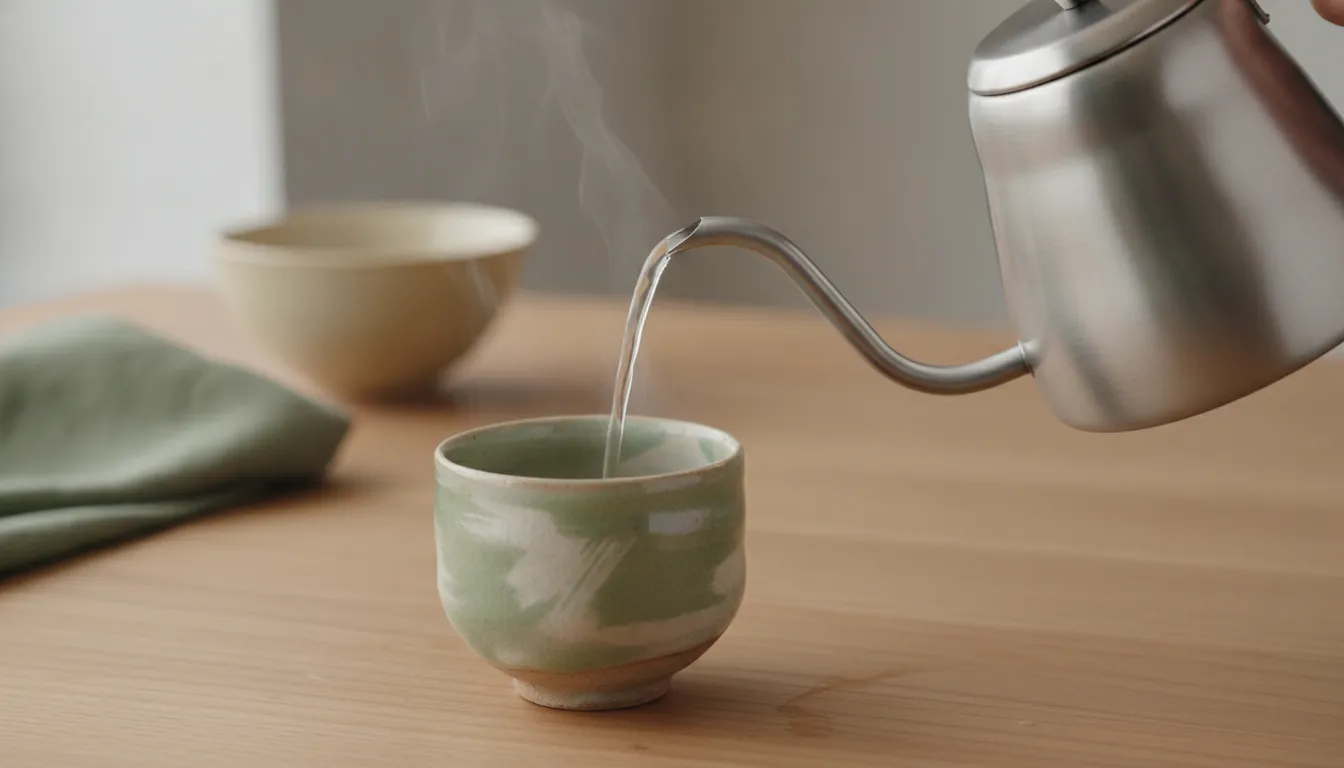
Pour control matters as much as the body
A broad spout can move water quickly into a larger pot or serving vessel. That may be convenient when speed and volume matter, but it can make a small cup harder to fill gently. A narrow or gooseneck-style spout gives you more control over the stream and can help you pour slowly, direct the water precisely, and divide it between multiple cups. It may also take longer to fill a vessel and can feel less convenient for casual, high-volume use.
For delicate Japanese green teas, controlled pouring can support a measured approach, especially when you are adjusting water, time, and temperature together. If matcha is part of your routine, you can pair that attention to preparation with premium matcha, while choosing a kettle based on the way you actually brew. Look for a comfortable handle, a stable base, and a spout that feels predictable in your hand. The best kettle is the one that makes careful preparation easier without turning every cup into a test.
What Capacity and Temperature Control Do You Need?
The right tea kettle should match the way you actually serve tea. A compact kettle can feel precise and efficient when you brew one or two cups. While a larger capacity makes sense when you prepare a pot for several people or refill a shared table. Capacity is not a quality ranking. It is a practical choice about how much water you heat, pour, and keep warm during a session.
Choose capacity by your serving pattern
For solo brewing, look for enough capacity to fill your brewing vessel and make a second infusion without repeatedly returning to the sink. If you usually brew for two, choose a size that covers both cups while leaving room for a measured pour. A household that hosts tastings may prefer more capacity, but a very large kettle can add weight and make controlled pouring less comfortable. The best tea kettle is the one you can lift, angle, and pour steadily.
Also consider your brewing vessels. A small kyusu or cup does not need the same volume as a table service. And heating more water than you need can make the routine feel less intentional. Think through a typical session before shopping: number of people, number of infusions, and whether you serve directly from the kettle or transfer water to a separate vessel.
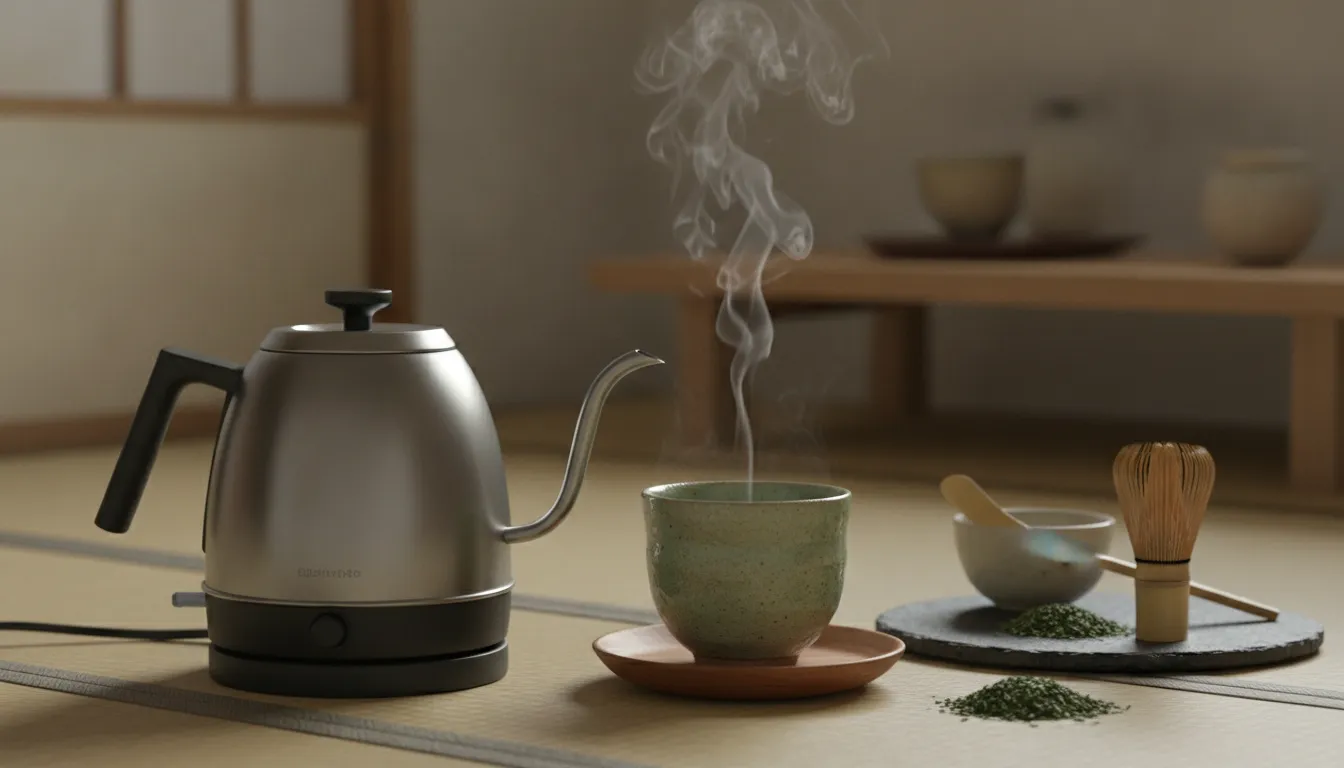
Adjust temperature for the tea and your palate
Temperature control is most useful when you brew several Japanese green teas. As a practical starting point, many green tea sessions fall somewhere around 160 to 176 F (70 to 80 C), but that is not a universal rule. Sencha, gyokuro, shaded teas, leaf size, steeping time, and personal taste can all change the setting you prefer. If a cup tastes too sharp, try slightly cooler water or a shorter steep. If it feels quiet or thin, a modest increase may bring more aroma and structure.
Gyokuro is often approached with lower-temperature water and a slower, more deliberate extraction than sencha. For a focused comparison, read Sorate's sencha water temperature guide and gyokuro brewing temperature guide. Sorate's broader tea brewing water and temperature guide can help you adjust water, time, and leaf together rather than treating the kettle setting as the only variable.
Choose a kettle with clear temperature adjustments if you want repeatability. If you enjoy observing the water and adapting by feel, a simple kettle can work well too. The goal is not to find one perfect number, but to make thoughtful adjustments that reveal what each tea offers.
How to Use a Tea Kettle as Part of a Japanese Tea Ritual
A tea kettle can do more than bring water to a boil. Used with attention, it gives you a measured beginning, a quiet pause, and greater control over the way each tea meets the cup. The goal is not to make preparation elaborate. It is to notice the small decisions that let the tea express its character.
A calm kettle-to-cup sequence
- Measure the water. Pour only as much fresh water as you expect to use, based on the number of cups and the vessel you will fill. Measuring first avoids unnecessary reheating and keeps the preparation focused. If you are serving more than one tea, begin with a clean kettle and fresh water so the flavors remain distinct.
- Heat the water with intention. Choose the kettle setting or stovetop heat that suits the tea rather than treating boiling water as a universal starting point. Japanese green teas vary in origin, processing, and style, so the right approach may change from one tea to the next.
- Pause and let the water cool. When the water reaches the needed heat, pause before pouring if the tea calls for a gentler temperature. Transfer the water to a cooling vessel or simply allow a short rest in the kettle, following the brewing guidance for that tea. This pause is part of the ritual, not wasted time.
- Pour steadily. Bring the kettle close enough to control the stream without rushing. Pour into the prepared teapot or cup in a smooth motion, distributing the water evenly. A controlled pour helps you repeat the preparation and keeps the movement quiet and deliberate.
- Observe while the tea brews. Notice the aroma, color, and changing texture as the leaves open. The kettle has already done its part, but this pause connects heat, time, and the tea itself. For a deeper look at the tools that support this practice, explore these Japanese tea ceremony tools.
- Serve and adjust. Taste the tea before deciding what to change. If it seems too sharp, flat, or delicate, adjust the water temperature, amount, or steeping time on the next round rather than forcing one fixed method. That spirit of adjustment suits teas with roots in places such as Uji, Kyoto, where tea traditions are shaped by careful attention to craft and preparation.
- Clean the kettle. Empty remaining water once the serving is finished and follow the kettle maker's care instructions. Wipe away moisture, leave the lid open if appropriate, and keep the interior free from lingering odors. A clean kettle gives the next preparation a fresh beginning.
Explore Japanese tea accessories for a more thoughtful home ritual
Frequently Asked Questions
Which type of tea kettle is best for Japanese green tea?
The best tea kettle is the one that gives you the control your tea routine needs. Choose an electric model for convenient temperature settings, or a stovetop kettle for direct heat and a more hands-on ritual. Material, capacity, pour control, and ease of cleaning matter as much as the heat source. Since sencha, gyokuro, and other teas can call for different brewing approaches, prioritize a kettle that lets you adjust rather than one fixed setting.
Is an electric or stovetop tea kettle better?
Neither is universally better. An electric tea kettle is practical when you want repeatable heating and convenient temperature presets. A stovetop model suits people who prefer direct control, a simple setup, or the sensory rhythm of heating water on the cooktop. Consider where you brew, how quickly you prepare tea, and whether portability or temperature precision is more important to you.
What is the difference between a tea kettle and a teapot?
A tea kettle heats water, while a teapot holds tea leaves and hot water for steeping and serving. The kettle prepares the water before brewing; the teapot is where the infusion takes place. Some brewing setups use both, while others pour heated water directly into a brewing vessel designed for a specific tea.
Do I need temperature control on a tea kettle?
Temperature control is useful, but it is not essential for every tea drinker. Adjustable settings can make it easier to begin with a practical temperature range and refine it for the tea, leaf quantity, and steeping time. If your kettle has no temperature display, you can still pause after heating and allow the water to cool before pouring. Treat any setting as a starting point, not a universal rule.
Ready to Complete Your Tea Ritual?
The right kettle becomes part of a thoughtful brewing rhythm, helping you pay attention to water, temperature, and the pace of each pour. If you are refining your setup, explore Sorate's selection of tools designed to support Japanese tea preparation.
Browse Japanese tea accessories to complete your home brewing ritual.


