


Gyokuro rewards a slower approach than the everyday cup of green tea. Its leaves are shaded before harvest, a traditional step that helps create the tea's deep jade color, smooth body, and intensely sweet umami character. Instead of rushing for heat and volume, you are making a small, concentrated infusion and giving each detail room to matter.
To understand how to brew gyokuro, start with about 5 grams of leaves. Soft water cooled to roughly 60 degrees C, and a 90-second steep in a small teapot. The lower temperature and generous leaf ratio draw out gyokuro's savory sweetness without overwhelming its delicate flavor.
Shop Sorate's premium Gyokuro from Uji , sourced from a family farm in Kyoto and ready for your first brew. Once you understand why gyokuro tastes so different, the brewing choices become much easier to remember. Begin with the shading process and the flavor it creates, then build your preparation around that distinctive profile.
What Makes Gyokuro Different from Other Green Teas
Gyokuro begins with a deliberate pause before harvest. Farmers shade the tea plants for roughly 20 to 40 days, limiting their exposure to direct sunlight while the leaves develop. This extra cultivation step helps preserve chlorophyll and increases theanine, giving the finished tea a character that is immediately different from sencha and most other green teas. The result is a cup with a naturally sweet, savory profile that requires no added flavoring. Learn more about Sorate's Uji tea heritage and why this region produces some of the finest shaded teas in Japan.
Gyokuro is shaded for 20 to 40 days before harvest, which preserves chlorophyll and boosts theanine. The result is a green tea with deep jade color, rich umami. And very little bitterness , a profile that demands a completely different brewing approach than sencha or matcha.
Shading creates a sweeter, more savory cup
In an unshaded tea plant, sunlight supports the conversion of theanine into bitter catechins, or tannins. With less sunlight, more of theanine remains in the leaf. That balance is central to gyokuro's flavor: instead of sharp astringency taking the lead, the cup has a rounded sweetness and deep umami. Theanine is the amino acid associated with gyokuro's signature savory taste, while the shading also contributes to its rich green appearance. For a closer look at the cultivation and understanding Gyokuro's umami profile, the growing method explains as much as the brewing method.
A distinct color and aroma
Look at dry gyokuro leaves and you will notice an especially dark, saturated green. Brewed leaves and liquor carry that deep jade character, a visual cue that sets gyokuro apart from lighter-colored sencha. The aroma is just as recognizable. Expect a marine, vegetal fragrance that can bring fresh seaweed or steamed greens to mind. It is not a flaw or an overpowering note; it is part of the tea's identity and a preview of the savory flavor waiting in the cup.
Gyokuro rewards a different approach
Sencha is often brewed to reveal freshness, lift, and a clean briskness. Gyokuro asks you to slow down and draw out concentration. Its umami-rich profile is why the brewing process uses cooler water, a generous amount of leaf, and a measured steep rather than a quick pour with near-boiling water. Once you taste the contrast, the difference is easy to recognize: sencha can feel bright and lively, while gyokuro feels dense, smooth, and quietly layered. Explore the full Gyokuro vs Sencha comparison for a deeper look at how these two teas diverge.
What Tools Do You Need to Brew Gyokuro
The right teaware makes brewing gyokuro feel deliberate rather than fussy. I recommend starting with a small Japanese side-handle teapot, or kyusu, holding about 150 to 200 milliliters. That compact size suits gyokuro's concentrated leaf-to-water ratio and gives you control over each infusion.
Choose a kyusu with a very fine mesh filter. Gyokuro leaves are small and delicate, so a coarse strainer can allow leaf particles into the cup or clog as the leaves soften. Fine mesh helps the rich liquor pour cleanly while keeping most sediment and broken leaf behind. This detail matters more with gyokuro than with larger-leaf teas. You can compare suitable options in Sorate's tea accessories collection.
Choose a small brewing vessel
If you do not have a kyusu, a houhin or shiboridashi can work beautifully. Both are designed for careful, low-temperature brewing and make it easy to observe the leaves as they open. Use the vessel that gives you a clean pour and enough room for the leaves to spread without becoming cramped.
Use small cups and a cooling vessel
Small yunomi tasting cups, around 30 to 50 milliliters each, suit gyokuro's concentrated style. They encourage you to sip slowly and notice how the aroma, texture, and sweetness develop. A yuzamashi, or water-cooling vessel, is also useful. Pouring hot water between vessels cools it and helps aerate the water before it reaches the leaves. If you do not own a yuzamashi, a spare cup or small heatproof pitcher is a practical substitute. Browse Sorate's full tea collection to find the varieties that pair best with this style of teaware.
For beginners, a kitchen thermometer is helpful rather than essential. It removes guesswork while you learn how your kettle and teaware affect the water temperature. Once the process feels familiar, you can begin judging temperature by timing and touch, but a thermometer makes the first few brews much easier to repeat.
The Essential Brewing Parameters for Gyokuro
Gyokuro rewards a slower, cooler approach than everyday green tea. The goal is a concentrated, silky infusion that brings forward its savory sweetness without turning harsh. Start with about 5 grams of leaves for one serving and roughly 100 ml of water, close to a 1:20 leaf-to-water ratio. For a larger pot, keep that proportion consistent. This is also a useful starting point when brewing premium Gyokuro from Uji.
Brew gyokuro at 50-60 degrees C with about 5 grams of leaf per 100 ml of soft water. Steep the first infusion for 90 to 120 seconds. Use more leaf, cooler water, and a longer steep than sencha.
| Parameter | Gyokuro | Sencha |
|---|---|---|
| Leaves per serving | About 5 g | Usually less than gyokuro |
| Water temperature | 50-60 degrees C | Higher than gyokuro |
| First steep | 90-120 seconds | Shorter than gyokuro |
| Leaf-to-water ratio | About 1:20. | Lower leaf concentration. |
For the first infusion, aim for 60 degrees C and 90 seconds, then extend toward 120 seconds if the flavor is still developing. The lower temperature is intentional: boiling water can make gyokuro bitter, while a gentle brew gives its umami time to emerge. The core comparison is simple: gyokuro uses more leaf, cooler water, and a longer steep than sencha. These specifications reflect established gyokuro guidance from Ippodo and Senbird Tea.
Water matters as much as temperature. Soft water is ideal because hard water can dull the tea's delicate sweetness and umami. If your tap water tastes strongly mineral, filtered or low-mineral water may give you a clearer cup. Treat these numbers as a precise starting point, not a rigid rule. If the infusion tastes thin, add a little time; if it tastes sharp, reduce the temperature or shorten the steep.
How to Brew Gyokuro Step by Step
Gyokuro rewards a slower, more attentive preparation than everyday green tea. The goal is to draw out its concentrated umami without agitating the delicate leaves or exposing them to harsh heat. Follow these steps, then adjust the amount of water or steeping time to suit your teaware and taste.
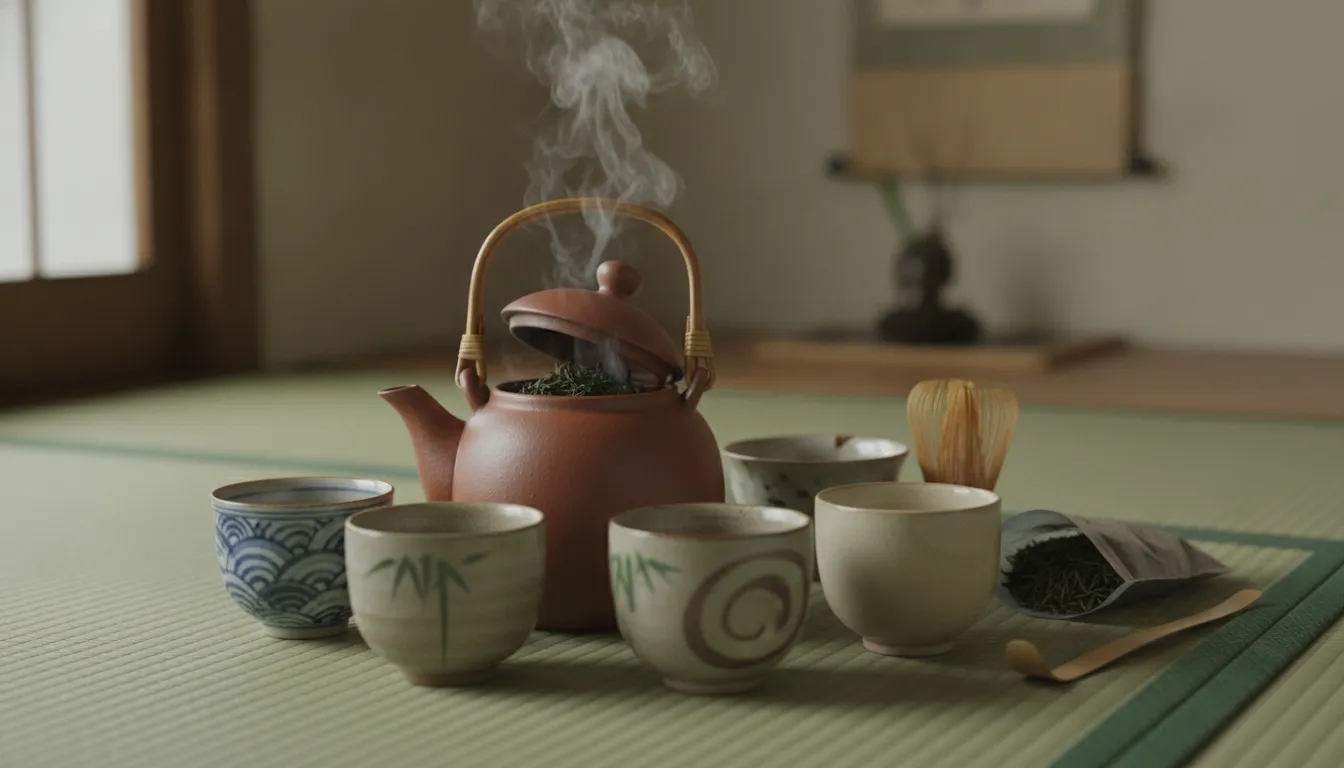
- Warm the teaware. Pour hot water into your kyusu and small tasting cups, swirl it around, and discard the water. Pre-warming helps keep the brewing temperature steady and makes the first infusion feel more intentional.
- Cool the water to 50 to 60 degrees C. If you do not have a thermometer, pour the hot water between two or three vessels until it has cooled. This yuzamashi technique lowers the temperature while also releasing trapped air, which can improve the clarity and flavor of the infusion. Never pour boiling water directly onto gyokuro. Excessive heat can damage delicate amino acids and produce bitterness. Ippodo's brewing guidance also uses vessel transfers to reach a low brewing temperature.
- Add the leaves. Empty the kyusu completely, then place the gyokuro leaves inside. For a concentrated serving, begin with roughly 5 grams of leaves and the amount of water recommended for your tea. Sorate's premium Gyokuro from Uji is well suited to this focused style of brewing.
- Pour gently and steep without stirring. Add the cooled water slowly over the leaves. Close the lid and let the tea steep for about two minutes. Do not shake, swirl, or stir the pot. Agitation can pull out more bitterness and makes it harder to keep the infusion balanced.
- Pour into the cups in alternating bursts. Distribute the tea a little at a time into each cup rather than filling one cup before the next. Continue until the kyusu is empty, and pour to the last drop. Those final drops are often the most concentrated and flavorful. Leaving water in the pot also allows the leaves to keep brewing, which can make a later infusion bitter.
- Sip slowly. Gyokuro is traditionally enjoyed from small cups. Let each sip rest briefly in your mouth before swallowing, noticing how the savory umami develops into a lingering finish. The first infusion should feel deliberate, not rushed.
The two habits worth remembering are simple: use cool water and avoid agitation. Pour every last drop, and let the tea's texture and flavor unfold at its own pace.
How to Re-Steep Gyokuro for Multiple Infusions
One of the pleasures of learning how to brew gyokuro is discovering how much character remains in the leaves after the first pour. Gyokuro leaves are resilient, and each infusion shifts the balance from concentrated and savory toward lighter, clearer flavors. Before every re-steep, make sure the previous infusion has been poured out completely. The last drop is especially flavorful, and leaving water in the pot allows the leaves to keep brewing, which can make the next cup bitter.
Gyokuro leaves can be re-steeped three to four times. The second infusion uses 60 degree C water for 30 to 60 seconds. The third uses hotter water around 80 degrees C for 60 seconds. Each infusion reveals a different side of the leaf.
Second infusion: lighter and refreshing
For the second steep, use water at about 60 degrees C and steep for 30 to 60 seconds. The result is usually lighter than the first infusion, with a more refreshing finish while retaining gyokuro's distinctive depth. Pour slowly and completely into your cups, then take a moment to notice which notes have softened and which have become more pronounced.
Third and fourth infusions
For a third steep, raise the water temperature to about 80 degrees C and steep for approximately 60 seconds. The warmer water helps draw out flavor from the leaves without requiring a long infusion. Expect a gentler cup with a different aromatic profile from the first two. If the leaves still have plenty of flavor, try an optional fourth infusion with hot water, adjusting the time to taste.
When the leaves are finally spent, do not discard them immediately. In a traditional way of enjoying the whole leaf, dress the softened leaves with a little soy sauce or ponzu and eat them with rice. It is a simple, savory ending to a tea session and another reminder that gyokuro is meant to be experienced slowly. To compare its character with another classic Japanese green tea, explore the differences between Gyokuro and Sencha.
What Are the Most Common Mistakes When Brewing Gyokuro
Gyokuro is forgiving once you understand what it wants, but a few everyday brewing habits can flatten its sweetness or pull out unwanted bitterness. When I brew it, I pay attention to these details first.
Using water that is too hot
Boiling water is the fastest way to lose gyokuro's gentle character. It can damage delicate amino acids and produce a bitter, astringent cup instead of a rounded, savory one. Let freshly boiled water cool well before it reaches the leaves. Soft water also makes a difference: water with a high mineral content can mask the tea's subtle sweetness and umami. If your tap water is hard, filtered or low-mineral water is worth trying. Ippodo's brewing guide recommends 60 degree C water for gyokuro.
Adding too much water or too few leaves
Gyokuro is meant to be concentrated, not diluted into a large mug. Start with at least 1 gram of leaf for every 10 ml of water, then adjust to taste. A generous amount of leaf and a small volume of water create the dense, richly flavored infusion gyokuro is known for. If the result tastes thin, adding more water is usually the wrong first move. Try more leaf instead.
Leaving the pot full between steeps
Pour every last drop from the kyusu, even if the final trickle seems insignificant. That last portion is especially flavorful, and draining the pot stops the leaves from continuing to brew. Leaving water behind can make the next infusion harsh and bitter. I usually pour into small cups in stages so the strength stays even, then open the lid slightly to let the leaves rest.
Stirring the leaves
There is no need to swirl, shake, or press the leaves. Gyokuro rewards stillness. Agitating the pot can extract more bitterness and encourage fine particles into the cup. Add the water gently, close the lid, and let time do the work.
Storing gyokuro in the wrong place
Heat, light, moisture, and air gradually dull gyokuro's delicate aroma and flavor. Keep the leaves in an airtight, opaque container in a cool, dark place, and close it promptly after measuring. Also avoid storing it beside strongly scented foods. Fresh storage preserves the details you worked to bring out in the cup. For a complete set of brewing essentials, browse Sorate's teaware and accessories.
Order Sorate's Gyokuro today and experience the depth of Uji's finest shaded green tea. Pair it with a traditional kyusu from our accessories collection for the complete ritual.
Frequently Asked Questions
What water temperature is best for gyokuro?
Start around 60 degrees C (140 degrees F), then adjust within the 50-70 degree C range to suit the tea and your palate. Cooler water helps bring out gyokuro's sweet, savory character, while boiling water can make the infusion bitter. If you do not have a thermometer, pour freshly boiled water between cups or a cooling vessel several times before adding it to the leaves. This also aerates the water and helps stabilize its temperature. Ippodo's standard gyokuro recipe uses 60 degree C water.
How long should gyokuro steep?
A first infusion typically steeps for about 90 seconds. Use approximately 5 grams of leaves with 150 to 200 milliliters of water, then pour every last drop from the vessel. Steeping for more than two minutes can pull out a harsher, more bitter flavor, so it is better to begin with the shorter time and adjust gradually. Ippodo's brewing guide specifies a 90-second first steep.
Can I brew gyokuro leaves more than once?
Yes. The same leaves usually work well for a second and third infusion. Use slightly hotter water and a shorter steep for later brews. The second cup is often lighter and more refreshing than the first, with the flavor changing as the leaves open. Pour the first infusion completely so the leaves do not continue brewing in the pot and make the next cup bitter.
What kind of water should I use for gyokuro?
Soft water is the best starting point because hard water can dull gyokuro's delicate sweetness and umami. If your tap water tastes strongly mineral-like, try a low-mineral bottled water or filtered water instead. Keep the choice simple: use water that tastes clean on its own, then focus on temperature and steeping time.
Can I grind gyokuro into a powder?
Gyokuro is brewed as whole leaves rather than prepared like matcha. Its fine leaves need a strainer or kyusu filter so the concentrated infusion pours cleanly. A kyusu with fine mesh is especially useful because small gyokuro leaves can break apart during brewing.
Ready to Brew Gyokuro at Home?
A careful brew is a simple way to appreciate gyokuro's layered aroma, silky texture, and gentle umami. When you are ready to make the ritual your own, shop Sorate's premium Gyokuro and tea accessories. Choose the leaves and tools that suit your brewing style, then take your time with each infusion.


