


Japanese tea ceremony tools invite us to notice how preparation changes when every object has a purpose. A bowl receives the tea. A bamboo whisk joins powder and water. A scoop measures with a gesture that is both practical and composed. In chanoyu, the Japanese way of tea, these utensils belong to a disciplined cultural practice shaped by hospitality, season, setting, and school. At home, they can also support a quieter and more attentive bowl of matcha. Learning their names is useful. Understanding the relationships among them is more rewarding.
This guide introduces the principal utensils with cultural care. It does not reduce chanoyu to a checklist, because a formal gathering involves far more than equipment. Instead, it explains how each object helps a host prepare tea for a guest. It also offers a respectful path for building a personal matcha practice with well-chosen pieces and matcha from Sorate.
What are Japanese tea ceremony tools?
Tea utensils are often called chadogu, a broad term for the objects used in the way of tea. Their selection, handling, and arrangement can communicate seasonality, formality, provenance, and the host's consideration for guests. A utensil is therefore never only a device. Its material, age, surface, and relationship to neighboring pieces all contribute to the gathering.
A full tea ceremony may involve objects used to heat water, prepare matcha, serve sweets, purify utensils, and shape the room. Different schools preserve distinct procedures and preferences. The same object may be handled in different ways according to context. Studying with a qualified teacher remains the best way to understand these forms as a living practice.
For someone preparing matcha at home, the central group is simpler: a tea bowl, bamboo whisk, bamboo scoop, sifter, and a suitable source of hot water. These tools make good preparation easier. They also encourage attention to temperature, proportion, texture, and care. Sorate's account of its relationship with Uji offers further context for the tea that enters the bowl.
| Tool | Japanese name | Primary role | Care note |
|---|---|---|---|
| Tea bowl | Chawan | Preparing and receiving matcha | Rinse and dry completely |
| Bamboo whisk | Chasen | Dispersing matcha in water | Rinse gently; air-dry |
| Bamboo scoop | Chashaku | Transferring matcha | Wipe dry; do not soak |
| Tea caddy | Natsume or chaire | Holding matcha for preparation | Keep clean and dry |
| Fresh-water container | Mizusashi | Holding replenishing water | Wash and dry after use |
| Bamboo ladle | Hishaku | Moving water | Dry thoroughly |
| Waste-water vessel | Kensui | Receiving rinse water | Empty promptly |
Chawan, chasen, and chashaku: the essential trio
Chawan: the tea bowl as meeting place
The chawan is where matcha is whisked, presented, and received. Its interior must allow the whisk to move freely, while its rim and foot influence how the bowl feels in two hands. A broad, relatively shallow bowl can release heat more quickly. A deeper form can retain warmth. Yet function is only part of its presence.
In a gathering, the host may choose a bowl whose clay, glaze, motif, or shape suits the season and occasion. Marks from making are not necessarily flaws. They can reveal the hand, material, and firing that formed the vessel. The guest encounters the bowl slowly, often turning it before drinking and appreciating it afterward.
At home, select a bowl that feels stable and gives the whisk enough room. Handmade variation can make a daily object more engaging. A first bowl does not need to imitate a museum piece. It should invite repeated use and reward care. Explore Sorate's tea accessories and bowls for pieces designed around attentive preparation.
Chasen: bamboo transformed into motion
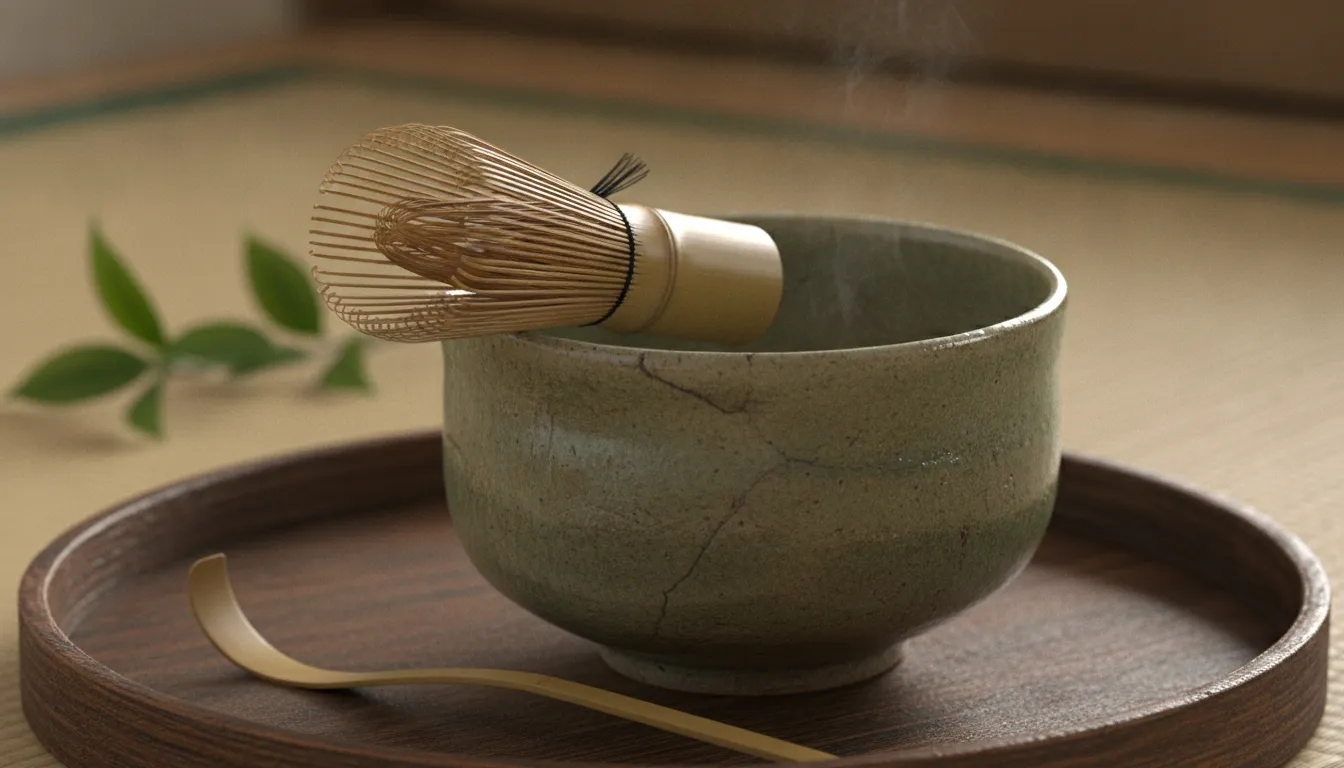
The chasen is carved from a single length of bamboo. Its fine tines flex through the tea, breaking apart small clumps and suspending matcha evenly in water. The whisk's construction is elegant because material and purpose remain visible. No concealed mechanism stands between the hand and the bowl.
Before use, briefly soften the tines in warm water. This makes them more flexible and reduces stress on the bamboo. During whisking, move from the wrist rather than pressing hard into the bowl. Afterward, rinse the whisk in clean water and allow it to dry fully in open air.
Chashaku: a modest measure
The chashaku is a slender bamboo scoop used to transfer matcha from a caddy into the bowl. Its modest form encourages an unhurried, precise gesture. Because scoops vary, the familiar suggestion of two scoops is only a starting point. A scale offers more consistency when learning proportions at home.
Do not wash a bamboo scoop under running water or leave it to soak. Wipe it carefully with a dry, clean cloth and store it away from moisture. Its apparent simplicity is instructive: a small tool can focus the hand when it is suited exactly to its task.
Choose tools that make attentive matcha preparation feel natural.
Water tools and the architecture of preparation
Matcha is made from tea and water, but water is not merely an ingredient. Its temperature, movement, and presentation shape the preparation. Formal chanoyu gives water an architectural presence through vessels and utensils that define where it comes from, how it moves, and where it goes.
Kama, furo, and ro: heating water with the season
The kama is the iron kettle used to heat water. Depending on the season and tradition, it may be positioned over a portable brazier called a furo or above a sunken hearth called a ro. These arrangements alter the physical and visual relationship between host, kettle, utensils, and guests.
The changing placement is one example of seasonality expressed through practice rather than decoration alone. Sounds also matter. Water warming in an iron kettle contributes to the atmosphere, while the host listens and responds. At home, a standard kettle can serve the practical purpose. Let boiled water cool to a suitable temperature before it meets matcha.
Hishaku, mizusashi, and kensui: a visible cycle
The hishaku is a long-handled bamboo ladle used to transfer water. The mizusashi holds fresh water, and the kensui receives water used during rinsing. Together, they make the cycle of preparation legible. Fresh water enters, utensils are cared for, and used water leaves the working space.
These tools also reveal why a tea preparation area should be orderly. Each object needs enough room for deliberate handling. Even without formal utensils, home preparation improves when clean water, hot water, a cloth, and a discard bowl have clear places. Clarity reduces hurried movements and keeps attention on the guest or the bowl.
Supporting utensils that bring order and care
Natsume and chaire: caddies for matcha
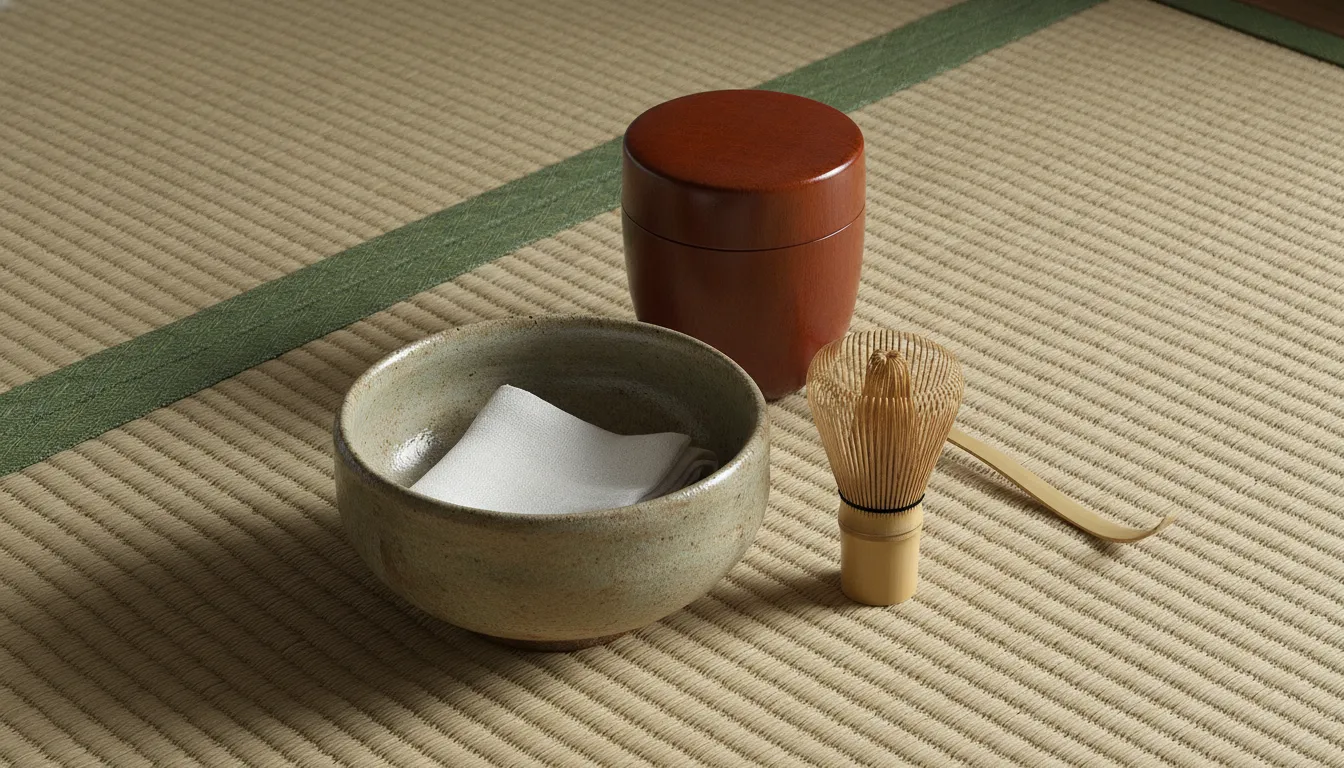
Matcha caddies hold the tea used during preparation. A natsume is commonly associated with thin tea, or usucha, while a chaire is associated with thick tea, or koicha. Those associations belong within established tea practice, where the caddy, its covering, and its handling carry specific significance.
For daily use, the fundamental need is protection. Matcha is sensitive to heat, light, air, moisture, and strong odors. Keep it sealed and follow the storage guidance provided with the tea. Transfer only what you intend to use into a clean, dry caddy. Sorate's ceremonial matcha collection presents teas intended for considered preparation.
Chakin, fukusa, and sifter: different forms of readiness
A chakin is a small linen cloth used in caring for the tea bowl. A fukusa is a silk cloth handled according to learned procedures in the symbolic purification of certain utensils. They are not interchangeable. Their distinction demonstrates how ordinary actions become precise within chanoyu.
A fine sifter is especially useful for matcha at home. Passing matcha through it before adding water breaks up compacted powder and supports a smoother texture. The sifter is not always the most visually celebrated tool, yet it resolves a practical challenge before whisking begins.
Other supporting utensils may include a futaoki, which provides a rest for the kettle lid or ladle, and a sweets container with picks. Their roles depend on the gathering. Rather than treating a long inventory as a shopping list, notice how every addition answers a need in the sequence.
How tools express hospitality, season, and meaning
The Japanese tea ceremony is often described through the principles of harmony, respect, purity, and tranquility. Tools do not represent these ideas as static symbols. They help people enact them. A clean bowl shows care. A seasonal selection acknowledges the present moment. Considered placement helps a guest feel at ease.
Selection is a form of conversation
A host may bring together objects from different places and periods. The relationship among them can suggest a season, honor an occasion, or invite a particular reflection. A rustic bowl beside a refined lacquer caddy creates a different conversation than two highly ornamented pieces. Meaning emerges from relation, not price alone.
This is also why provenance deserves attention. Knowing who made an object, how it was formed, and how it has been cared for deepens appreciation. Sorate's approach to Japanese tea culture centers the relationship between source, preparation, and experience.
Wabi and the dignity of use
Discussions of tea often invoke wabi-sabi as a general preference for imperfection. That shorthand can flatten a complex aesthetic and cultural history. In the tea context, it is more useful to notice restraint, humility, weathering, and the dignity of ordinary materials. A tool gains meaning through skilled use and attentive care.
A bamboo scoop can be compelling because it is direct. A repaired or time-marked bowl can invite closer attention because its history remains visible. These qualities do not excuse poor function or neglect. Care is what allows modest objects to continue serving well.
Discover the Uji landscape and relationships behind Sorate's tea.
How to choose a thoughtful matcha tool set
A beginner does not need every utensil used in formal chanoyu. Start with the pieces that directly improve preparation, then let experience reveal what is missing. A compact home set can be both practical and beautiful without claiming to reproduce a ceremony outside its teaching context.
Begin with function, then refine the experience
Choose a bowl with enough interior space for whisking. Add a well-made bamboo whisk, a scoop, and a fine sifter. Use a kettle that gives you reliable control over water, plus a clean cloth for the work area. A caddy is helpful if it protects a small working amount of matcha.
When comparing objects, ask direct questions. Does the bowl sit securely? Can the whisk move without striking narrow sides? Is the caddy clean, dry, and easy to close? Will the object be cared for and used? These questions favor lasting value over novelty.
A curated set can simplify the first selection. Sorate's matcha kits and sets bring complementary pieces together, while the wider accessories collection allows a more personal arrangement.
Respect craft without turning tools into props
Tea objects are often visually striking, but their deepest character appears through use. Resist buying many pieces solely to create an aesthetic display. Learn the care requirements of bamboo, ceramic, lacquer, metal, and cloth. A smaller group, used often and maintained well, supports a more meaningful practice.
Gifts can introduce someone to this approach when chosen carefully. Consider the recipient's experience, available space, and preferred tea. Sorate's Japanese tea gifts offer a considered starting point for sharing tea and its preparation.
Material should guide the decision as well. Bamboo is light and responsive, but it needs airflow and gentle handling. Ceramic offers weight, warmth, and extraordinary variety. Lacquer can be exceptionally refined, yet it requires care appropriate to its finish. Metal tools may be durable, although they belong to different parts of preparation than bamboo and ceramic. Ask the maker or seller for care guidance when the material is unfamiliar.
Scale matters when several tools share a small surface. A large bowl paired with a tiny caddy may function well, but the relationship can feel unsettled. Arrange potential pieces together before deciding. Leave open space around them. The resulting composition should support movement rather than compete for attention.
Finally, allow a set to develop slowly. Repeated use teaches what your hands prefer and what your routine genuinely needs. You may discover that a particular bowl is ideal for cooler mornings, while another is comfortable in warm weather. Such knowledge cannot be purchased all at once. It grows from the ordinary pleasure of making tea regularly.
A simple sequence for preparing matcha at home
The following sequence is for everyday preparation, not a formal tea ceremony. Its purpose is to create a calm, repeatable method that respects the tools and the tea. Adjust the matcha amount, water quantity, and temperature according to the specific tea and your taste.
- Prepare the space. Clear the surface, wash your hands, and arrange the bowl, whisk, scoop, sifter, cloth, matcha, and water within comfortable reach.
- Warm the bowl and whisk. Add warm water to the bowl, gently place the whisk in it, then remove the whisk. Discard the water and dry the bowl completely.
- Sift the matcha. Pass an appropriate portion through a fine sifter into the dry bowl. This prevents compacted powder from resisting the whisk.
- Add water. Pour water at a suitable temperature for the matcha. Water that is excessively hot can obscure the tea's balance and aroma.
- Whisk with a light hand. Hold the bowl steady and move the whisk briskly from the wrist. Avoid grinding the tines against the bottom.
- Pause and drink. Notice aroma, color, texture, and flavor before making judgments. Drink while the tea remains fresh and integrated.
- Clean immediately. Rinse the bowl and whisk with clean water, wipe the scoop dry, and let every object dry completely before storage.
Repetition develops sensitivity. Over time, you will notice how water temperature changes aroma, how whisking alters texture, and how one bowl holds heat differently from another. Those observations matter more than performing speed or pursuing a perfectly uniform surface.
Tea also becomes richer when shared. Preparing a bowl for another person shifts attention outward. The gesture need not imitate formal chanoyu to express consideration. Offer the best bowl you can make, create an uncluttered place to receive it, and remain present.
Build a considered home matcha practice with a curated Sorate set.
Frequently asked questions about Japanese tea ceremony tools
What are the essential Japanese tea ceremony tools for beginners?
A practical beginning set includes a chawan, chasen, chashaku, fine sifter, clean cloth, and a vessel for hot water. These pieces support careful matcha preparation without attempting to reproduce a formal ceremony. Add a caddy when you need a protected working container. Explore Sorate's matcha selection after choosing tools suited to your routine.
Why is a bamboo whisk used for matcha?
A chasen has many flexible bamboo tines that disperse matcha through water and develop an even texture. Its responsiveness helps the preparer feel changes in pressure and rhythm. Unlike a metal kitchen whisk, it is shaped specifically for movement inside a tea bowl. Rinse it gently and let it dry fully.
Can I prepare matcha without a formal tea room?
Yes. Thoughtful matcha preparation can happen at a kitchen table. Clear the space, choose a few suitable tools, and move deliberately. It is helpful to distinguish this personal practice from formal chanoyu, which is learned through teachers, schools, and sustained study. The distinction supports respect rather than diminishing a daily ritual.
How should tea ceremony tools be cleaned and stored?
Rinse the bowl and bamboo tools promptly with clean water. Avoid harsh detergent on a chasen, never soak a bamboo scoop, and let every piece dry fully before storage. Follow maker guidance for ceramics, lacquer, and metal. Keep matcha sealed away from heat, moisture, light, and strong odors.
Japanese tea ceremony tools show how much thought can reside in useful things. Each has a role, but no piece acts alone. Bowl, whisk, scoop, water, tea, host, and guest meet in a sequence shaped by care. Beginning with a few sound tools is enough. Use them often, maintain them well, and let attention become the most important element you bring to the bowl.


