


A Japanese tea tasting is easiest to understand when you think beyond a lineup of cups. The value is in noticing how origin, cultivar, preparation, aroma, texture, and finish change from one tea to the next. There is also room to ask questions along the way.
For anyone researching a tea flight NYC experience. Sorate offers an approachable way to compare Japanese teas while learning about their origins, harvest methods, tasting notes, serving, and preparation. The current Flatiron tea-tasting page is the place to confirm what is included in the live experience.
This format is designed for curious visitors. You may be new to Japanese tea or already know the difference between a bright sencha and a deeper matcha. It is also distinct from a formal Japanese tea ceremony, with a different structure and purpose. Understanding that distinction makes it easier to arrive prepared and appreciate the tasting on its own terms.
What Is a Tea Flight in NYC?
A tea flight is a guided tasting that lets you compare several teas in one sitting. Rather than choosing a single cup and moving on, you taste a curated selection side by side. Noticing how each tea differs in aroma, flavor, texture, finish, and preparation. It is an approachable way to learn what you like, especially if Japanese green tea is new to you.
In a tea flight NYC experience, the setting matters. So does the number of teas. A knowledgeable host can give each selection context. You can learn where the leaves come from and how harvest method, cultivar, and preparation shape the cup. You are not expected to arrive with a trained palate. The useful questions are simple. What should I notice first? Why does this tea taste more savory, delicate, roasted, or refreshing than the one before it? How would I prepare it at home?
A guided comparison, not just a sampler
The purpose of a flight is to make differences easier to recognize. One tea may draw your attention with a noble aroma, while another has a deeper umami character or a cleaner finish. Tasting in sequence gives your palate a point of comparison, and conversation helps turn a fleeting impression into practical knowledge. You may leave with a clearer sense of which styles suit quiet mornings, shared meals, gifts, or a more deliberate tea ritual.
That educational approach reflects SORATE's broader way of presenting Japanese tea. The brand connects tea to its origin, preparation, and ritual, and sources directly from family farms in Uji, Kyoto, a historic Japanese tea-growing region. Its product education includes origin, harvest method, cultivar, tasting notes, serving information, and preparation guidance. Learn about SORATE's approach to Japanese tea.
How it differs from a matcha-only flight
A broader tea flight may compare different Japanese green tea styles, while a matcha flight focuses specifically on matcha. Those are related experiences, but they answer different questions. A general flight helps you explore the range of Japanese tea. A matcha-only flight gives you a closer look at how matcha can vary in aroma, texture, flavor, and preparation. If you already know you want to concentrate on matcha, you can explore the matcha flight separately.
In either format, the best tea flight is less about identifying the "right" answer than paying attention. Compare slowly, ask questions, and let your preferences develop through tasting.
What Sorate's Flatiron Tea Tasting Includes
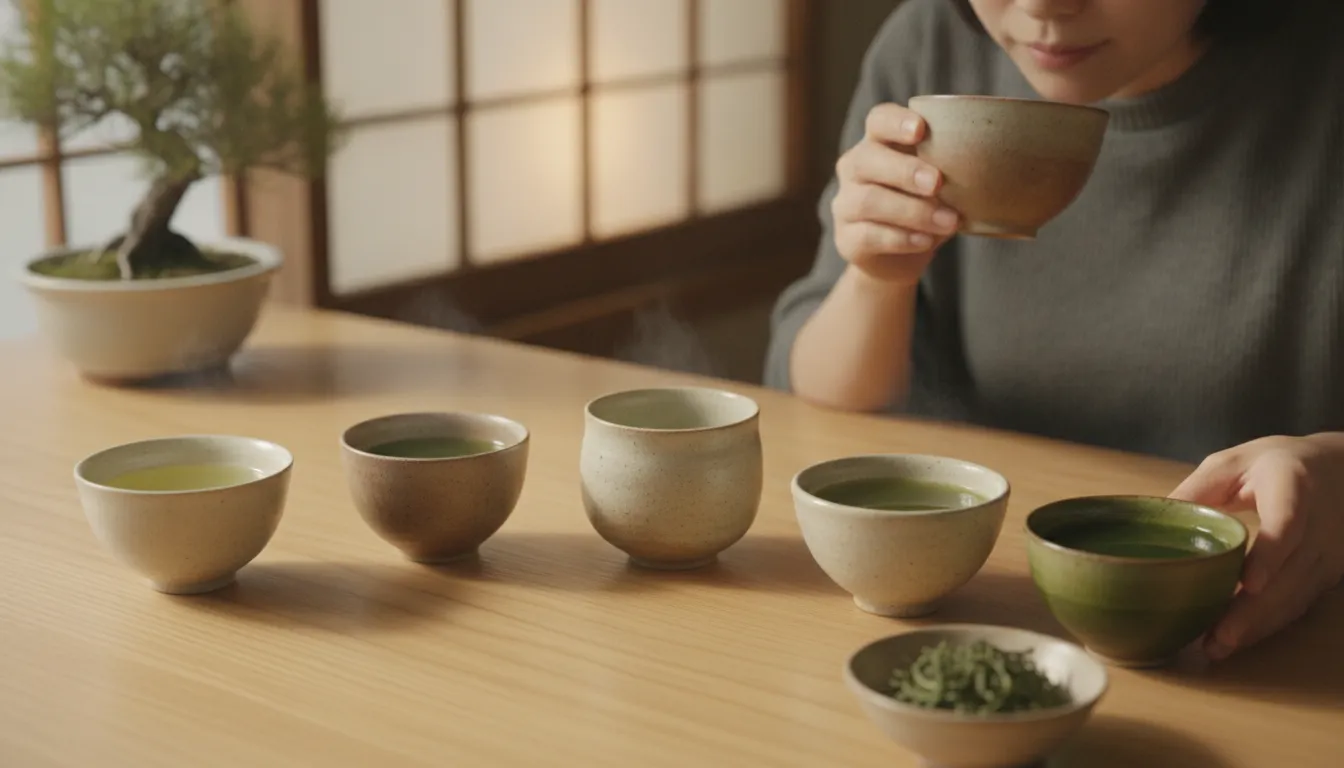
For visitors looking for a tea flight in NYC, Sorate's current Flatiron tea tasting offers a guided way to compare several Japanese teas in one sitting. The live product page lists a curated selection rather than a single cup: three matchas, Premium Gyokuro, and Premium Sencha Fukamushi. Tasting multiple styles side by side can make differences in aroma, texture, depth, and finish easier to notice, especially when you are still developing your palate.
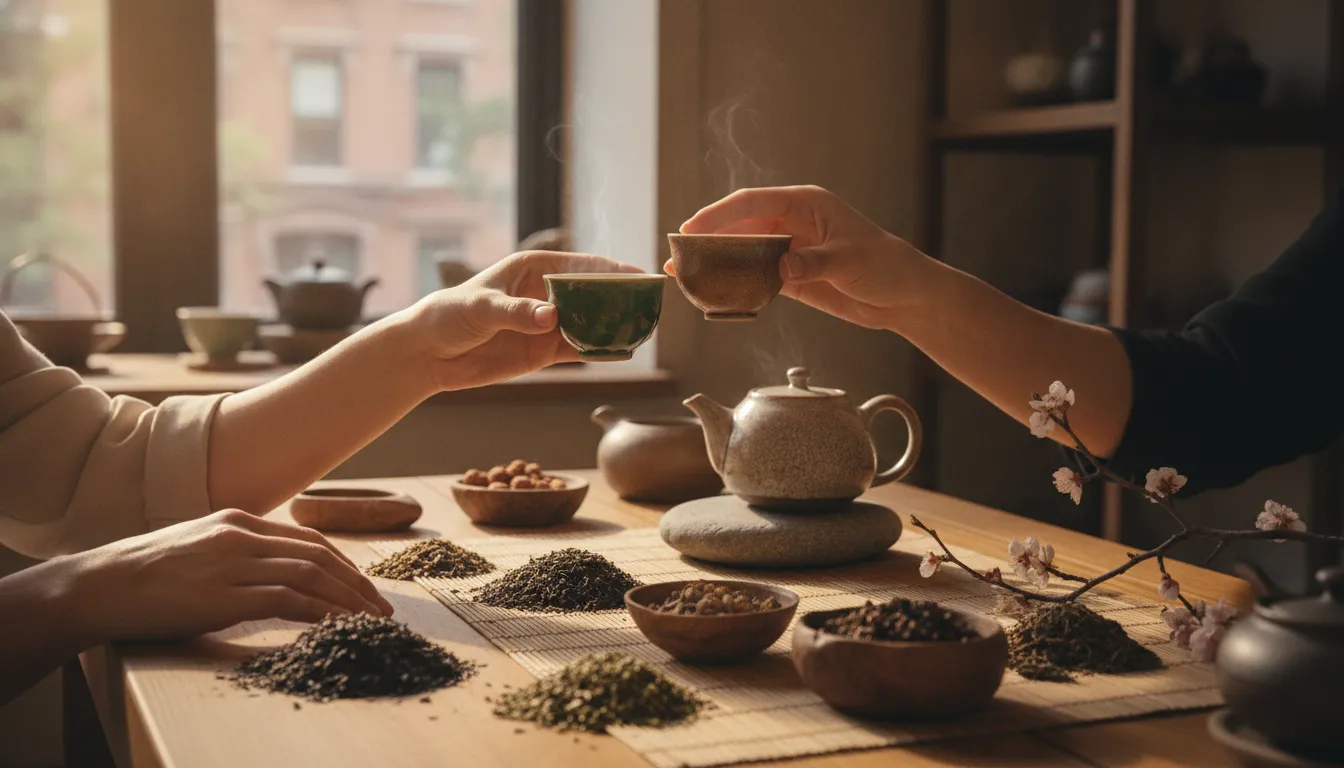
The tasting also includes one wagashi choice. Wagashi is a traditional Japanese sweet, and its presence gives the experience a small food element alongside the tea. The sweet is part of the listed tasting format, not a reason to assume that the menu includes a full meal. If you have dietary questions or want to understand the current selection, ask the Sorate team before your visit.
The current tasting lineup
The published lineup brings together three matchas with two brewed green teas. Premium Gyokuro is known for its distinctive shaded-tea character, while Premium Sencha Fukamushi represents a deeply steamed sencha style. The three matchas allow for comparison within the category, while the gyokuro and sencha create contrast in preparation and presentation. Sorate's educational approach may also address details such as origin, harvest method, cultivar, tasting notes, serving, and preparation, but the precise flow of a visit can vary. Treat the product page as the authority for the current experience.
This is a tasting format designed for attention and conversation. You can focus on how each tea looks and smells before noticing its texture and flavor. You do not need professional vocabulary or prior matcha knowledge. A useful question might be how the teas differ in preparation, or which one best suits your preferences. The goal is to leave with a clearer sense of what you enjoy and why.
Location, timing, and booking details
According to the current Flatiron product page, the tasting takes place at 30 East 18th Street, New York, NY 10003. The listed duration is one hour, and the experience has a maximum of two people. The page also includes a 24-hour cancellation note. These details can change, so confirm the menu, cancellation terms, and any booking instructions directly on the product page before making plans.
Because the experience is limited to two people, it can suit a focused outing with a friend or a one-on-one introduction to Japanese tea. Do not assume that every date or time is available, however. Sorate's page should be checked for current scheduling and reservation status rather than relying on a third-party listing or an older article.
Book the current Flatiron tea tasting
How to Prepare for a Japanese Tea Tasting
You do not need extensive tea knowledge to enjoy a Japanese tea tasting. A beginner's curiosity is enough. The most useful preparation is practical: review the current booking page before you go, allow enough time to arrive without rushing. And come ready to pay attention to how each tea changes from one cup to the next.
The suggestions below are general visitor guidance, not confirmed SORATE venue policy. Always use the current booking or teahouse page for details about reservations, timing, location, accessibility, and any day-of-visit instructions.
Check the current details before leaving
Start by confirming the date, time, address, and reservation requirements for the experience you selected. Tea offerings and visitor information can change, so an older article, social post, or map listing may not reflect the current arrangement. Save the booking confirmation and give yourself a little margin for travel. Particularly if you are visiting the Flatiron area as part of a larger New York City itinerary.
There is no need to invent a dress code or assume a particular seating arrangement. If you have questions about the setting, mobility needs, or anything that would make the visit more comfortable. Contact the venue through the current channel listed on its site before your appointment.
Arrive ready to slow down
A tasting is easier to appreciate when you are not watching the clock. Arriving on time, rather than cutting the journey close, gives you a chance to settle in and shift your attention away from the noise of the city. You may want to avoid scheduling another demanding commitment immediately afterward. Especially if your goal is to notice the differences among several teas rather than hurry through the experience.
It can also help to keep your expectations flexible. A Japanese tea tasting is an educational opportunity to compare origin, harvest, cultivar, tasting notes, serving, and preparation. Those are all areas that SORATE includes in its product education, but the specific conversation will depend on the current experience and the questions you bring.
Try to notice the tea in stages instead of deciding immediately whether you like it. Pay attention to the aroma before tasting, the first impression on the palate, the texture, and the finish. If one tea seems unfamiliar, give it a second thoughtful sip. Differences can become clearer when you compare them side by side, and there is no single correct reaction to a tea's character.
Bring preferences and questions
Before you arrive, consider what you already enjoy. Do you usually prefer a fresh, vegetal green tea, a roasted profile, a rounded texture, or the distinctive character of matcha? You do not need the technical vocabulary. Describing a flavor or texture you like gives the host a useful starting point.
Questions are welcome in an educational setting. You might ask how two teas differ in cultivation, why their aromas change as they cool, or which preparation details matter most at home. Take a few notes if that helps, but leave room to experience the tea directly. For anyone searching for a tea flight NYC visitors can approach with an open mind, that balance of preparation and curiosity is often the best way to begin.
How to Taste Several Teas with Attention
A flight becomes more interesting when you give each tea a quiet moment before deciding which one you prefer. You do not need formal tasting vocabulary. Notice what changes from cup to cup, and let your own impressions lead. Sorate's tea education considers details such as origin, harvest method, cultivar, serving, preparation, and tasting notes. So a guided tasting can connect what is in the cup with how and where the tea was made.
- Observe. Begin with the tea's appearance. Look at the color, clarity, and surface of the liquor. With powdered tea, notice the color and the character of the foam. These visual details are not a scorecard, but they give you a first impression before aroma and flavor take over.
- Smell. Bring the cup close and take a gentle breath. Search for an impression rather than a perfect label: fresh, vegetal, roasted, floral, earthy, or something else. Smell the tea again after it cools slightly. Temperature can change what you notice.
- Sip. Take a small sip and let it move across your palate. Pay attention to the first flavor, then to what develops a moment later. Is it soft or vivid? Sweet, savory, refreshing, or roasted? If the tea is unfamiliar, simple descriptions are more useful than trying to sound expert.
- Notice texture and finish. Consider how the tea feels. It may seem light, silky, creamy, or brisk. Then notice the finish, meaning the flavor and sensation that remain after swallowing. Does it disappear quickly, or does another impression stay with you?
- Compare. After each cup, write two or three words and one detail you would recognize later. Compare the teas by aroma, flavor, texture, and finish rather than asking which is objectively best. A second sip may reveal a different balance, especially after tasting another tea.
For a closer look at the same process with matcha, learn how to taste matcha through aroma, appearance, texture, and flavor. The goal is not to rush toward a favorite. It is to become more attentive to the differences that make each tea distinct.
Tea Flight vs. a Formal Japanese Tea Ceremony
A guided tea flight and a formal Japanese tea ceremony can share an appreciation for careful preparation, hospitality, and the character of the tea. They are not the same experience, however. A flight is generally organized around tasting and learning about several teas. A ceremony follows a codified practice in which the relationship between host, guest, setting, utensils, and sequence carries meaning.
The University of Illinois Japan House explains that, at its most basic, a tea ceremony is a host preparing and sharing a bowl of tea with a guest. Over centuries, that simple act became a ritualized art form requiring years of practice. The setting may incorporate elements such as calligraphy, tea flowers, or a formal tea dinner. Those details help show why ceremony is more than a tasting format: the occasion and the manner of serving are part of the experience.
A tea flight centers on comparison and education
For someone searching for a tea flight NYC experience, the practical focus is usually direct engagement with the teas. You may compare differences in aroma, flavor, texture, origin, harvest, cultivar, serving style, or preparation. Sorate's educational approach includes these dimensions, giving guests a way to understand what is in the cup rather than simply receiving a finished beverage. A flight can therefore be approachable for a curious newcomer while still rewarding an experienced tea drinker.
That same tasting focus distinguishes a broader tea flight from a matcha-only experience. Sorate lists a separate matcha flight for guests who want to concentrate on matcha. The choice between the two depends on whether you want to compare a wider range of Japanese teas or stay with one tea category.
A formal ceremony follows a ritualized structure
Formal tea practice has its own vocabulary and traditions. The Washington and Lee Japanese Tearoom describes the formal gathering known as chaji. A host first chooses a theme, which may relate to the season, and selects utensils appropriate to the guests and occasion. The complete format can last three to four hours and includes a formal meal, thick tea, and thin tea. That duration and sequence are fundamentally different from a shorter tasting designed to move through several samples and their explanations.
The Way of Tea also includes a deliberate series of actions, such as building a fire. Boiling water, whisking green tea powder in a tea bowl, and serving it with sweets, as described by Five Colleges. Its guiding concepts include harmony, respect, purity, and tranquility. These principles are useful context for understanding the care behind the practice, but they should not be reduced to a performance or treated as entertainment.
Sorate offers a distinct private Japanese tea ceremony experience for guests seeking that ceremonial format. Choose a flight when your priority is tasting and comparing tea with guidance. Choose the private ceremony when you want to enter a more formal host-and-guest tradition, with its own pace, preparation, and ritual expectations.
Tea Flight vs. a Tasting at Home
Both an in-person tea flight and a tasting at home can slow you down and help you notice how Japanese teas differ. The better choice depends on whether you want guided discovery or the freedom to shape the experience yourself. A tea flight NYC visitors book at Sorate offers a focused setting for learning with an experienced host. At home, you set the guest list, choose the teas, and decide how formal or relaxed the gathering should feel.
| Consideration | In-person Sorate flight | Tasting at home |
|---|---|---|
| Setting | A dedicated teahouse environment designed for attention and conversation. | Your own table, kitchen, or living space, with a familiar and flexible atmosphere. |
| Guidance | A host can explain origin, harvest method, cultivar, tasting notes, serving, and preparation. | You guide the discussion yourself, using the information on each tea or a prepared tasting plan. |
| Tools | The experience is arranged around the teas and their service, so you can concentrate on tasting. | You assemble cups, a kettle, serving vessels, water, and any brewing or whisking tools you need. |
| Pacing | A planned sequence keeps the tasting moving and gives each tea a clear point of comparison. | You can linger over one tea, repeat a brew, pause for food, or change the order as you go. |
| Purpose | Ideal for learning, trying a curated range, and asking questions in real time. | Ideal for sharing tea with friends, practicing your palate, and creating a repeatable ritual. |
Which format fits your occasion?
Choose the in-person option when you want context you may not yet have. Sorate's education connects what is in the cup with origin, cultivation, preparation, and serving, which can make unfamiliar differences easier to recognize. It is also a useful choice when you would rather explore than purchase several teas and organize every detail yourself. For a more specific experience, Sorate also offers a matcha-only flight, which is distinct from a broader tea tasting.
Choose home hosting when the social setting matters as much as the tea. You can invite people at different experience levels, serve a small selection, and make the tasting as informal as you like. Sorate's guide on how to host a tea tasting at home can help you plan the sequence and tools without treating the gathering as a formal ceremony. A flight is an educational tasting experience, not a substitute for the structure, etiquette, and cultural practice of a private Japanese tea ceremony.
Frequently Asked Questions
What does a tea flight in NYC usually include?
A tea flight is a guided tasting of several teas served together for comparison. At Sorate's current Flatiron Tea Tasting, the listed experience includes three matchas, Premium Gyokuro, Premium Sencha Fukamushi, and one wagashi choice. The live product page lists the tasting at one hour for a maximum of two people, so confirm the current details when booking: Flatiron Tea Tasting.
Do I need experience with Japanese tea to attend?
No. A tasting is a useful format for newcomers because you can compare aroma, texture, flavor, origin, and preparation with guidance. Arrive ready to ask questions and notice how each tea differs. Preferences are helpful, but specialized vocabulary or prior knowledge is not required.
Is a tea flight the same as a Japanese tea ceremony?
No. A flight is an educational comparison of multiple teas, while a formal ceremony follows a structured sequence shaped by tea-school traditions, host-selected utensils, and the gathering's theme. A complete chaji may also include thick tea, thin tea, and a formal meal over three to four hours, according to Washington and Lee's Japanese Tearoom: chaji overview. Sorate offers a separate private tea ceremony experience.
Can I recreate a tea tasting at home?
Yes. Select a few teas, use consistent water and serving amounts, and taste them in a deliberate order while recording aroma, flavor, texture, and finish. An in-person tasting adds expert guidance and a dedicated setting, while home tasting gives you control over the pace, tools, and guests. Sorate's guide to hosting a Japanese tea tasting at home can help you plan.
Ready to compare Japanese teas with guidance in a welcoming NYC setting? Book your visit and make the tasting the starting point for a more informed tea ritual.


