


A thoughtful matcha tasting can turn an ordinary bowl into a quiet study of aroma, texture, umami, bitterness, and finish. Rather than asking only whether a matcha is good or bad, you slow down, observe each sensation, and learn how preparation changes what you experience. The reward is not a score. It is a more attentive relationship with the tea in front of you.
Explore Sorate's Uji-sourced matcha and choose a bowl for your next tasting ritual.
With a consistent method, you can compare matcha fairly and discover which expressions you enjoy most. This guide offers a professional-style approach that is precise enough for side-by-side evaluation and simple enough to repeat at home.
What professional matcha tasting measures
Professional matcha tasting separates the experience into observable sensory dimensions: aroma, texture, umami, bitterness, astringency, finish, and preparation consistency. Evaluating each dimension before making an overall judgment produces clearer notes, fairer comparisons, and a deeper understanding of personal preference.
The six core dimensions
- Aroma: What do you smell in the dry powder, the whisked tea, and as you swallow?
- Texture: Does the tea feel light, creamy, silky, chalky, or drying?
- Umami: Is there a savory depth that gives the tea body and richness?
- Bitterness: Is it clean and balancing, or does it overwhelm other notes?
- Finish: Which sensations and aromas remain after the sip?
- Consistency: Does the matcha show the same character when prepared the same way again?
Observation before judgment
Describe what is present before deciding whether you like it. "Silky texture with a brisk finish" is more useful than "excellent." Precise language lets you compare bowls over time and reveals your own tastes without treating preference as a universal standard.
Origin and craft can shape a tea's character, but no single tasting note proves where or how it was made. To learn about Sorate's direct relationship with a family-owned farm in Uji, Kyoto, visit The Farm.
How do you prepare matcha for a fair tasting?
A fair matcha comparison controls the variables that can change the bowl. Use the same amount of powder and water, water temperature, bowl shape, whisking time, and whisking style for every sample. Record those details so the tasting can be repeated rather than remembered vaguely.
Set up a neutral tasting space
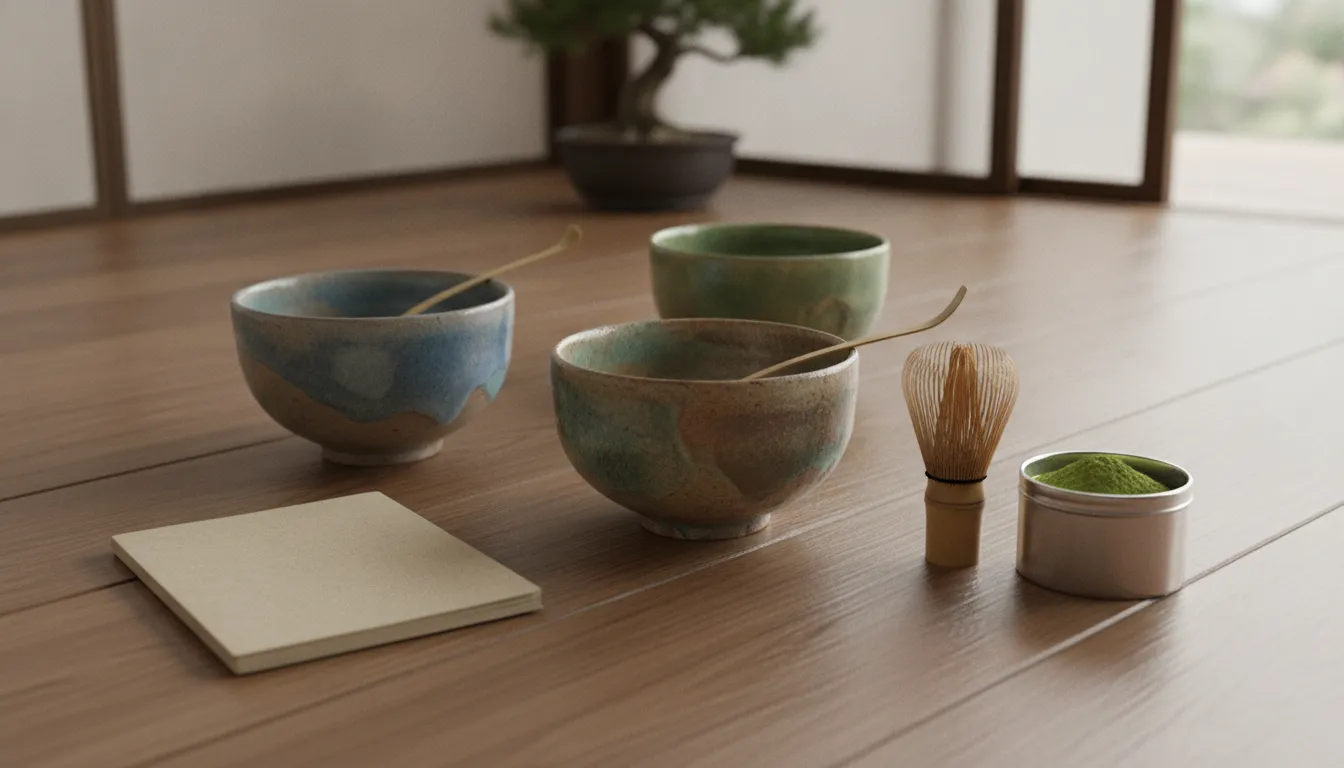
Choose a bright, quiet place without scented candles, perfume, cooking smells, or strong food. Use clean bowls with pale interiors so you can see each tea clearly. Keep room-temperature water nearby to refresh your palate.
Gather a fine sieve, bamboo scoop or small spoon, scale if available, bamboo whisk, and kettle. Sorate's tea accessories can help create a consistent and considered ritual.
Use one repeatable recipe
- Warm the bowl with hot water, then empty and dry it fully.
- Sift the same measured amount of matcha into each bowl.
- Add the same amount of water at the same temperature.
- Whisk each sample for the same length of time with the same motion.
- Taste promptly, before the bowls cool at different rates.
Avoid boiling water, which may make bitterness and astringency feel more forceful. The exact recipe matters less than repeating it accurately. Change only one variable when testing a different preparation.
Whisk for an even suspension
Matcha is whisked into water rather than steeped and removed. Sifting breaks up clumps, while steady whisking distributes the fine powder through the bowl. When comparing samples, aim for similar foam and body in each one. Uneven preparation can make one tea seem smoother or more intense for reasons unrelated to the leaf.
Evaluate color and aroma before the first sip
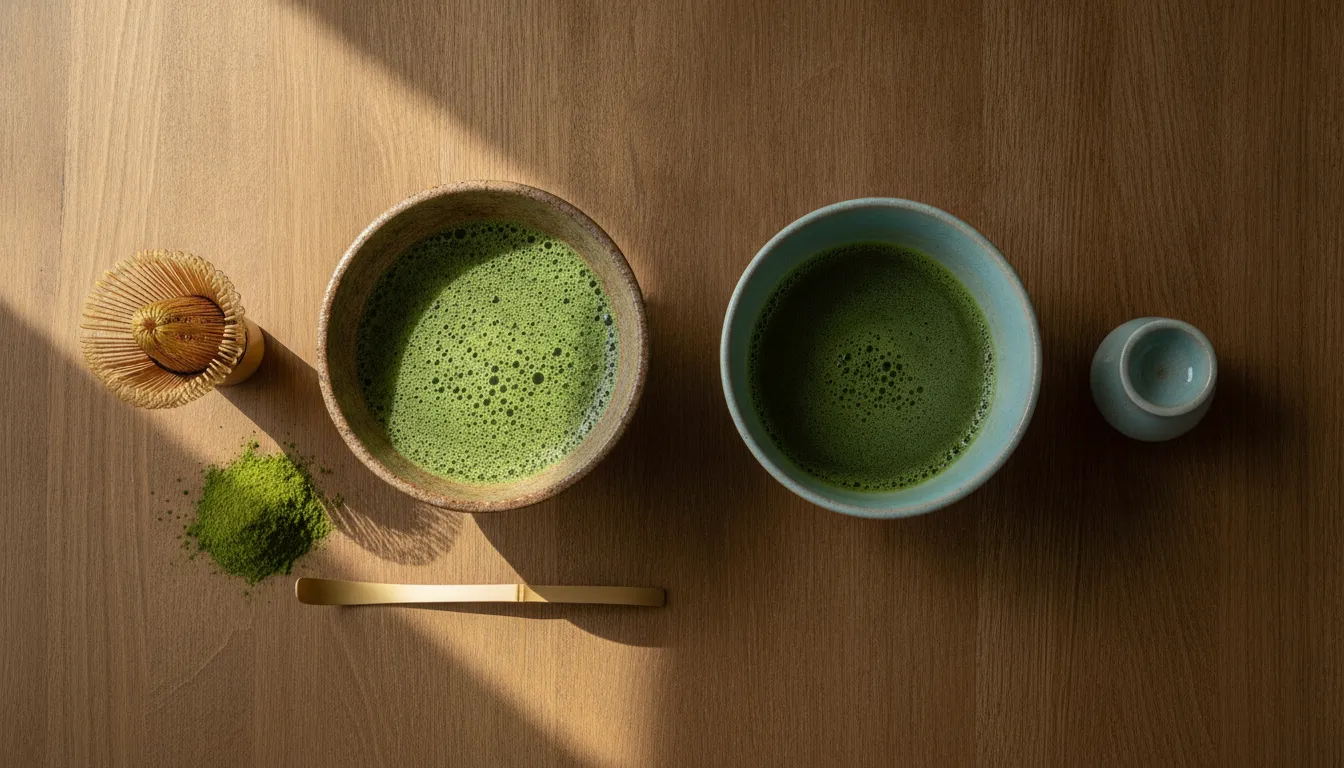
Matcha tasting begins before the tea reaches your mouth. Observe the dry powder in soft natural light, then smell it before and after whisking. Color and aroma offer useful clues, but neither should be treated as a complete verdict on its own.
Look without rushing to rank
Note the powder's shade, brightness, and texture. After whisking, look at the body of the tea and the character of the foam. A vivid appearance may be inviting, yet the bowl still needs to be judged through aroma, taste, mouthfeel, and finish.
Smell the dry powder
Bring the open container or a small dry sample near your nose and inhale gently. Useful words may include fresh greens, sweet grass, flowers, toasted nuts, sea breeze, cocoa, or earth. Record only what you truly notice. There is no prize for finding the longest list of aromas.
Notice the aroma after whisking
Warm water releases another layer of scent. Smell the bowl soon after whisking, then again after it rests for a moment. Ask whether the aroma is delicate or bold, simple or layered, and whether it changes as the bowl cools.
Pay attention as you swallow
Aroma also travels from the mouth toward the nose as you sip and swallow. This retronasal impression can reveal notes that were not clear when smelling the bowl directly. Exhale gently after a sip and note what appears.
How should good matcha taste and feel?
Good matcha tastes coherent and balanced, not necessarily mild or free of bitterness. Its aroma, savory depth, sweetness, bitterness, texture, and finish should feel connected. A satisfying bowl can be rich and creamy or light and brisk, depending on the tea and the drinker's preference.
| Sensory dimension | What to notice | Useful note examples |
|---|---|---|
| Aroma | Strength, clarity, and change | Fresh greens, floral, nutty, marine |
| Texture | Weight and movement in the mouth | Silky, creamy, light, chalky |
| Umami | Savory depth and fullness | Brothy, rounded, deep |
| Bitterness | Intensity and role in the balance | Gentle, brisk, sharp, lingering |
| Astringency | Drying or gripping sensation | Soft, clean, drying, puckering |
| Finish | What remains after swallowing | Sweet, savory, fresh, dry, long |
Separate taste from texture
Texture is the physical feel of the bowl. Take a small sip and let it move across your tongue. A matcha can taste brisk yet still feel smooth, or taste mild while feeling slightly chalky. Keeping these traits separate makes your notes more exact.
Look for balance, not the absence of bitterness
Bitterness is not automatically a flaw. In a balanced bowl, it can add shape and keep sweetness or umami from feeling flat. Notice whether bitterness works with the other traits or covers them. Astringency is related but distinct: it is the drying or gripping feeling left in the mouth.
Compare Sorate's matcha collection to experience how distinct bowls express aroma, texture, and finish.
Read the finish and aftertaste
The finish begins after you swallow. Pause before taking another sip and notice what stays in your mouth, what returns through aroma, and how those impressions change. A useful finish note describes length, character, and evolution rather than simply calling it long or short.
Give the finish enough time
Set the bowl down after a sip and wait through several easy breaths. Notice whether sweetness, savoriness, fresh green aromas, or a drying feeling remains. Then observe whether the sensation stays steady, fades cleanly, or changes into something new. This pause keeps the next sip from covering the evidence left by the last one.
The finish can also show how the bowl works as a whole. A lively bitterness may feel balanced when it gives way to sweetness. A creamy first sip may feel less satisfying if a rough dryness quickly takes over. Neither result is a universal verdict. It is information that helps you explain your response to the tea.
Compare the beginning, middle, and end
Think of each sip as a short sequence. The beginning is the first aroma and immediate taste. The middle includes the tea's weight, umami, sweetness, bitterness, and astringency. The end is the lingering flavor and physical sensation after swallowing. Recording all three stages creates a more complete note than listing flavors alone.
When a bowl feels especially harmonious, ask what connects these stages. Perhaps a fresh aroma returns in the finish, or gentle bitterness gives structure to a silky texture. When the bowl feels disconnected, note that too. This sequence helps you recognize balance without reducing matcha tasting to a single score.
Measure length and change
Instead of writing only "long finish," describe its path. Does a green note fade while sweetness grows? Does a dry grip remain on the sides of the tongue? Does an aroma return after several breaths? These details make a tasting note useful when you return to it later.
Check the cooling bowl
Taste again as the bowl cools. Cooler tea may make some traits easier to notice and can show whether the matcha stays balanced through the full drinking experience. Remember that the finish reflects both tea and preparation. Water temperature, whisking, and concentration can all change what lingers.
Compare matcha side by side without losing focus
A focused matcha tasting flight usually includes two or three samples prepared in matching bowls. Taste in more than one order, refresh your palate with plain water, and write short neutral notes before ranking anything. This limits fatigue and reduces the influence of first impressions.
Choose a useful comparison
Comparisons are clearest when they answer one question. You might taste two matchas prepared with the same recipe, compare one tea at two temperatures. Or compare a fresh bowl with the same matcha after it has been open for a period of time. Avoid changing the tea and recipe at once.
Taste in more than one order
The first sample can set a reference point that changes how the next one feels. Taste from left to right, refresh your palate, then return in a different order. If you want to reduce expectations, ask someone else to label the bowls with simple codes.
Use short, neutral notes
For each bowl, write one phrase for aroma, texture, balance, and finish. Avoid ranking immediately. Once you have observed every sample, compare the notes and decide which bowl best suits your taste or intended use.
Reset between samples
Take a small sip of plain water between bowls and pause. Skip strongly flavored snacks during the tasting. If every sample starts to seem the same, stop and return another day. Sensory attention is more useful than pushing through fatigue.
A curated tea kit or set can be a thoughtful starting point for building a consistent preparation ritual.
Build a matcha tasting journal
A matcha tasting journal connects sensory impressions with preparation details. Recording the tea, date, recipe, aroma, texture, taste, and finish makes each session easier to compare. Over time, the journal becomes a personal reference for the qualities and rituals you value most.
Record the preparation
Write down the matcha name, date opened, amount of powder, water amount, water temperature, bowl, and whisking time. Add any key conditions, such as tasting soon after a meal. These details help explain why two bowls of the same tea may seem different.
Use a simple sensory template
- Dry aroma: one or two clear notes
- Whisked aroma: strength and character
- Texture: light, creamy, silky, chalky, or drying
- Taste: umami, sweetness, bitterness, and balance
- Finish: length, change, and lingering aroma
- Next test: one preparation variable to adjust
Write a complete sample note
A useful entry might read: "Fresh green aroma with a soft toasted note. Silky at the front of the palate, followed by rounded umami and gentle bitterness. The finish becomes lightly sweet and remains for several breaths. Next time, test slightly cooler water while keeping every other variable the same."
This style of note stays descriptive, separates observations, and suggests one clear next experiment. It is more valuable than a numerical score with no explanation.
Build your own reference points
Repeat the same tea on different days before making broad conclusions. Over time, your notes will show which traits you return to and which preparation choices bring them forward. That personal record is more useful than chasing someone else's ideal. Sorate's broader selection of tea gifts can also help you share the tasting ritual with another tea drinker.
Frequently asked questions about matcha tasting
What does high-quality matcha taste like?
There is no single required flavor. Many well-made bowls show a pleasing relationship among savory depth, gentle sweetness, bitterness, texture, and finish. Judge balance and clarity while keeping your own preferences in mind.
Why does my matcha taste bitter?
Bitterness may come from the tea, a strong powder-to-water ratio, or water that is too hot. Repeat the bowl with the same method, then adjust one variable at a time. This shows whether preparation is shaping the result.
Can I taste matcha with milk?
You can assess how a matcha performs in milk, but milk changes its aroma, taste, and texture. For a direct comparison, taste each matcha with water first. Then prepare the drinks you normally enjoy.
How many matchas should I compare at once?
Two or three is a practical starting point. It gives you enough contrast without tiring your palate. Take breaks and use plain water between samples.
Does brighter green always mean better matcha?
Color is one useful observation, not a complete quality test. Light, storage, preparation, and the tea itself can affect what you see. Consider aroma, texture, balance, and finish as well.
Make tasting part of your tea ritual
Professional-style matcha tasting is a calm, repeatable way to know your tea. Control the preparation, observe before judging, and write down what you notice. With practice, the small differences between bowls become clearer, and the ritual itself becomes more meaningful.
To understand the values behind Sorate's approach to authentic Japanese tea, read Sorate's story and explore the relationship between origin, craft, and daily ritual.
Begin your next matcha tasting with Sorate, then return to your notes as your palate grows.


