


The first sip tells you more about tea storage than the calendar does. A well-kept Japanese green tea opens with a lively aroma, clear color, and layered flavor. One left near a sunny window can taste flat before you expect it to. I have found that a few small habits make the difference, especially with finely milled matcha.
Explore Sorate House Matcha to start your storage routine with the freshest tea.
Storing Japanese green tea means protecting it from light, heat, oxygen, moisture, and strong odors in an airtight, opaque container kept in a cool, stable place. Matcha needs extra care because its powder has more surface area exposed to air.
That approach helps preserve the character of teas sourced from places such as Uji, Kyoto. Whether you are opening House Matcha for a quiet whisking ritual or brewing Sencha, Gyokuro, Genmaicha, or Hojicha. Start by understanding what gradually steals freshness from the leaves.
The Four Enemies of Fresh Japanese Green Tea
Japanese green tea is beautifully delicate. That is part of its charm, but it also means the leaves respond quickly to the environment around them. When I am storing Japanese green tea, I think of freshness as a quiet balance: protect the tea from light. Heat, oxygen, and moisture, and its color, fragrance, and flavor have a much better chance of staying vivid.
- Light: A sunny windowsill may look like a convenient place to keep a tea tin, but direct light gradually breaks down chlorophyll and delicate aromatic compounds. The result is a less vibrant cup, with muted fragrance and a color that loses its fresh green character. Sunlight is one of tea's biggest enemies, which is why opaque packaging or a dark cupboard is preferable.
- Heat: Warmth speeds up the changes that make green tea taste and look tired. Higher temperatures accelerate chlorophyll breakdown, which can contribute to a dull, brownish color instead of the lively green associated with fresh Japanese tea. Keep tea away from the stove, oven, dishwasher, and other places where temperatures rise and fall.
- Oxygen: Every time a container opens, fresh air reaches the leaves and oxidation continues. Over time, that can flatten the tea's aroma and soften the distinction between a bright, savory sencha and a more rounded hojicha. A well-sealed container and smaller portions help limit unnecessary exposure.
- Moisture and surrounding odors: Green tea is dried until it contains only about 5% water, so the leaves are highly hygroscopic: they readily draw moisture from the air. They also absorb nearby smells like a sponge. A tea stored beside coffee, spices, onions, or cleaning products can pick up those aromas, even when the container seems closed. Keep tea away from humidity and strong odors so its own fragrance remains clear.
These four enemies often work together. Heat makes quality loss move faster, while a humid or scented cupboard can alter the leaves before you notice anything is wrong. A cool, dark, dry, odor-free location is a simple first defense.
Best Practices for Storing Japanese Green Tea at Home
Each tea asks for a slightly different kind of care. I think of the goal as preserving the moment you open the package: matcha should still look vividly green. Gyokuro should release its deep umami aroma, and a good everyday tea should taste clear rather than flat. Keep every tea away from light, heat, moisture, and strong odors, then adjust the level of protection to the tea itself.
Matcha: Protect the Powder from Air and Light
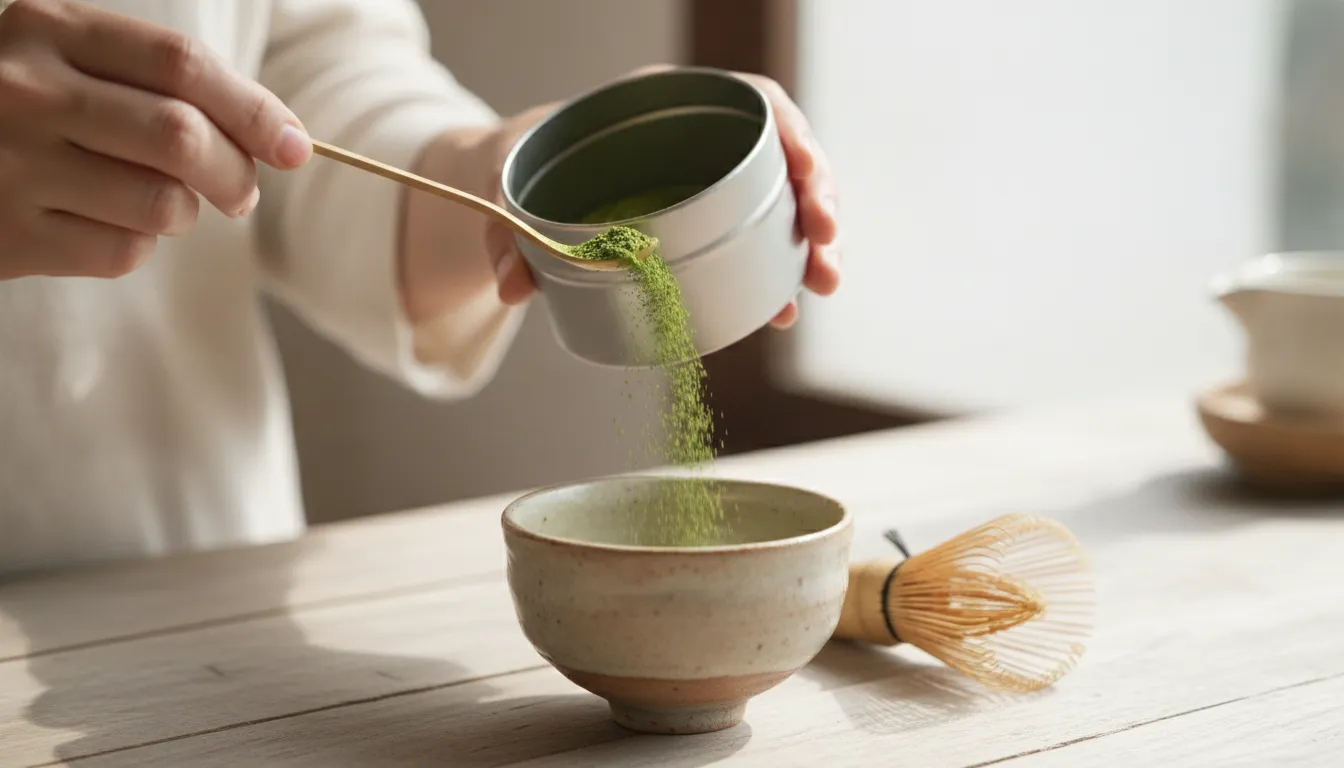
Matcha needs the most attention because the finely milled powder has far more exposed surface area than loose leaves. That makes it especially susceptible to oxidation, which can dull its color and soften the fresh, fragrant character you want in the bowl. Research on matcha storage recommends an extremely well-sealed, dark container and prompt use. Learn more about the storage factors that affect matcha.
Keep your House Matcha tightly sealed in a cool, dark cupboard, away from the stove and from aromatic foods. Open it only when you are ready to measure, whisk, and enjoy it. If you buy a larger quantity, dividing it into smaller airtight portions can reduce the amount of oxygen introduced each time you reach for it. Explore Sorate House Matcha when you are ready to make that ritual part of your routine.
Sencha: Make Your Everyday Leaf Easy to Reach
Sencha is often an everyday tea, so the best storage system is one you will actually use. Transfer an opened package to an airtight, opaque container and keep it in a cool, dry place with a stable temperature. A cupboard is usually more practical than the refrigerator for tea you drink regularly. Each opening brings in fresh air, so choose a container that is appropriately sized rather than leaving a large pocket of air above a small amount of leaf.
Store Sencha separately from coffee, spices, and cleaning products. Green tea is highly dry and readily absorbs moisture and surrounding odors, which can replace its clean aroma with something unmistakably cupboard-like. Sorate's Japanese green tea collection makes it easy to choose a tea that suits your daily brewing rhythm.
Gyokuro: Keep Conditions Cool, Dark, and Stable
Gyokuro has a delicate, nuanced profile that rewards extra care. Keep it in a cool, dark, highly stable environment, protected from temperature swings and humidity. Rather than storing it beside a frequently opened window or warm appliance, choose the quietest part of a cupboard. These small choices help preserve the tea's layered aroma and savory umami when you brew it.
For more guidance on bringing those flavors forward, see Sorate's guide to brewing Gyokuro, then browse the Sorate Gyokuro page.
Hojicha: Forgiving, but Still Worth Sealing Well
Hojicha's roasted character makes it a little more forgiving than the greener, more delicate teas, but it still benefits from an airtight container in a cool, dark cupboard. Good storage keeps its warm roasted aroma distinct and prevents it from absorbing the scents around it. Treat it with the same simple habit as Sencha: close the container promptly, keep it dry, and brew what you can enjoy while the aroma is lively.
The Best Tea Caddies and Containers for Keeping Tea Fresh
The right container is more than a tidy way to organize a tea shelf. It creates a small, stable environment that protects the leaves from the conditions that flatten their aroma and flavor. When I am storing Japanese green tea, I look for four things first: an airtight seal. Light protection, a practical size, and materials that will not hold onto unwanted smells.
Choose an airtight, light-blocking container
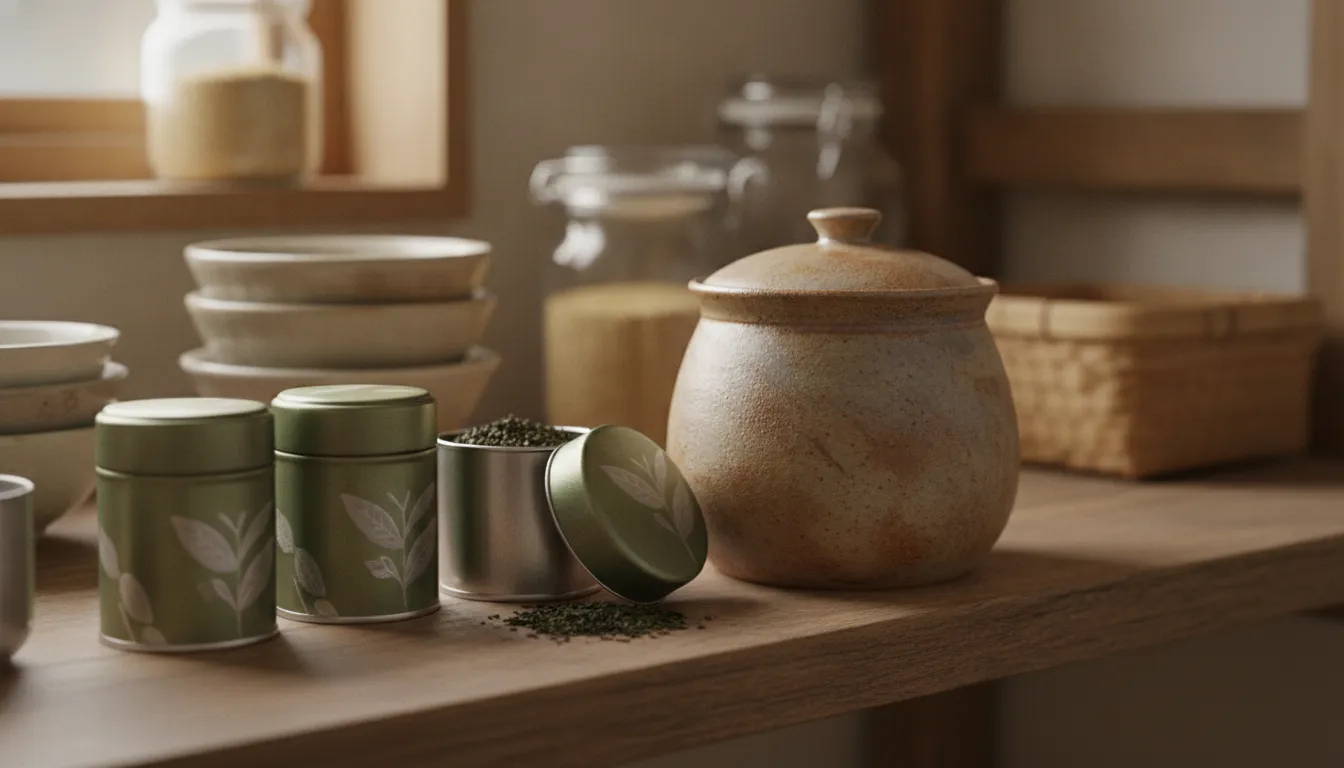
An airtight container helps shield tea from oxygen and humidity, both of which can speed the loss of freshness. Look for a lid that closes firmly and leaves no obvious gaps around the rim. A container does not need to be elaborate, but it should close more securely than a loosely folded bag or decorative jar. Airtight storage is widely recommended for protecting tea from oxygen and humidity.
Light matters, too. Direct sunlight can degrade delicate aromatic compounds and diminish the vibrant green color associated with fresh green tea. I would avoid placing clear glass on a sunny shelf, even if the jar looks beautiful there. An opaque caddy, or a container kept inside a dark cupboard, is a safer choice. Opaque packaging is used to reduce light exposure during tea storage and transit.
Match the container to how quickly you drink
Every time you open a container, you introduce fresh air. For that reason, a container that is only partly full leaves more air around the tea than a well-sized one. If you buy a larger quantity, divide it into smaller airtight portions and open one at a time. This keeps the reserve portion undisturbed while you enjoy the tea in daily use.
Size also makes a caddy easier to use. Sorate's Tea & Matcha Caddy holds approximately 80 grams and is handcrafted for regular tea storage. It is a thoughtful option when you want a dedicated home for a favorite tea rather than repeatedly rolling up an opened pouch. You can find it in Sorate's Accessories collection.
Keep odors and porous materials away
Green tea readily absorbs surrounding odors, so keep the container away from coffee, spices, cleaning products, and strongly scented pantry items. I also avoid unlined wood, paper, or other porous materials that can trap aromas and transfer them to the tea. A clean, non-porous interior with a dependable seal gives the leaves a neutral place to rest until the next brew.
Shop the Tea & Matcha Caddy and other storage accessories to protect every batch.
How Long Does Japanese Green Tea Stay Fresh?
For the freshest cup, I recommend drinking opened leaf tea within one to two months. That is when the color, aroma, and flavor are most likely to feel vivid and layered, especially for delicate Japanese green teas. An unopened package can last longer, but freshness still depends on its packing date and how it has been stored.
A useful rule of thumb is that loose-leaf Japanese tea often carries a best-by date of about one year after manufacture. Matcha has a shorter window because the finely milled powder exposes much more surface area to oxygen. A typical best-by period for matcha is around six to eight months after packing. These ranges are reflected in Japanese tea storage guidance from JapaneseTea.sg, but the date is best understood as a guide to flavor, not a safety deadline.
Over time, tea gradually loses the qualities that make it enjoyable. The green color can become dull or brownish, the aroma may seem flat rather than fresh and fragrant, and the brewed flavor can taste weak or muted. Higher temperatures speed the breakdown of chlorophyll, which contributes to that shift in color, according to The Tea Crane. If an older tea has lost its character, there is no need to force it into your daily ritual. Taste a small brew and decide whether it still gives you the experience you want.
Where should you keep it?
For most households, a dark, dry cupboard with a stable temperature around 60 to 70 degrees Fahrenheit is the practical choice. Keep the package tightly sealed and away from the stove, sunlight, spices, coffee, and cleaning products. Tea readily picks up surrounding odors, and every opening introduces fresh air.
Refrigeration can be useful for longer storage, but only when the container is truly airtight. Otherwise, the tea may absorb refrigerator moisture and odors. If you do refrigerate it, let the sealed container return to room temperature before opening so condensation does not reach the leaves or powder. For everyday drinking, buying an amount you can finish promptly is usually simpler than managing a cold-storage setup.
Matcha deserves the shortest timeline. Once opened, keep it especially well sealed, shielded from light, and use it while its color and aroma are still lively. That is the easiest way to preserve the clean, rounded character you expect from a carefully made powder.
Matcha Subscriptions and Bulk Tea: Keeping Every Batch Fresh
Buying tea in larger quantities can be practical, but freshness depends on how quickly you open and use each portion. I think of a tea cabinet as a small rotation: the amount I drink this week belongs in an easy-to-reach caddy. While the rest stays sealed and protected from air, light, heat, and kitchen odors.
| Consideration | Small, frequent batches | Bulk purchase |
|---|---|---|
| Freshness | Usually the strongest option because each package is opened closer to when it will be used. | Can stay fresh when the reserve is sealed well, but the working portion still needs careful handling. |
| Cost per gram | Often costs more per gram, with more frequent shipping or ordering. | Usually offers the better cost per gram, especially for a tea you drink consistently. |
| Storage burden | Requires less cabinet space and little portioning. | Needs portioning into small, airtight caddies while the remainder stays sealed. |
| Waste risk | Lower risk of tea going stale before you finish it. | Higher risk if a large opened package sits unused or is opened repeatedly. |
For matcha, small and regular deliveries are especially appealing because the powder has so much surface area exposed once it is opened. Sorate offers a prepaid six-month matcha subscription through its matcha collection, which can make it easier to receive fresh, manageable batches without waiting until the last scoop disappears. For loose-leaf drinkers, browse the tea collection and choose a quantity that matches your actual brewing rhythm.
How to store a bulk purchase after opening
If bulk buying is the better fit, do not keep returning to one oversized pouch for every cup. Portion the tea into small, clean, airtight caddies, keeping only a week or two of tea in the container you open daily. Keep the remaining tea sealed in its original packaging or another airtight container. A caddy sized for your normal usage, such as Sorate's Tea & Matcha Caddy, helps limit the amount exposed to air during each opening.
Finally, label each portion with its open date. That simple note turns freshness into something you can manage rather than guess at. Store the caddies in a cool, dark, stable cupboard, away from coffee, spices, and cleaning products. When the aroma starts to flatten or the color loses its brightness, move that batch to the front of the rotation and plan a smaller purchase next time.
A Simple Daily Storage Routine for Every Tea Lover
Once the right storage spot is in place, freshness comes down to a few small habits. I use this routine whenever I open a new tea, and it keeps the daily ritual simple rather than turning the pantry into a laboratory.
-
Move the tea into an airtight, opaque caddy
Transfer loose leaves to an airtight container as soon as you open the package. A tight seal limits contact with oxygen and humidity, while an opaque caddy shields the leaves from light. If you are choosing a dedicated container, Sorate's Tea & Matcha Caddy is sized for an active portion of tea. Write the opening date on a small label or on the underside of the lid so you know which tea to enjoy first.
-
Choose a cool, stable, dark location
Place the caddy in a cupboard or drawer away from the stove, direct sunlight, and sources of heat. A relatively stable 60 to 70 degrees Fahrenheit is a useful guide for preserving sensory quality. Keep tea away from spices, coffee, and cleaning products too. Green tea leaves readily absorb surrounding odors, and a beautifully fragrant tea deserves a neutral home.
-
Give matcha and Gyokuro extra care
Keep matcha and delicate Gyokuro in the coolest, darkest stable spot available. Matcha's powdered form exposes more surface area to air, while Gyokuro's nuanced flavors benefit from especially steady conditions. Open either container only when you are ready to measure tea, then close it promptly.
-
Reduce the air in your active container
Every opening introduces fresh oxygen. If a bag remains in rotation, gently press out excess air before resealing it. Better still, divide a larger supply between smaller caddies, filling one for everyday use and leaving the rest undisturbed.
-
Restock in small, enjoyable batches
Buy only the amount you can comfortably finish while it still smells vivid and tastes lively. Smaller purchases make it easier to rotate through Sencha, Genmaicha, Hojicha, or Gyokuro without letting an opened pouch linger. A subscription can provide a steady rhythm as well, so each new batch arrives before the previous one becomes an afterthought.
The goal is not complicated equipment. It is a consistent sequence: seal, shelter, open briefly, and replenish thoughtfully. With those habits, opening your tea caddy becomes a reliable invitation to brew.
Join Sorate's prepaid matcha subscription and receive fresh, evenly sized batches all year long.
Frequently Asked Questions
Where should green tea be stored to keep it fresh?
Keep it in an airtight, opaque container in a cool, dry cupboard away from sunlight, heat, and strong aromas such as coffee, spices, or cleaning products. A stable room temperature around 60 to 70 degrees Fahrenheit helps preserve the tea's aroma and flavor. Store only a manageable amount in your daily-use container so you are not repeatedly exposing the full supply to air.
Should green tea be kept in the fridge?
Usually, a cool, stable pantry is simpler and safer for everyday use. Refrigeration can slow deterioration, but it is suitable only when the tea is sealed in a truly airtight container. Otherwise, it can absorb moisture and refrigerator odors. If you refrigerate tea, let the closed container return to room temperature before opening it, which helps prevent condensation from reaching the leaves. Learn more about refrigeration risks.
How long does Japanese green tea stay fresh after opening?
For the freshest aroma and flavor, aim to use opened green tea within one to two months, even when it is stored well. Buy amounts that match your drinking routine rather than keeping a large supply open for a long time. If the tea smells flat, tastes muted, or has lost its lively color, it may have passed its best sensory window. This storage guide recommends the one-to-two-month window.
How do you store matcha to maintain its color and flavor?
Matcha needs extra care because its powdered form has much more surface area exposed to oxygen than whole leaves. Keep it tightly sealed in an opaque container, protected from heat, light, moisture, and odors, and use it promptly after opening. Close the container immediately after measuring so the powder retains its fresh color and nuanced flavor. See the detailed matcha storage guidance.
Ready to Keep Your Tea Fresh?
Proper storage helps preserve the color, aroma, and nuanced flavor that make Japanese tea such a pleasure to prepare. Shop Sorate's fresh Uji matcha and Japanese green teas and explore the matcha subscription for an easy way to enjoy each batch at its best.


