


Tea growing regions in Japan are more than points on a map. Latitude, elevation, rainfall, soil, fog, harvest timing, and cultivation traditions all influence how tea is grown and processed. Uji is the best-known example for many tea lovers, but Shizuoka, Kagoshima, Yame, and other regions each offer a different way to understand Japanese tea.
Explore Sorate's Japanese tea collection
What are the main tea growing regions in Japan?
Japan's major tea growing regions include Shizuoka, Kagoshima, Uji and the wider Kyoto area, Yame in Fukuoka, and tea districts farther north such as Sayama. Each region has its own combination of climate, terrain, harvest calendar, cultivars, and processing traditions. The result is a wide landscape of Japanese green tea, not one single regional style.
Japanese tea is cultivated across a long north-to-south span. That range matters because tea plants respond to the length of the growing season, winter temperatures, spring frost risk, sunlight, and the movement of water through the soil. Farmers also adapt cultivation to local slopes, plains, valleys, and coastal or inland conditions.
- Shizuoka: A broad, varied tea landscape that stretches from mountain areas to open plains.
- Kagoshima: A warm southern region known for a long harvest season and diverse production.
- Uji and Kyoto: A historic tea center associated with tencha, matcha, gyokuro, sencha, and careful cover cultivation.
- Yame: A Fukuoka region especially associated with traditional gyokuro cultivation in mountain areas.
- Sayama and other northern districts: Cooler growing conditions that show how latitude and winter shape cultivation decisions.
These labels are useful starting points, but they do not replace a producer's details. A tea's cultivar, harvest, shading period, steaming or roasting choices, and finishing style are just as important as its regional name.
How do geography and climate shape Japanese tea?
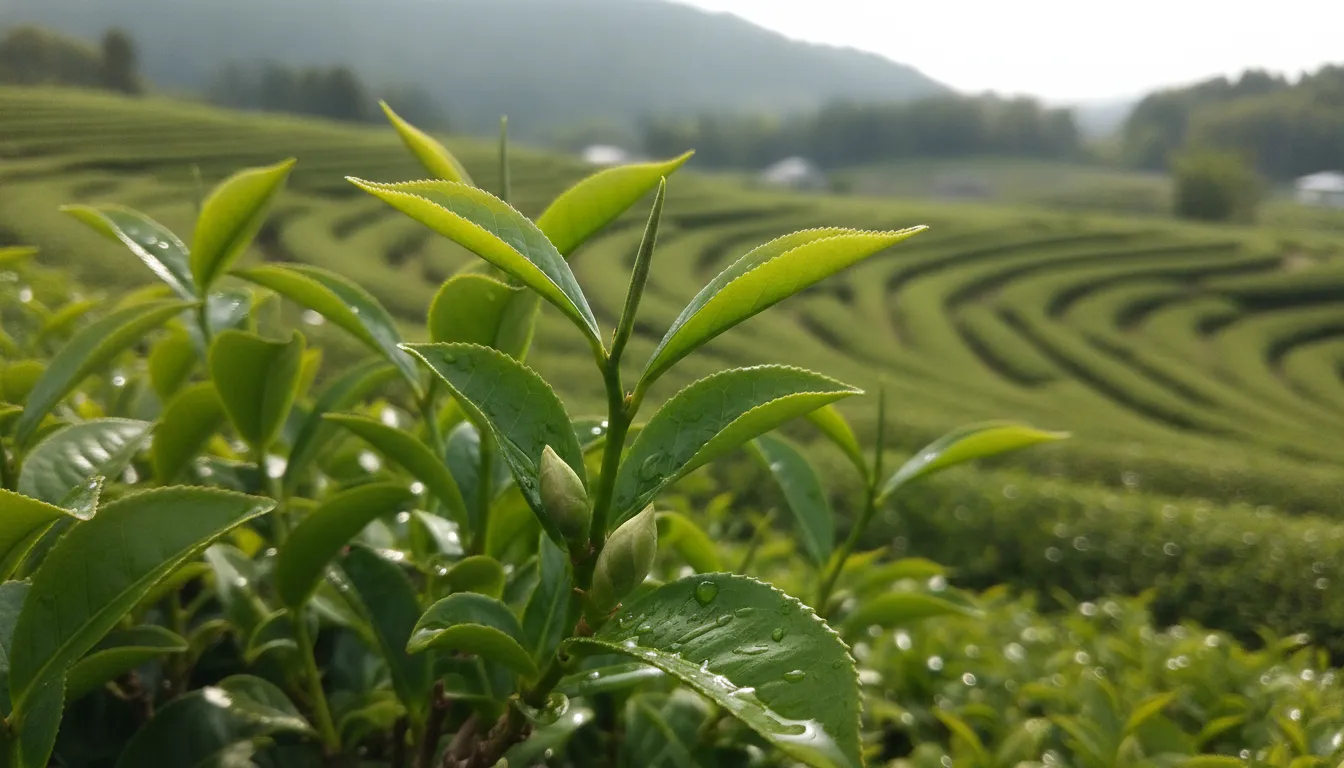
Geography shapes Japanese tea by changing when plants grow, how quickly shoots develop, how much moisture the roots receive, and how farmers protect young leaves. Cooler nights, mountain mist, well-drained slopes, fertile plains, and shade structures can all affect harvest timing and the balance of aroma, sweetness, umami, and astringency in the finished tea.
Latitude changes the growing calendar
Southern regions tend to warm earlier in spring, while northern regions face a shorter season and greater concern about frost. This affects when the first shoots appear and how farmers plan the harvest. Kagoshima's warm climate supports an especially long harvest window, while cooler districts require different timing and protection strategies.
Harvest timing is not simply a matter of early versus late. The same tea plant can produce leaves with different characteristics at different points in the season, and a farmer may choose a particular harvest for a specific tea style. When you compare regional teas, look for harvest information alongside the place name.
Elevation and slope change exposure
Tea can grow on plains, rolling hills, and mountain slopes, but each setting presents different conditions. Slopes may drain water quickly and experience strong shifts between daytime and nighttime temperatures. Mountain areas can also hold mist and cool air, while open plains may offer more uniform sunlight and room for efficient field management.
Elevation does not guarantee a certain flavor. It is one part of a larger system that includes cultivar, shade, soil, weather, picking standard, and processing. The useful question is not whether high-grown tea is automatically better, but what a particular landscape allows a farmer to do.
Rainfall, soil, and shade work together
Tea plants need reliable moisture, but standing water can damage roots. Fertile, well-drained soil is one reason river valleys and carefully managed slopes have become important tea areas. Shade is another deliberate intervention. Covering plants before harvest changes the light reaching the leaves and is central to the cultivation of teas such as tencha and gyokuro.
Those choices connect the landscape to the tea ritual. A regional tea is not just a crop grown in a climate. It is the outcome of a relationship between place, plant, season, and human technique.
Why is Uji one of Japan's best-known tea regions?
Uji is one of Japan's best-known tea regions because its surrounding landscape, long tea history, cover-cultivation traditions, and connection to tea ceremony culture have supported distinctive teas for centuries. Ujicha can also refer to tea made through Uji-origin methods from leaves grown in a wider surrounding area, not only within Uji City.
The Ministry of Agriculture, Forestry and Fisheries describes Ujicha through both place and method. Its overview points to fertile, well-drained soil, substantial rainfall, and small slopes with meaningful day-to-night temperature differences around the Uji and Kizu rivers. It also describes a regional tradition that includes tencha, sencha, gyokuro, hojicha, kabusecha, and genmaicha, with matcha made by grinding tencha.
Uji's importance is therefore not only historical. The region shows how cultivation choices become part of a tea identity. Under-cover growing, careful picking, and processing traditions can be read alongside the geography rather than separated from it. For a concise official overview, see the Ministry of Agriculture, Forestry and Fisheries guide to Uji tea.
Sorate's connection is specifically rooted in Ujitawara-cho, in the Uji area of Kyoto. That sourcing story deserves its own space, so this article does not retell it as a regional history. Read Sorate's story of its birthplace in Uji for the farm relationship, local landscape, and brand perspective.
For tea shoppers, Uji is best treated as an invitation to ask more precise questions. Is the tea sencha, gyokuro, tencha, or matcha? Was it shaded? Which harvest was used? How was it finished? Those details turn a broad regional reputation into a clearer understanding of what is in the cup.
What makes Shizuoka tea different?
Shizuoka is distinctive for the breadth of its tea landscape. Tea is grown from mountainous areas to plains, so the prefecture contains many local conditions rather than one uniform terroir. Its scale and variety make it a useful example of how altitude, sunlight, river mist, field shape, and processing choices can create different regional expressions within one prefecture.
Shizuoka is widely recognized as Japan's leading tea-producing prefecture. An official Shizuoka Food Information Center overview describes cultivation across mountain areas and plains, including sunny areas such as Makinohara and mountain fields influenced by river mist. This variety helps explain why it is more useful to speak of Shizuoka's tea districts than to imagine one single Shizuoka flavor.
In practical terms, Shizuoka is a good region to explore when you want to compare how landscape affects production at scale. Open fields may support efficient cultivation, while mountainous areas create different exposure, access, and temperature patterns. A tea's label or producer notes can reveal whether it comes from a broad plain, a river valley, or a higher mountain district. You can read the official Shizuoka regional overview for more context.
How do Kagoshima and Yame express place in the cup?
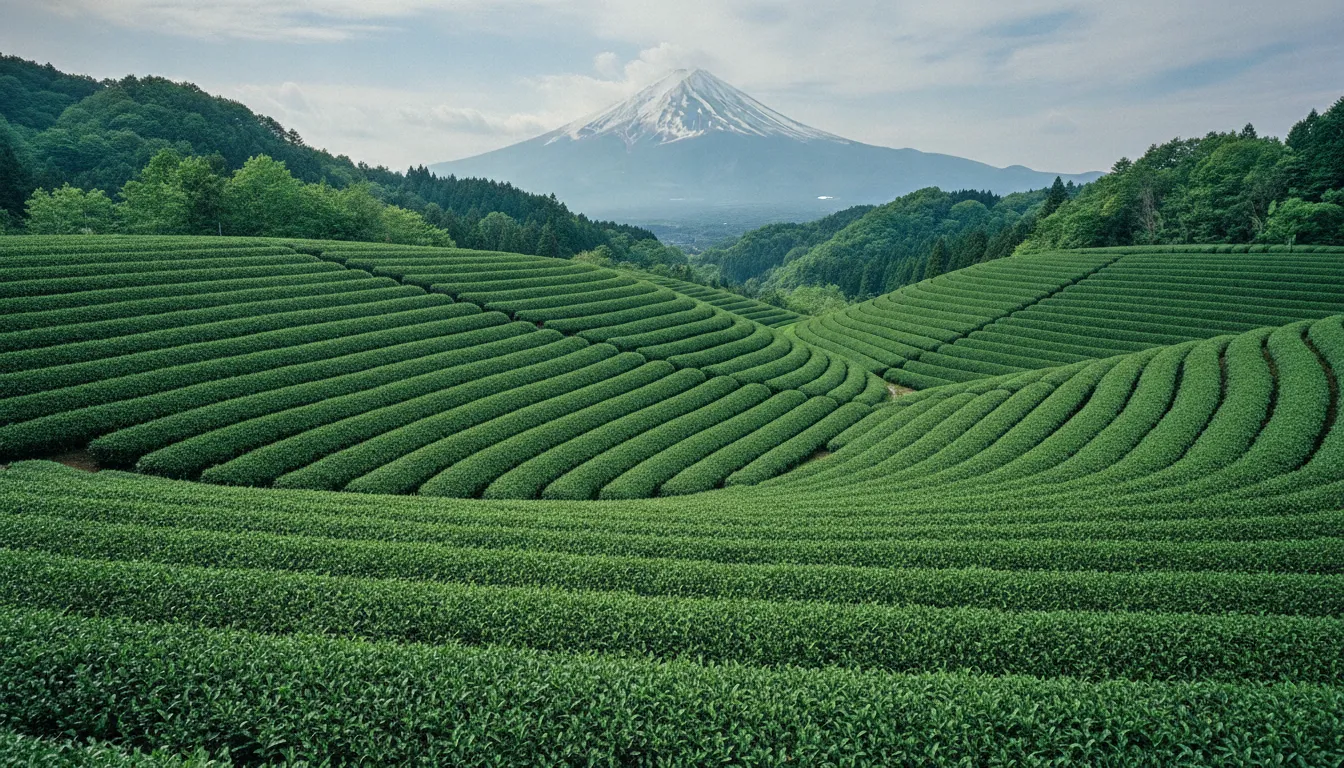
Kagoshima and Yame show two different ways that place can guide tea production. Kagoshima's warm southern climate supports a long and varied harvest season, while Yame's mountain areas and shade-grown gyokuro traditions emphasize careful, small-scale cultivation. In both regions, climate and technique work together rather than acting alone.
Kagoshima: a warm, varied southern region
Kagoshima's position in southern Japan gives it a warm climate and an extended harvest calendar. The Ministry of Agriculture, Forestry and Fisheries identifies Kagoshima as Japan's second-largest tea-producing prefecture by production quantity and cultivation area, and notes that it produces a range of teas from early to late harvests. The prefecture is also known for early new tea and for producing tencha, the leaf material used to make matcha.
That combination of warmth, scale, and variety makes Kagoshima a useful counterpoint to Uji. Where Uji is often introduced through historic tea culture and cover cultivation, Kagoshima helps readers see the role of season length, field geography, and production diversity. Explore the MAFF guide to Kagoshima tea for the region's production and processing context.
Yame: mountain tea and gyokuro tradition
Yame, in Fukuoka Prefecture, is strongly associated with gyokuro cultivated in mountain areas. The Fukuoka Yamecha council describes shade cultivation, hand selection, and traditional care as important parts of Yame's gyokuro identity. Mountain terrain limits the amount that can be produced and makes careful cultivation central to the region's approach.
Yame is a reminder that a tea region can be known for a focused specialty rather than a broad catalogue. Its regional identity comes from the interaction of mountain conditions, shading, plant management, and a long effort to preserve a demanding style. Learn more from the Fukuoka Yamecha guide to Yame gyokuro.
Japanese tea regions compared at a glance
The simplest way to compare Japanese tea regions is to look at their growing conditions and traditional strengths together. Uji is closely tied to historic tea culture and covered teas, Shizuoka to varied landscapes and broad production, Kagoshima to a warm and long season, and Yame to mountain-grown gyokuro traditions. These are useful patterns, not rigid rules.
| Region | Landscape and climate cues | Tea traditions to explore |
|---|---|---|
| Uji and Kyoto | Hilly terrain, rainfall, well-drained soil, day and night temperature differences | Tencha, matcha, gyokuro, sencha, and Uji-origin methods |
| Shizuoka | Mountain fields, plains, river mist, and many local districts | Broad range of Japanese green teas and regional sencha styles |
| Kagoshima | Warm southern climate and a long, varied harvest season | Sencha, tencha, early new tea, and diverse production |
| Yame, Fukuoka | Mountain areas and carefully managed shaded fields | Traditional gyokuro and other premium green teas |
| Sayama and northern districts | Cooler seasonal conditions and a shorter growing window | Regional green teas shaped by northern cultivation |
Use the table as a map, not a scorecard. A region can be historically important without every tea from that region tasting alike. The best next step is to read the producer's notes for cultivar, harvest, shading, processing, and intended preparation.
Discover Sorate's matcha from Uji, Kyoto
How should you choose a Japanese tea by region?
Choose a Japanese tea by region as a starting point, then narrow your selection using tea type, harvest, cultivation method, and flavor notes. If you want to explore Uji's tea tradition, start with a Kyoto tea and read its sourcing details. If you are comparing regions, choose the same tea type from different places so the geographic contrast is easier to notice.
- Start with the tea type: Compare sencha with sencha, or gyokuro with gyokuro, before drawing regional conclusions.
- Read the harvest information: First harvest and later harvest teas can have different profiles within the same region.
- Look for cultivation details: Shading, hand-picking, plant training, and field conditions add useful context.
- Pay attention to processing: Steaming, roasting, rolling, and grinding can reshape the expression of the leaf.
- Keep notes while tasting: Record aroma, texture, sweetness, umami, astringency, and finish without treating any one style as universally best.
Sorate's Japanese tea collection includes regional teas such as Gyokuro, Gyokuro Karigane, Sencha, Genmaicha, and Hojicha. For matcha, the House Matcha from Uji, Kyoto offers a direct way to connect a regional story with a specific product. The goal is not to memorize every tea district. It is to become more attentive to the path from field to ritual.
Shop Japanese green tea by style and origin
Frequently asked questions about tea growing regions
Is Uji the only tea-growing region in Japan?
No. Uji is one of Japan's most recognized tea regions, but major production and cultural traditions also come from Shizuoka, Kagoshima, Yame, Sayama, Mie, Miyazaki, and other areas. Each combines local climate and terrain with its own cultivation and processing practices.
What is Japan's largest tea-growing region?
Shizuoka is commonly identified as Japan's leading tea-producing prefecture. Its fields extend from plains to mountain areas, and its many local districts produce a wide range of teas. Regional leadership does not mean every tea from Shizuoka has the same flavor.
Does a tea's region determine its flavor?
Region influences tea, but it does not determine flavor by itself. Cultivar, harvest date, shading, picking standard, steaming, roasting, rolling, grinding, storage, and preparation all matter. Regional information is most useful when read together with the producer's full description.
Why is Uji associated with matcha?
Uji is associated with matcha because the area has a long tea ceremony history and strong traditions around shaded tencha cultivation. Matcha is made by grinding tencha into powder. Uji and the wider Kyoto region helped refine and preserve the cultivation and processing practices connected to this style.


