


A Japanese teapot is not one single shape. The name covers vessels made for different kinds of loose-leaf tea, serving styles, and everyday rituals. You may see a small side-handled pot called a kyusu, a compact handleless houhin, or a larger top-handled dobin. Their shared purpose is simple: to steep tea leaves and pour the infusion, while the details of shape, filter, and capacity change how each one feels to use. The right choice depends less on a rulebook than on what you brew, how many people you serve, and which form feels comfortable in your hands.
Explore Sorate's tea accessories
In this guide, I will compare the forms, materials, handles, and filters that help a pot fit your routine. I will keep the focus on choosing and using teaware, not on kettle selection or a full brewing recipe. Start with the kind of tea moment you want to create, then consider the vessel that supports it.
How to choose a Japanese teapot for your tea routine
To choose a Japanese teapot, begin with your tea routine. Do you brew a few cups for yourself, pour several rounds for guests, or serve tea at a gathering? Those habits can guide the form and capacity you need.
A kyusu is often pictured as a small teapot for loose-leaf tea. The University of Idaho ceramic collection describes one form as a small vessel for individual use. Japanese teapots also come in shapes suited to other serving patterns. Treat these descriptions as a starting point, not a strict size standard. Check the maker's capacity and consider the cups you will pour. A small pot may mean frequent refills at a table. A large pot may feel awkward when you brew for one.
| Form | What to notice | May suit |
|---|---|---|
| Side-handled kyusu | Side grip; wrist-turn pour | Loose-leaf tea; a few cups. |
| Houhin | Compact; handleless; lid gap | Small, deliberate pours. |
| Shiboridashi | Shallow; handleless; grooved edge | Small-volume brewing. |
| Dobin | Larger body; top handle | Serving a group. |
The table is a guide to form, not a ranking. Even two pots in the same category can feel quite different in the hand. If you shop in person, lift the pot empty and check whether you can hold it securely, see the spout opening, and remove the lid without fumbling. Online, review the stated capacity and look for clear images of the handle, lid, and strainer from more than one angle.
It also helps to distinguish a teapot from a kettle. The kettle heats water; a teapot holds leaves and water for steeping, then pours the infusion. They can sit beside each other during tea preparation, but they do different jobs. For details about water-heating equipment, keep that question separate from choosing the vessel that touches the leaves.
For tea-specific steeping variables such as water, time, and temperature, Sorate's tea brewing guide is the better reference. Here, the central question is which vessel fits your serving routine. That distinction helps you choose a pot without expecting it to solve every part of the brewing process.
Which Japanese teapot forms should you know?
Japanese teapot names can describe a broad class of vessels or a more specific design. Kyusu, for example, literally means teapot, although English-language tea writing often uses the word for the familiar side-handled form. The term is useful, but it is only one part of a wider family of shapes.
Kyusu: a useful everyday reference
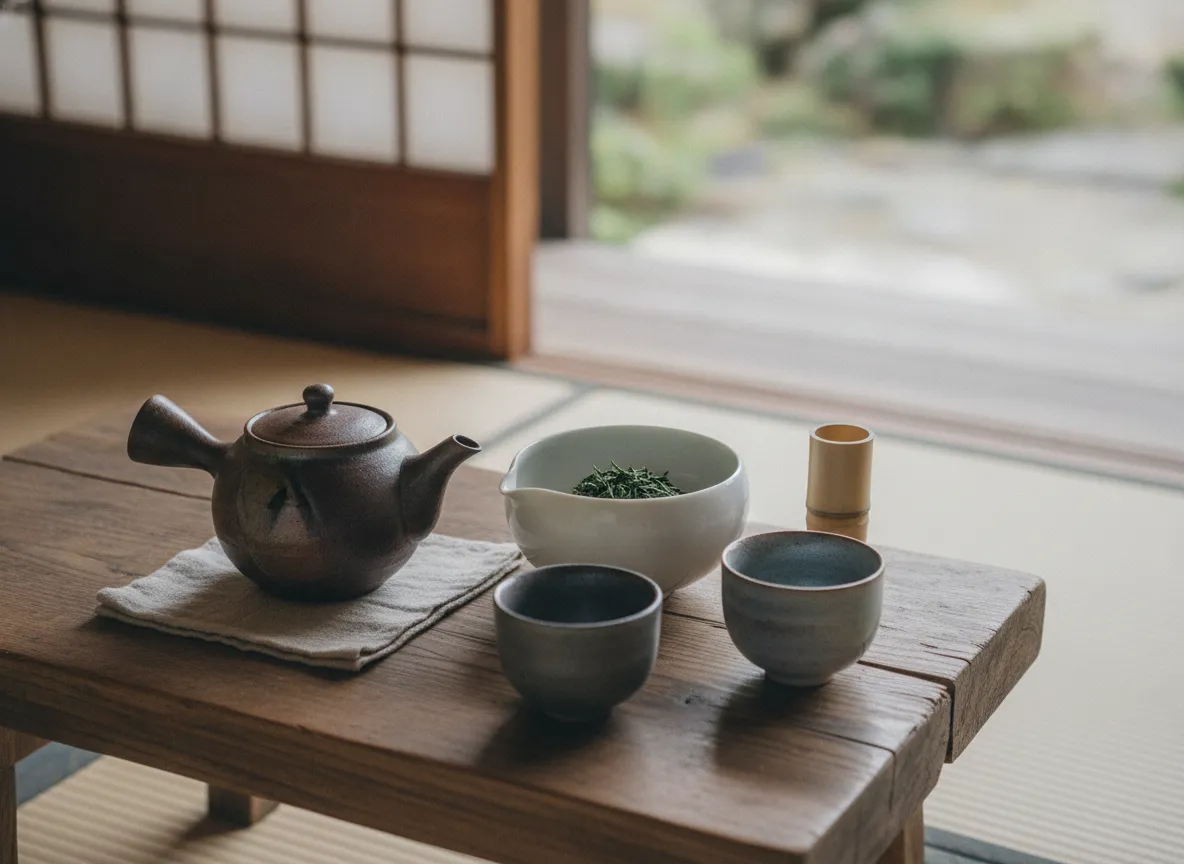
A side-handled kyusu is easy to recognize by its handle projecting from the body at an angle to the spout. Collections of Japanese ceramics describe it as a small pot, often suited to individual use. That compact scale can make it a natural choice for preparing loose-leaf tea in a few cups. Think of it as a practical starting point rather than the only authentic way to brew Japanese tea.
Houhin and shiboridashi: handleless options
A houhin has no handle. Its lid and rim create a narrow opening through which tea can pour while leaves are held back. A shiboridashi is also handleless, but typically has a flatter, shallow profile; small grooves near the rim can guide the liquid and help keep leaves in the vessel. Both forms invite a deliberate pour, and both tend toward smaller servings than a large household pot. Their lack of a handle is a design choice, not a missing feature.
When comparing these forms, look at how the leaves will be retained and how much tea you plan to serve. A lid opening may work differently from a built-in mesh or ceramic filter. The precise construction varies by pot, so inspect the specific piece rather than assuming that every vessel with the same name has identical details.
Dobin: a top-handled pot for sharing
A dobin is commonly described as a larger form with a handle above the body. That top grip leaves the sides of the pot free and can make carrying a fuller vessel feel intuitive. Some references associate dobin with serving teas such as genmaicha or hojicha and with pouring for more than one person. Treat these associations as helpful context, not a rule that limits what can be brewed in a particular pot.
These forms also sit beside, rather than replace, other tea vessels. Formal chanoyu, the Japanese tea gathering often called the tea ceremony, centers on preparing powdered matcha in a bowl, not steeping loose leaves in a teapot. For everyday leaf tea, a teapot may be one item in a set alongside cups and a water-cooling vessel. A Smithsonian collection record, for example, documents a kyusu as part of a sencha set with cups and a hot-water ewer. Keeping these uses distinct makes the vocabulary clearer and the choice easier.
How does a teapot handle change pouring?
A handle affects how a Japanese teapot sits in your hand and how it pours. It does not determine whether a pot is good or bad. Comfort, balance, grip and the weight of a filled vessel matter more than choosing a style because it is said to be traditional.
Side handles keep the grip beside the spout
On a side-handled kyusu, the handle projects from the body near a right angle to the spout. The pour comes from a turn of the wrist, rather than the forward tipping motion used with many familiar household pots. Some descriptions note that the free hand or thumb can help steady the lid while pouring. This can feel precise once you have tried the movement, but it may feel unfamiliar at first. If you have a chance, practice with an empty pot before filling it.
Rear and top handles offer different holds
A rear-handled teapot places the handle behind the body, much like many Western-style pots. A top-handled dobin suspends a grip over the vessel, which can be useful when lifting a larger pot from the table. Do not assume one style is better for a certain tea or setting. A handle's shape, clearance from the lid, and balance when filled all influence comfort.
Pay attention to a few practical details when comparing pots. Can your fingers fit around the handle without touching the hot body? Does the lid sit securely while you pour? Can you tilt the pot smoothly without the handle shifting in your grip? Are you likely to serve yourself, pass the pot around, or pour multiple small cups? The answers help narrow your options without relying on strict rules about which handle belongs to which tea.
Japanese tea ware is also made in a variety of regional and workshop traditions. A documented example from Tokoname shows a side-handled kyusu paired with a separate water-cooling vessel, while museum collections include both stoneware and porcelain teapots. These examples show that form and material can vary together. They are useful points of reference, not a reason to choose a vessel solely by place name.
For a small home tea ritual, a compact side-handled form may be appealing because the gesture of turning the wrist is part of serving. For a table of guests, a larger top handle may feel easier to lift. Let your hands and the way you share tea guide the choice. If the grip feels secure and the pour controlled, you have found a form that suits you.
What materials are Japanese teapots made from?
Japanese teapots come in more than one material. Ceramic and porcelain vessels vary in clay, glaze, shape, surface and decoration. You may also see glass or metal teaware. Suitability depends on the specific construction and maker's instructions. Focus on observable details and your intended use. Do not assume material alone predicts flavor or performance.
Ceramic and stoneware
Stoneware offers a broad canvas for different clays and finishes. A Smithsonian collection record describes a kyusu made of stoneware with a rice-straw-ash glaze, made in Hagi, Yamaguchi Prefecture. The example shows how a teapot can reflect a particular ceramic tradition without suggesting that every Hagi pot shares one exact shape or finish.
Tokoname is another name readers may encounter when looking at Japanese tea ware. Bard Graduate Center describes a hand-thrown kyusu and water cooler associated with Tokoname, noting the burnt-orange color typical of the ceramics and the area's iron-rich clay. Its article also traces local production of wares and utensils for loose-leaf sencha to the nineteenth century. These are useful historical and material details. But they should not be stretched into a claim that a clay type changes tea's taste or carries a guaranteed brewing benefit.
Porcelain and decorated wares
Porcelain can have a smooth, often lighter-looking finish, and some Japanese examples feature painted or overglaze decoration. The Metropolitan Museum of Art records a nineteenth-century side-handled sencha teapot in porcelain with red overglaze and gold decoration, identified as Kyoto ware. A separate Met record documents a Kyoto ware kyusu made of stoneware with polychrome overglaze enamels. Together, these collection examples make clear that material, regional tradition and decorative surface can vary, even among teapots associated with the same broad tea culture.
Choose by feel, finish and maker's guidance
When you compare materials, consider the vessel's weight, texture, finish and ease of handling. A glazed interior may be simpler to rinse than an unglazed surface, but follow the maker's care instructions for the actual item. Look at the spout and filter as closely as the exterior; a beautiful finish will not compensate for a pour that does not suit you.
Material is one part of the decision, not a shortcut to a universal best choice. If you want an understated pot for regular use, you may gravitate toward a simple, easy-to-handle ceramic form. If you enjoy the look of painted porcelain or a particular kiln tradition, that aesthetic can be part of the pleasure. For background on how Sorate approaches Japanese tea and its origins, see the story of Sorate's Uji roots.
What should you know about filters and capacity?
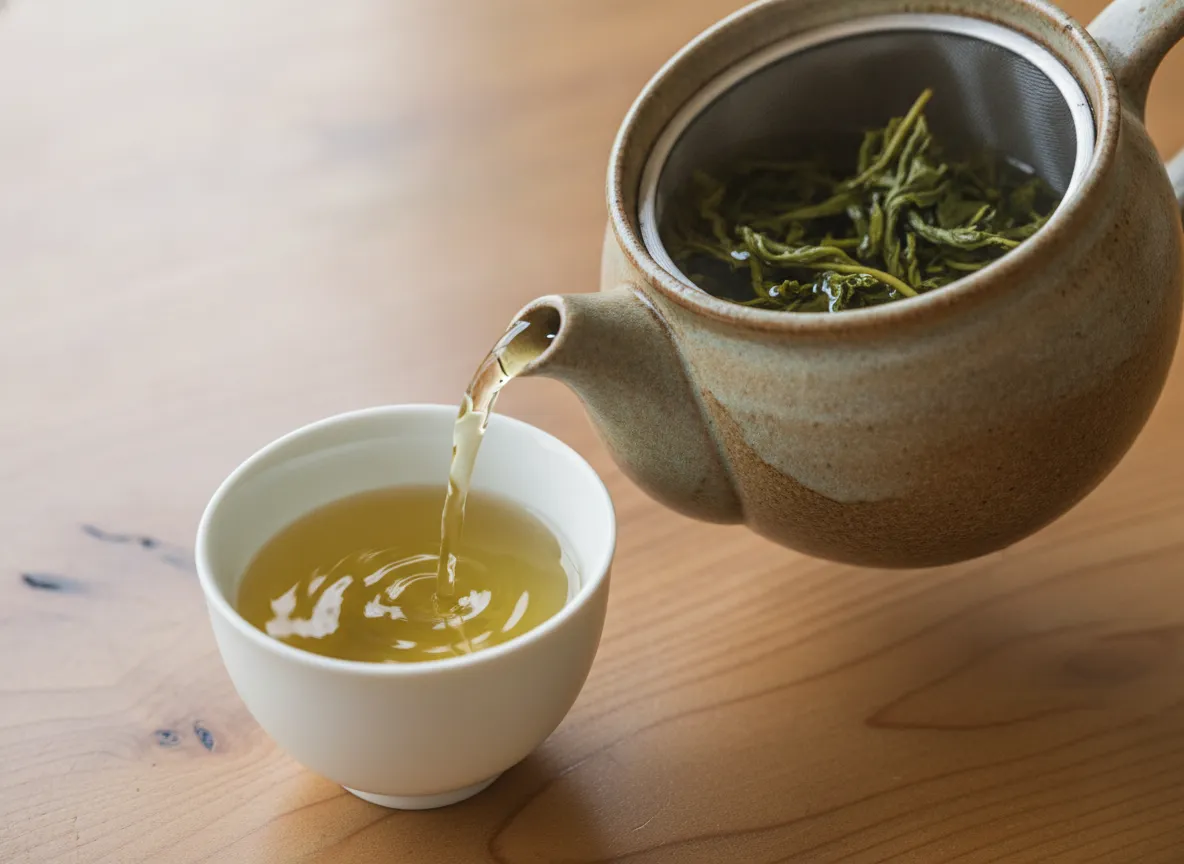
A strainer determines whether tea leaves stay in the pot as you pour. Japanese teapots may use an integrated ceramic filter near the spout or a removable mesh insert. Some pots use a fine screen. Others rely on a lid-and-rim opening that retains leaves without a separate basket. The right arrangement depends on the pot, the leaf size, and the kind of pour you prefer.
Compare the filter to the leaves you brew
Look through the spout and check where the filter sits. Small leaf fragments can pass through a coarse opening, while a fine mesh or closely spaced holes may hold them back more thoroughly. Some handleless houhin rely on the space between the lid and rim to let tea flow while leaving leaves inside. A shiboridashi may use grooves near the pouring edge. These are design examples; individual pots differ, so inspect the product details and any care notes before choosing.
If you often brew larger, twisted leaves, you may want a pot with enough interior room for them to unfurl and a filter that does not feel restrictive. If your teas include smaller particles, pay extra attention to the strainer. Neither situation calls for a universal material or filter rule. The aim is to keep the pour comfortable and the cup free of more leaf than you want.
Let capacity follow the way you serve
Capacity labels can help you compare vessels, but they do not tell the whole story. Ask how many cups you typically pour and whether you enjoy several small infusions or one larger serving. A compact pot can suit a personal ritual or a few cups; a larger dobin-style form may be more convenient when serving a group. Published size ranges for kyusu and handleless pots vary by source and model, so use the maker's actual capacity rather than treating a category estimate as a standard.
Also consider the cup size and the number of pours you expect. A few small tasting cups do not require the same volume as a larger mug for one person. When comparing online, verify whether the listed capacity refers to a brim-full volume or a recommended fill level, if that information is available. If not, contact the seller before relying on a precise serving count.
For tea-by-tea preparation details, such as water and steeping time, use a dedicated brewing reference. Sorate's Gyokuro guide includes focused advice on teaware for that tea, while this article stays with the broader question of vessel design.
A simple checklist for choosing a Japanese teapot
Before choosing a Japanese teapot, picture the routine you want it to support. A useful pot is one you can handle comfortably, clean according to its maker's directions, and reach for often. This short checklist keeps the decision grounded in use rather than labels alone.
- Start with your serving pattern. Decide whether you usually brew for one, share a few cups, or serve a table. Compare the maker's stated capacity with the cups you actually use.
- Choose a form you can pour confidently. Try a side handle, rear handle, or top handle if possible. Check the grip and balance when the pot is full, not only when empty.
- Inspect the lid and spout. The lid should sit securely, and the spout should pour in a controlled stream. If the design includes a lid vent, avoid covering it while pouring.
- Match the strainer to your tea leaves. Look at the size and position of the filter, how easy it is to rinse, and whether it appears appropriate for the leaf size you normally brew.
- Consider the finish and care instructions. Decide whether you prefer a glazed, unglazed, or decorated surface, then follow the maker's specific cleaning and drying guidance.
- Keep the roles of your teaware clear. A teapot steeps and pours tea; a kettle heats water. Matcha is prepared by whisking in a bowl, so a teapot is not a substitute for matcha equipment.
There is no single best pot for every tea drinker. A compact kyusu may suit a personal loose-leaf routine. A handleless form may appeal if you prefer small, deliberate pours. A larger top-handled pot may feel comfortable for sharing. To explore complementary tools for Japanese tea, browse Sorate's tea accessories. Choose pieces that fit how you make and serve tea.
Explore accessories for your tea ritual
Frequently asked questions
What are Japanese teapots called?
Kyusu is a Japanese word for teapot. In English-language tea contexts, it often refers to the side-handled pot commonly used for loose-leaf tea. Houhin, shiboridashi, and dobin are other names you may see for distinct forms.
What is a classic Japanese teapot?
A side-handled kyusu is one well-known example, but there is no single shape that represents every Japanese teapot. Handleless and top-handled forms also appear in Japanese tea ware. Choose based on how you plan to brew and serve rather than treating one design as the only traditional option.
How do you use a traditional Japanese teapot?
For loose-leaf tea, add leaves to the pot and pour in water prepared for that tea. Steep according to a reliable tea-specific guide, then pour into cups. Leaf amount, water temperature and time vary by tea. Follow a dedicated brewing reference rather than assuming one recipe fits every leaf.
What is the best Japanese teapot?
The best Japanese teapot is the one that fits your leaves, serving size, grip, and preferences. Compare capacity, handle style, strainer design, material, and the maker's care instructions. If possible, try the pot in your hand before choosing.
A thoughtful teapot can make everyday loose-leaf tea feel more considered, from the first pour to the last cup. Choose a shape and filter that fit your routine, then let the ritual remain simple: good leaves, a vessel you enjoy handling, and time to share the tea.


