


This guide covers everyday, guest, and gift setups.
Serving tea to guests feels easier when each piece has a clear purpose and the pot, cups, and serving surface are within comfortable reach. A thoughtful arrangement can be simple; it does not need to resemble a formal ceremony or a matched heirloom collection.
A tea service set is a group of pieces arranged to serve guests. It usually centers on a pot, cups, and a stable surface. Choose pieces that suit the tea, number of guests, and serving style; there is no required checklist.
Explore tea-serving accessories
Think first about the path from pouring to each guest: where the pot sits, how cups are reached, and where drips or small tools can be kept. Once that flow is clear, it becomes easier to decide which pieces are essential for your table and which are simply useful extras.
What belongs in a tea service set?
Start with a teapot suited to your tea. Set out enough cups for everyone, along with a clear, stable surface for placing them down. A tray can help you carry pieces or contain drips, but it does not need to match the pot. Think of the setup as a working arrangement, not a fixed checklist.
The Smithsonian's National Museum of Asian Art records a sencha set with a kyusu, hot-water ewer, six cups, and a storage box. See the museum's sencha set record.
Core pieces for serving
For a simple guest service, match the number of cups to the people you expect, then leave room for a refill or an extra guest if space allows. Choose a pot you can lift and pour with control. Place cups within reach and leave the area around the pot uncluttered, so serving does not become a shuffle of objects. A small tray or heat-safe landing spot can help organize the pot and cups, especially when you are moving between the kitchen and table.
Whether you need a strainer depends on the pot and the tea: use one when leaves would otherwise pour into the cups. Keep the arrangement flexible rather than buying every accessory at once. If you already have a pot with an effective built-in strainer, a second strainer may add little to the service.
Optional pieces that support your routine
Add only the items that make your particular gathering easier. A separate vessel for hot water can be useful if you expect to offer refills or need to adjust the pace of serving. A tea caddy keeps leaves close at hand; a small dish gives used leaves somewhere to go during cleanup. Saucers are optional if your cups and setting do not call for them, and sweetener or milk pieces belong only when your guests want them.
Some tea practices use specialized tools for preparing tea, but those tools are not automatically part of an everyday pot-and-cup service. Keep preparation tools separate from the pieces guests need at the table. Choose only the items that suit your tea and guests. Leave unused pieces off the table.
How do you choose a teapot for the gathering?
Start with how you expect to serve, not a prescribed set size. Consider how many people will pour, whether you plan one round or several refills, and how much space is available. Choose a pot that can rest safely between pours and feels comfortable to handle. An oversized or awkward pot can take over the table.
For a small group, consider whether you would rather brew a round for everyone or pour smaller amounts and return to the pot as guests finish. If you expect refills, make sure the pot can be comfortably lifted and poured throughout the visit. There is no universal cup-count rule: match the pot to your guests, your preferred serving rhythm, and the cups you actually use.
Pay attention to control as well as capacity. The spout should let you direct the pour into a cup without needing to tilt the pot sharply or reach across the table. Check that the handle feels secure in your hand, that you can lift the pot without straining, and that the lid stays in place as you pour. If possible, handle the pot before choosing it. Comfort is personal, and a beautiful piece is most useful when you can serve from it with ease.
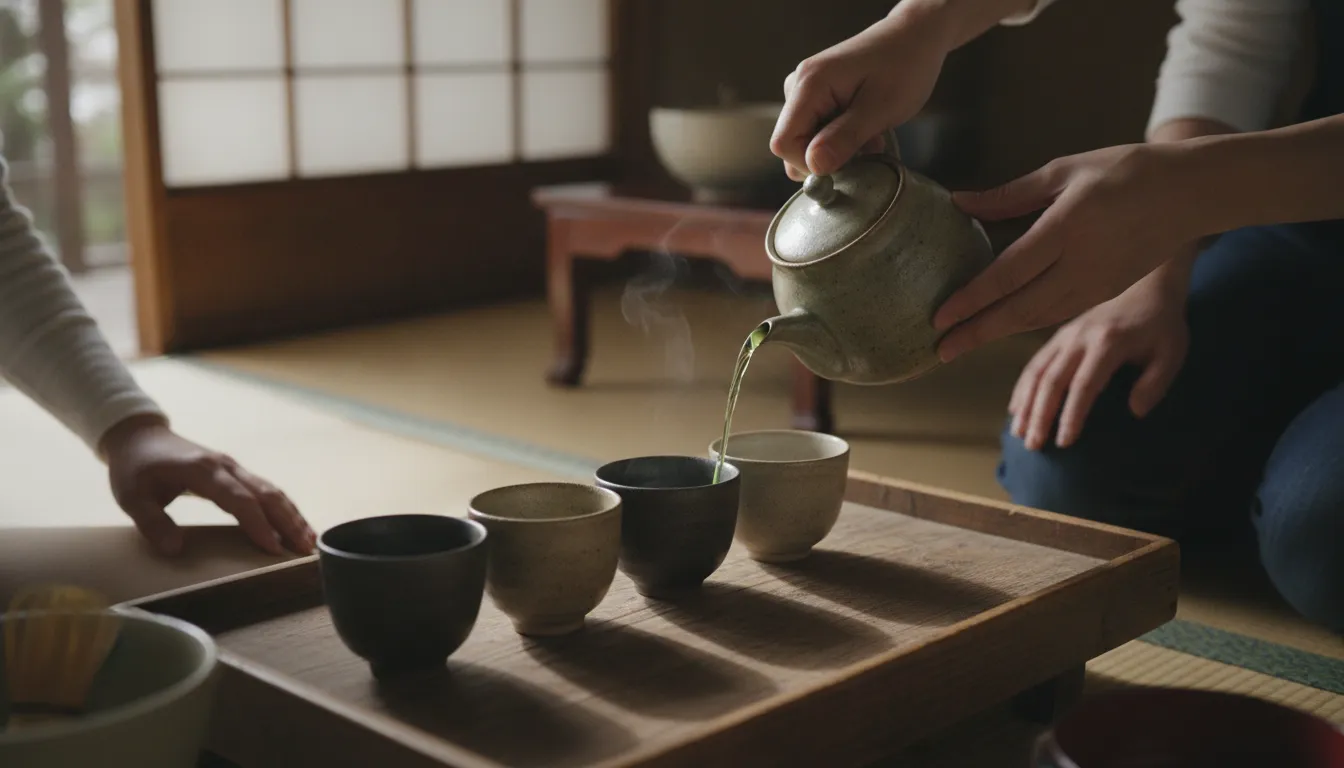
Cleanup matters, too. Consider whether the opening gives you room to rinse the inside and remove leaves or an infuser without fuss. Think about where the pot will dry and how it will be stored after the gathering. If you serve different teas, a straightforward cleaning routine can make it easier to bring the pot back into rotation. Consider how you will handle hot water and move the pot between the brewing area and table, especially if the route is narrow or shared with other guests. Keep the serving motion simple and unhurried.
Finally, choose for the pace you want. A single-pot setup keeps the table simple and encourages everyone to share the same brew. Separate pots can help when guests want different teas, but they require more room and attention. Before settling on a tea service set, picture the whole moment: filling the pot, carrying it safely, pouring for each person, and making another round. The right teapot is the one that supports that flow without making hosting feel like a performance.
Match cups and saucers to the service
Set out enough cups for everyone you expect to serve, including yourself if you will be pouring and joining the table. If guests may want another cup before the first one is cleared, keep a few clean extras within reach rather than crowding every place setting with duplicates. The goal is an easy handoff from pot to guest, not a perfectly uniform display.
Think about how the cups feel in use. Guests should be able to lift and set them down comfortably. You should also be able to serve without reaching across the table. Before guests arrive, set the cups within reach and check that the pot, tray, and small accessories have room. Keep spare cups nearby if the table is tight.
Decide whether saucers will help
A saucer gives guests a place to rest a cup, catch a drip, or carry tea to another seat. It can also complete a place setting when tea is served with a small bite. Saucers are not essential for every relaxed gathering. If they take up space or make the table harder to navigate, serve the cups without them.
Consider the whole service before choosing. A saucer should sit securely beneath its cup and leave enough room for guests to set it down without knocking into neighboring pieces. If you are serving at a low table or asking guests to move around, prioritize stability and a clear landing spot over extra decoration. Keep the arrangement consistent, so guests can tell at a glance where each cup belongs.
Create a coordinated look without matching everything
Cups can feel connected through one repeated detail, such as a shared color, a similar finish, or a simple accent that echoes the teapot or serving tray. Exact matching is one option, not a requirement. A small variation can make a table feel personal, provided the pieces still work together and do not compete for attention.
Choose a limited palette for a calm setting. You can also repeat one visual detail across different cups. Check the pieces on the table, not just on a shelf. They should feel comfortable together, and each cup should be easy to identify and pick up.
Which supporting pieces make service easier?
A tray gives you a contained place to carry cups, catch small drips, or bring the teapot and a few essentials to the table. Choose one that fits the pieces you actually use and leaves enough room to lift items comfortably. If you serve at a dining table, a clear, stable surface can do the same job; a dedicated tray is helpful, not mandatory.
A strainer or infuser helps when your brewing method calls for one. Some teapots have a built-in strainer. Others can use a removable basket or infuser. Match the tool to the pot and tea. Keep a small dish nearby for used leaves so you have a place to set it down.
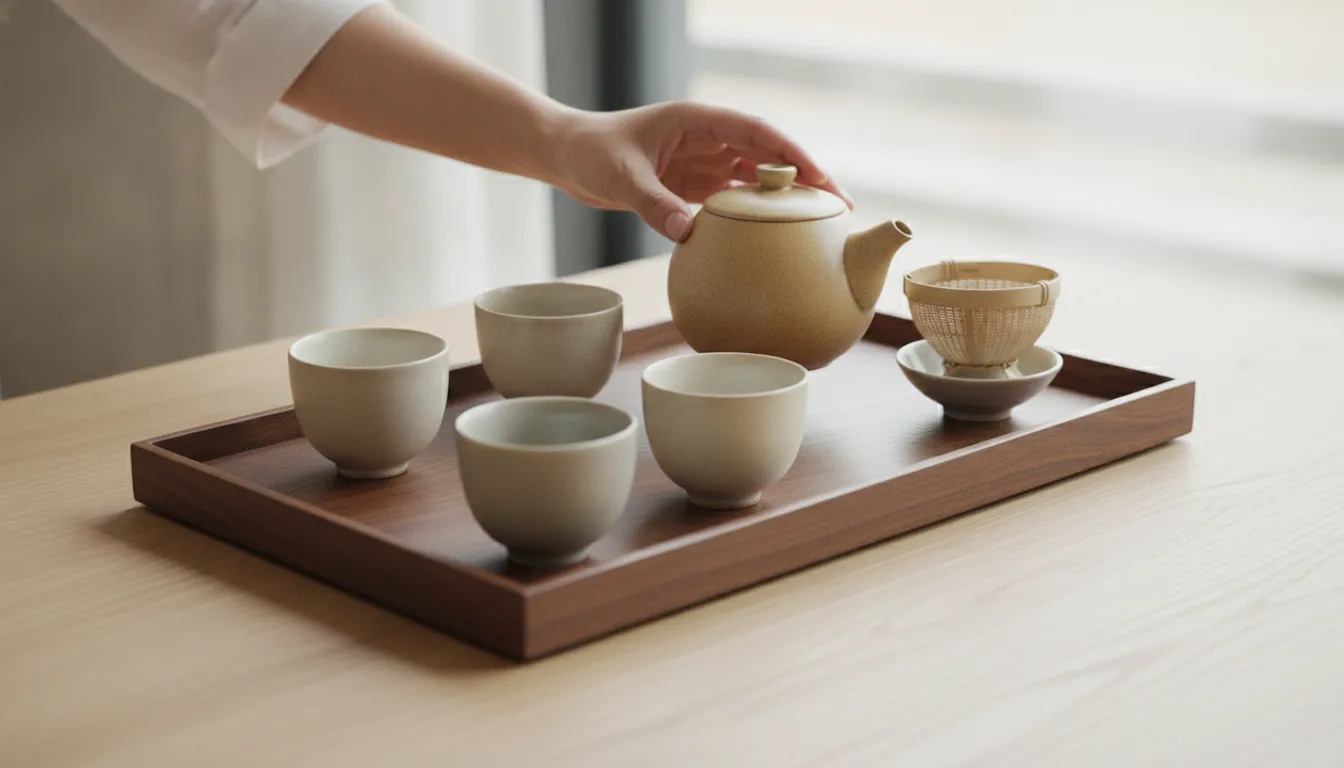
A tea caddy can keep the leaves you plan to serve close at hand, especially when guests may want another pot. For an easy, uncluttered setup, bring out only what the occasion needs: the caddy, a scoop, a waste dish, or a small cloth for incidental drips. These practical additions support the service without requiring a matching piece for every task.
Keep matcha preparation tools distinct from general leaf-tea service. A bowl and whisk are used to prepare matcha; they are not required to steep and pour sencha, gyokuro, or another leaf tea. If you are serving both styles, set out the preparation tools only for the matcha portion rather than treating them as standard parts of every tea service.
Sorate's accessories collection includes individual items such as a teapot, infuser, caddy, and matcha tools. Think of these as pieces to complement your own setup, not a promise of a complete, all-purpose guest-serving set. Start with the accessories that solve a real serving need, then add others only if they make your routine simpler.
How to arrange and serve tea without crowding the table
A comfortable tea table is less about matching every piece than making the next pour easy. Start with the space you have, then arrange only what the gathering needs. This is a practical home setup, not a fixed arrangement or a formal Japanese tea-room layout.
- Clear a stable surface. Choose a level table or counter with enough room for guests to set down their cups. Move unrelated items aside and leave a clear path between the serving area and each seat. If the table is small, keep extra cups, tea, and refill water nearby rather than placing every supply in front of you. A tray can define the serving area and catch drips, but it should not take up the space guests need.
- Stage the pot, cups, and useful accessories. Set the teapot where you can lift and pour without reaching across anyone. Arrange cups within easy reach, with handles or open rims facing comfortably toward each guest. Keep a strainer or infuser close if the tea needs one, and place a small dish or cloth nearby for used leaves or drips. Skip accessories that will not be used; each extra piece should make serving simpler, not create another obstacle.
- Check reach and hot-water safety. Before serving, imagine the full pour: can you lift the pot securely. See where the tea is going, and set the pot back down without twisting or leaning over a guest? Keep a kettle or other hot-water vessel on a stable, heat-safe spot, away from table edges and where sleeves or hands could catch it. If you need to refill, make a clear route to the water source. Adjust the setup before guests sit down rather than trying to maneuver around cups later.
- Pour, then replenish as needed. Serve at a comfortable pace and check whether everyone has a cup before beginning another pour. Keep the pot's resting place clear, and move used leaves or drips out of the way when convenient. Refill water or bring additional tea from the side station as needed, instead of crowding the table with reserve supplies. For ideas on making the gathering itself feel relaxed, see Sorate's guide to hosting a Japanese tea tasting at home.
Museum records document tea services with different combinations of pieces. One set may include a pot, hot-water ewer, and cups. These records describe particular objects, not a universal table plan. Let the tea, number of guests, and available space guide your arrangement.
Choose a set that suits your home and the occasion
Choose an arrangement you will use comfortably, rather than one that demands more storage or care than you want to give. Think about how tea usually happens at home, then add only what makes serving easier.
For everyday use, keep the setup simple: a pot, enough cups, and a tray or clear surface. Pieces do not have to match. A consistent palette or repeated detail can make a mix of pieces feel considered. It also lets you add or replace pieces over time.
If you often host, choose pieces that suit the way you serve. Consider how many guests you expect and whether you prefer several small rounds or a larger pot. Leave space for cups and safe handling of hot water. A setup that is easy to reach and reset is more useful than accessories you rarely use.
Storage and cleanup matter as much as appearance. Picture where each piece will live between gatherings. If space is limited, a few versatile pieces may be easier to store than a large set.
| Setup | Pieces | Use |
|---|---|---|
| Everyday. | Pot and cups. | Simple routine. |
| Guests. | Pot, cups, tray. | Easy serving. |
| Gift. | One or two pieces. | Adds to tools already owned. |
For a gift, think about the recipient's tea habits and what they already own. A curated tea kit or gift can be a thoughtful starting point, but it is not necessarily a complete pot-and-cup service. Sorate's collections offer tea, matcha, accessories, kits, and gifts; choose based on the person's interests rather than assuming one package contains every serving piece. For more ideas, see the Japanese tea gifts guide or explore a simple tea-time ritual at home.
Explore Sorate's tea kits and sets
Frequently Asked Questions
What is the difference between a tea set and a tea service?
The terms overlap, and sellers may use them differently. A tea set often means coordinated pieces, such as a pot and cups. Tea service can suggest the wider arrangement for serving guests, including a tray and useful accessories. Check the item list rather than relying on the label.
What is the best tea set brand?
There is no single best choice for every home. Look for pieces that suit the number of people you usually serve, feel comfortable to handle, are easy to clean, and fit your storage space. Confirm exactly what is included, since a coordinated tea offering may not include both a pot and cups.
Where is the best place to buy tea sets?
Choose a retailer that lists each included piece and provides care and sizing details. In a shop, you can feel how the pot and cups handle. Online, check dimensions, full contents, return terms, and whether accessories are sold separately.
Which tea sets are worth money?
For everyday use, value comes down to whether the pieces serve your routine, suit your table, and are practical to store and care for. If you are considering a collectible, do not assume age or appearance guarantees resale value; seek reliable documentation and a qualified valuation for that specific piece.
Find pieces for a thoughtful tea ritual
A welcoming tea service does not depend on a matching set or a crowded table. Start with the pieces you will use, then add details that make preparing and sharing tea feel natural. Explore Sorate's gift collection for tea and accessories that can complement a considered tea ritual.


