


Hojicha is forgiving, but a few small choices bring its toasted character into focus. The roasted leaves welcome a warm, deliberate brew, while the powder needs a different technique to become smooth and full-bodied.
To understand how to brew hojicha, start with loose leaf in hot, not quite boiling water and give it a short steep. For hojicha powder, sift it first, then whisk it with a small amount of hot water before adding more liquid. The right ratio and temperature depend on whether you want a clear, aromatic cup or a richer, latte-ready base.
In the quick guide below, I will lay out dependable starting points for both forms, then show how to adjust them by taste. Once those basics are clear, brewing becomes less about following a rigid recipe and more about finding the balance that suits your cup.
The Best Way to Brew Hojicha at Home
For loose-leaf hojicha, start with 1 tablespoon of leaves for every 8 ounces of water. Use water just off the boil, around 195 to 205 degrees F, and steep for 30 to 60 seconds. Pour the tea completely through a strainer, then taste. The roasted leaves are forgiving, so you can extend the steep slightly when you want a deeper, toastier cup.
For hojicha powder, use 1 teaspoon of powder with 2 to 3 tablespoons of hot water. Whisk until smooth and lightly frothy, then add the remaining water to make an 8-ounce cup. For a latte, keep the concentrated mixture and add warm or cold milk instead. Sifting the powder first helps prevent clumps.
Loose leaf: steep, then strain
Loose-leaf hojicha is prepared like an infusion. The water draws flavor from the leaves, while the strainer keeps the finished cup clear. A shorter steep brings forward a lighter amber cup with a clean toasted aroma. A longer steep creates more body and intensity. If the first cup tastes thin, add a little more leaf or steep for another 15 seconds before raising the temperature.
Powder: whisk, then drink
Powder is made to remain in the cup rather than be removed after steeping. That is why it needs a small amount of water and active whisking. The goal is to disperse the fine particles evenly before diluting the mixture. This method gives hojicha powder a fuller texture and makes it useful as a hot drink, iced drink, or latte base. Sorate's hojicha powder is roasted Bancha with notes of smoked chocolate and caramel, so it brings a particularly rich character to milk-based drinks.
The methods differ because the tea is in two forms: leaves release flavor into water, while powder is suspended throughout it. Begin with these measurements, then adjust one variable at a time. Brewing temperature and steeping time affect extraction and aroma, so small changes can noticeably shift the cup. For a closer look at the powder method, read how to prepare hojicha powder.
What Makes Hojicha Different From Other Japanese Teas?
Hojicha begins with a process that changes the character of the tea completely. Rather than remaining a bright, steamed green tea, the leaves are roasted at high temperatures. Sorate's Hojicha (Bancha) is made from a fourth harvest and slow-roasted to develop a nutty, toasted profile. The cup is warm and rounded, with a deeper aroma than delicate green teas. Explore Sorate's hojicha collection to compare the loose-leaf and powder formats.
Roasting brings out a deeper flavor
The roast is the defining note. Instead of leading with fresh, grassy or marine flavors, hojicha opens with toasted grain, roasted nuts, and a gentle smokiness. Sorate's hojicha powder carries additional notes of smoked chocolate and caramel, which makes it especially expressive in a latte or other culinary preparation. Loose leaf is more like a clear tea infusion, while powder gives the cup a fuller, more concentrated texture because the ground tea remains in the drink.
Why hotter water works well
Many delicate Japanese green teas reward a cooler, more careful pour. Hojicha is more forgiving because its flavor has already been shaped by high-temperature roasting. Hotter water helps open the roasted aroma and draw out the tea's full toasted character without asking you to protect the fresh, delicate notes associated with steamed teas. It is still possible to overdo the heat or steeping time, especially if you prefer a lighter cup. But hojicha does not need the same restrained approach as a tea such as Gyokuro.
When learning how to brew hojicha, think of temperature as a way to tune the roast. Use hot water for a fuller, more aromatic cup, then shorten the steep or use less leaf if the flavor becomes too intense. Brewing conditions influence both extraction and aroma, so small adjustments can make the same tea feel softer, toastier, or more pronounced from one preparation to the next.
How to Brew Loose-Leaf Hojicha
Loose-leaf hojicha is forgiving, but a measured starting point helps you taste the tea clearly. I use a slightly generous leaf-to-water ratio, water that is hot but not boiling, and a short first steep. Sorate's Hojicha (Bancha) is a fourth-harvest, machine-trimmed Yabukita tea from Uji, Kyoto, slow-roasted for a nutty, toasty cup.
- Measure the leaf. Use 5 grams of loose-leaf hojicha for 240 milliliters, or about 8 ounces, of water. If you do not have a scale, begin with 2 rounded teaspoons. Place the leaves in a teapot, basket infuser, or roomy strainer so they can open without being compressed.
- Heat the water. Aim for 185 to 195 degrees Fahrenheit, or 85 to 90 degrees Celsius. The water should be hot and steaming, but not at a rolling boil. Hojicha's roasting gives it a sturdy toasted character, so it generally welcomes more heat than delicate teas, while this range keeps the cup balanced.
- Steep briefly. Pour the water over the leaves and steep for 45 to 60 seconds. Start a timer for the first brew. The leaves and water should meet evenly, without stirring or pressing the basket. Brewing conditions influence extraction and aroma, so small changes in time can make a noticeable difference in the finished cup.
- Pour completely. Decant the tea into your cup in one steady pour. Do not leave liquid sitting over the leaves, since it will continue extracting and can make the last portion stronger than the first. For a second infusion, use the same temperature and add roughly 15 to 30 seconds to the steep.
- Adjust by taste. If the tea tastes thin, add 30 seconds to the next steep or use a little more leaf. If it tastes too intense or dry, shorten the steep to 30 to 40 seconds or dilute the cup with a splash of hot water. For a deeper roasted impression, keep the ratio and extend the time gradually rather than jumping straight to boiling water.
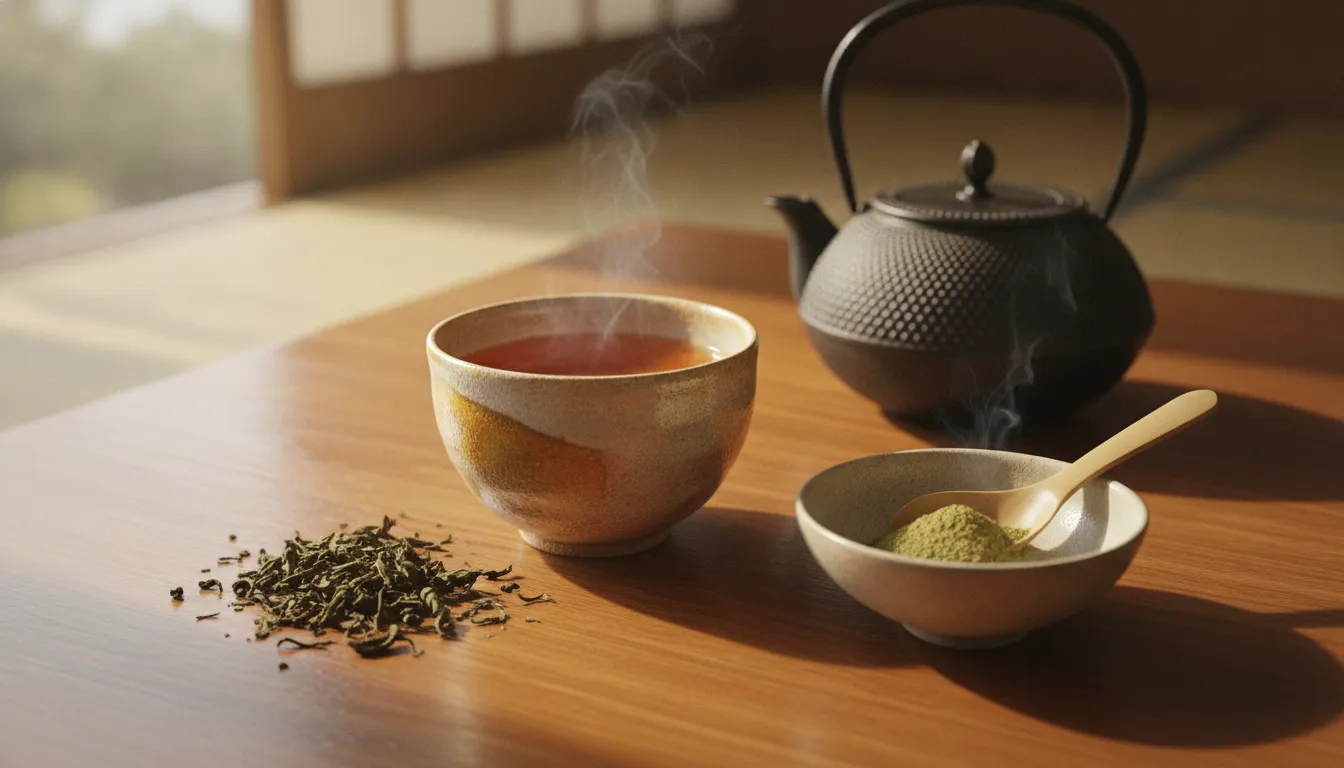
Use fresh, clean-tasting water whenever possible. Hojicha's amber liquor and toasted aroma make it easy to notice whether your water is dull, heavily mineralized, or overpowering the leaf. Once you find your preferred balance, note the dose, temperature, and steep time. That simple record turns how to brew hojicha into a repeatable ritual, while leaving room to make the next cup lighter, fuller, or more concentrated.
For a trusted starting point, explore Sorate's Hojicha (Bancha), a slow-roasted loose leaf from Uji, Kyoto.
How to Brew Hojicha Powder Without Clumps
Powder needs a different approach from loose leaves: rather than steeping and straining, you suspend the finely milled roasted tea in water. A small whisk and a little patience create a smooth cup that lets the smoky chocolate and caramel notes of Sorate's hojicha powder come through clearly.
- Measure the powder and water. Start with 2 grams of hojicha powder, about 1 level teaspoon, and 60 milliliters, or 4 tablespoons, of hot water. This concentrated base is easy to drink as a small cup or to build into a latte. If you prefer a lighter cup, use the same powder with up to 90 milliliters of water.
- Sift before adding water. Pass the powder through a fine tea sifter directly into a wide cup or bowl. This breaks up compacted particles before they meet the water, which is the simplest way to prevent stubborn clumps. For a refresher on the ingredient and its uses, see Sorate's guide to how to prepare hojicha powder.
- Make a smooth paste. Add a small splash of the hot water, about 15 milliliters, and stir with a bamboo whisk or small handheld frother until no dry pockets remain. Scrape around the base and sides of the cup. Starting with a paste gives every remaining particle a chance to hydrate evenly.
- Whisk in the remaining water. Pour in the rest of the water and whisk briskly in a back-and-forth motion until the surface looks even. A circular stir can leave powder gathered at the bottom, while a quick back-and-forth motion helps distribute it throughout the cup. Serve promptly while the roasted aroma is warm.
For a hot hojicha latte
Prepare the concentrated base above, then add 180 to 240 milliliters of steamed milk. Pour the milk slowly while stirring so the powder stays suspended. Dairy or an unsweetened plant-based milk can work; choose the one that keeps the roasted flavor in focus. Add sweetener only after tasting, since the powder's caramel notes may already give the cup a rounded impression. Sorate's recipe shows how to brew the perfect hojicha base for a warm or iced latte.
For an iced cup
Whisk the powder with the same small splash of hot water first. Do not pour dry powder directly over ice, as the cold temperature makes clumps more likely. Once smooth, add the remaining water, then pour the base over ice and top with cold milk for a refreshing latte. If the flavor feels too intense, increase the milk or water gradually. If sediment settles after a few minutes, give the drink one gentle stir rather than adding more powder.
Loose Leaf vs Powder: Which Brewing Method Fits Your Cup?
Both forms carry hojicha's roasted character, but they create different rituals. Loose leaf is a clear, pourable infusion: the leaves open in hot water, then you separate them before serving. Powder is finely milled tea that stays in the cup, so whisking turns it into a fuller, more opaque drink. I choose loose leaf when I want to linger over a simple cup and powder when I want a concentrated base for a latte or an iced preparation.
| Consideration | Loose leaf | Powder |
|---|---|---|
| Form | Roasted leaves and stems steeped in water. | Finely milled roasted tea blended into the liquid. |
| Tools | Teapot, infuser, or fine strainer and a cup. | Sifter and whisk, frother, or tightly sealed jar. |
| Texture | Light-bodied and clear, with no tea sediment when poured carefully. | More rounded and opaque, with body from the suspended powder. |
| Timing | Short steep, then pour off the leaves to control strength. | Whisk directly before serving; no steep-and-strain step. |
| Best uses | A straightforward hot cup and a calm, repeatable tea ritual. | Hot or iced lattes, concentrated drinks, and cooking. |
For loose leaf, start with a modest amount and a short steep, then adjust the next infusion if you want more toasted intensity. For powder, sift first and whisk with a small amount of warm water before adding more liquid. This separates the particles and helps prevent clumps. Sorate's hojicha powder is made from roasted fourth-harvest Bancha and is described with smoky chocolate and caramel notes, while the loose-leaf Hojicha (Bancha) offers a nutty, toasted cup. The choice is less about a single correct method than the texture and pace you want from the brew.
How to Adjust Hojicha Brew Time, Temperature, and Strength
Once you have a reliable starting point, small changes can bring the cup closer to your preferred balance. I adjust one variable at a time so I can tell whether the change came from the water, the steep, or the amount of hojicha. Brewing conditions influence both extraction and aroma, so the same leaves can taste noticeably different from one session to the next.
If the cup tastes weak or flat
Start by checking the ratio before raising the temperature. Add a little more loose leaf, or use slightly more powder, then repeat the same brew. If the flavor is still faint, extend the steep by 15 to 30 seconds. For loose-leaf hojicha, a hotter brew can help bring forward its toasted character, but avoid changing heat and time together. If the cup tastes flat rather than light, fresh water and a clean, fully warmed teapot may make a clearer difference than a longer steep.
Powder behaves differently because the ground tea remains in the cup. If it looks cloudy or settles heavily, sift the powder first and whisk it with a small amount of warm water into a smooth paste. Then add the remaining water gradually. A fine layer of sediment can be normal, but large clumps usually point to insufficient mixing rather than a problem with the powder.
If the cup tastes bitter, smoky, or too strong
Shorten the steep first. If bitterness remains, lower the water temperature slightly and keep the ratio unchanged. An overly smoky cup may need less hojicha, especially when using a concentrated powder. Dilute the finished brew with a little hot water rather than immediately discarding it, then note the adjustment for next time. A muted roast can often be restored with a slightly longer steep, while a harsh roast usually needs less time or a cooler pour.
For powder, whisk a smaller amount into a concentrated base when making a latte, then add milk to taste. Sorate's hojicha latte recipe is a useful next step when you want to brew the perfect hojicha base for a hot or iced drink. The goal is not one rigid formula. It is a repeatable cup that lets the nutty, toasted notes remain distinct.
Shop hojicha powder for latte-style drinks
Frequently Asked Questions
Are you supposed to whisk hojicha?
Whisk loose-leaf hojicha only if you want to incorporate the brewed tea into a latte or create a more aerated cup. For a traditional cup, steep the leaves, then pour through a strainer. Hojicha powder should be whisked with a small amount of warm water to make a smooth paste before adding the remaining water or milk.
How much hojicha powder should I use with water?
Start with 2 grams of hojicha powder and about 60 milliliters of warm water for a concentrated serving. Sift the powder, whisk until smooth, and adjust the water for a lighter cup. For a latte, keep the concentrated base and add milk to taste.
What is the best water temperature for hojicha?
Use hot water just below boiling for loose-leaf hojicha, then steep briefly and taste. The roasting gives hojicha a toasted profile that can stand up to relatively hot water, while temperature and time still shape extraction and aroma. If the cup tastes harsh, lower the temperature or shorten the steep.
How do I make an iced hojicha drink?
Whisk hojicha powder with a small amount of warm water first, then pour the smooth concentrate over ice and add cold water or milk. You can also brew loose leaf a little stronger, strain it, and chill it over ice. Adjust the concentration so the roasted flavor remains distinct after dilution.
However you reach for a cup tonight, I hope this guide turns the whole ritual into a small moment of calm. Brewing hojicha is less about following rules and more about finding the balance that tastes right in your own kitchen. Start with the loose leaf for a clean, nutty cup. Or reach for the powder when you want a cloudier, toastier body or a quick scoop for a latte.
When you are ready to stock your cupboard, pick the method that matches your evening. Both are roasted from the same fourth-harvest Bancha by the family farm in Uji, Kyoto, and both bring that warm, comforting sweetness to the table.


