


Thin, watery matcha lacks the creamy mouthfeel and deep umami that make the tea ritual so rewarding. The right matcha ratio brings balance to every bowl, whether you prefer airy usucha, velvety koicha, or a creamy latte.
Explore SORATE's authentic Japanese matcha for your daily ritual.
Use 2 grams of matcha with 60 to 80 mL of water for usucha, 4 grams with 30 to 40 mL for koicha, or 4 grams with 40 to 60 mL of water plus milk for a latte. Treat these matcha ratios as starting points, then adjust one variable at a time.
Temperature, water volume, and whisking technique all shape the final taste. The quick-reference chart below gives you a dependable baseline before you refine each bowl to suit your palate.
Matcha ratio quick-reference chart
Finding the right matcha ratio is the foundation of a good tea ritual. Traditional methods offer a clear path, but the ultimate goal is to find a balance that suits your taste. SŌRATE sources ceremonial-grade matcha directly from our family-run farm in Uji, Kyoto. This high-quality matcha collection is stone-ground from shade-grown tencha leaves. These traditional methods help ensure a smooth, umami-rich flavor across different preparations.
Traditional tea preparations
In the Japanese tea ceremony, there are two primary ways to prepare matcha: thin tea (usucha) and thick tea (koicha). Usucha is the most common form for daily enjoyment. It typically uses 2 grams of matcha powder for every 60 to 80 mL of hot water to create a light, frothy texture.
For those seeking a more intense experience, the koicha proportions for koicha involves doubling the powder and reducing the water. This results in a thick, velvety tea with a deep concentration of antioxidants. These include compounds like epigallocatechin gallate, according to research from the National Institutes of Health.
Matcha for lattes and modern drinks
Modern matcha drinks like lattes require a different approach to keep the tea flavor clear when mixed with milk. Many experts suggest using a 1:10 powder-to-water ratio as a base for lattes. This often translates to about 4 grams of matcha with 40 to 60 mL of water. You can then combine this base with about 160 mL of milk. Following a Sorate preparation guide helps maintain consistency as you experiment with different dairy or plant-based alternatives.
| Preparation | Matcha Amount | Water Amount | Intended Texture |
|---|---|---|---|
| Usucha (Thin Tea) | 2 grams | 60 - 80 mL | Light and frothy |
| Koicha (Thick Tea) | 4 grams | 30 - 40 mL | Rich and velvety |
| Hot Matcha Latte | 4 grams | 40 - 60 mL | Creamy and balanced |
| Iced Matcha Latte | 4 grams | 40 - 60 mL | Refreshing and bold |
These measurements are dependable starting points rather than rigid rules. Factors like water temperature and the age of your tea can change how the flavor develops. Generally, using water between 160 and 175 degrees Fahrenheit helps prevent scalding the powder. This also helps you avoid unwanted bitterness. As you become more familiar with your tools, a slight adjustment to the ratio can help you reach your perfect cup.
What is the best matcha ratio for usucha?
The best starting matcha ratio for usucha is 2 grams of sifted matcha to 60 to 80 mL of water at 160 to 175 degrees Fahrenheit. Use less water for a fuller, more umami-forward bowl, or add water gradually for a lighter tea while preserving its smooth texture.
Traditional thin tea measurements
Usucha, or thin tea, is the most common way to enjoy ceremonial matcha. Finding the right matcha ratio is the first step in this daily practice. A standard bowl usually calls for 2 grams of matcha powder and 60 to 80 milliliters of hot water. This balance ensures the tea is light enough to drink but still rich in flavor. The sensory goal is a vibrant, frothy bowl that feels smooth on the palate with a clean finish.
You can use a traditional bamboo scoop called a chashaku to measure your tea. Two scoops equal about 2 grams of powder. If you prefer a kitchen scale, use it to get the exact weight. Quality matcha from Uji has a strong umami profile that shines when you follow these specific brewing instructions steps. Proper measurements help you achieve the bright green color and sweet aroma typical of high-quality tea.
Mastering the whisking ritual
The ritual of making usucha involves more than just mixing. You must create a suspension where the tea particles float evenly in the water. A chasen, or bamboo whisk, is the best tool for this job. Its many prongs help build a stable microfoam that gives the tea a creamy mouthfeel. This foam acts as a bridge between the air and the tea, softening the initial taste of each sip.
- Sift 2 grams of matcha through a fine sieve into your bowl to remove any clumps.
- Add 60 to 80 milliliters of hot water, ideally between 160 and 175 degrees Fahrenheit.
- Place your whisk in the bowl and use your wrist to move it in a quick "W" or "M" pattern.
- Keep whisking until a layer of tiny bubbles forms across the entire surface of the tea.
- Gently lift the whisk from the center of the foam to leave a small peak.
Water temperature is a key part of the process. If the water is too hot, it can scald the powder and cause bitterness. Staying below 175 degrees Fahrenheit protects the bioactive compounds like L-theanine that give matcha its calm energy. Using filtered water also helps the delicate notes of the tea stand out without mineral buildup.
Adjusting your bowl for flavor
While the 2 gram ratio is a great start, you can change it to suit your taste. If your tea feels too weak, try adding a small amount of powder or using less water next time. If the flavor is too intense or grassy, increase the water slightly. This flexibility allows you to find your own perfect bowl of tea based on your mood.
Bitterness often comes from water that is too hot or powder that was not sifted well. Clumps can hide pockets of dry powder that ruin the texture and taste. If you find the tea is not frothing well, ensure your whisk is clean and your movements are fast. You can also read about the traditional matcha proportions for thicker drinks if you want a bolder, stronger experience. Regular practice will help you master the balance of foam and flavor in every bowl.
How does the matcha ratio change for koicha?
For koicha, double the matcha and reduce the water: begin with 4 grams of matcha and 30 to 40 mL of warm water. Instead of whisking for foam, slowly knead the mixture with a chasen until it becomes glossy, smooth, and thick enough to resemble warm honey.
Koicha is the highest form of the Japanese tea ritual. While most people know thin tea, koicha is a very thick drink. The main change is the matcha ratio used for the tea. Instead of a light drink, koicha is thick like warm honey or melted chocolate. This thickness needs much more tea powder than water. The result is a bold and creamy tea that shows the best traits of the leaves.
A thick tea style
Making koicha involves a major shift in how you measure the tea. Thin tea usually uses 2 grams of matcha with 60 to 80 mL of hot water. To make the thick version, you must double the powder and use much less water. This high amount of tea creates a rich and smooth feel on the tongue. Finding the recommended tea-to-water balance is the key to a good bowl. If the mix is too thin, it loses its body. If it is too thick, it may be hard to sip.
The strength of this style means that every small step matters. Using filtered water helps keep the taste pure and free from minerals. Old tea schools in Kyoto, like Urasenke, teach that this balance is a core part of the ritual. They say the ratio must be exact to show respect for the tea. Using a good preparation method can help you learn these steps. It is a good way for beginners to start before they try making thick tea.
The shift from whisking to kneading
The way you make koicha is very different from thin tea. When you make thin tea, you whisk the water and powder fast. This creates a soft layer of foam on top. But koicha does not have any foam at all. Instead of whisking, you use a slow kneading motion with the bamboo whisk. This slow movement blends the heavy amount of powder into a smooth and shiny mix. It looks more like a syrup than a standard cup of tea.
- Use a bamboo scoop to measure about 4 grams of tea.
- Push the powder through a fine sieve to get rid of any clumps.
- Add a small amount of hot water to the bowl.
- Gently knead the tea until it becomes a thick and smooth paste.
This method needs a steady hand and some time. Since there is very little water, clumps can form fast if you do not sift the tea. The kneading process helps the tea release its full smell without being watered down. The result is a strong liquid that has a deep and long taste. It is often served at special events where guests share from one bowl. This sharing is an old sign of peace and trust.
Why leaf quality defines the result
Since koicha uses so much tea, the quality of the powder is the most vital part. Using a low grade of tea will make the bowl very bitter and hard to drink. High quality matcha comes from shade grown tencha leaves. These leaves are ground by stones into a very fine powder. Sorate gets its tea from a family farm in Uji that has used these traditional methods for a long time. These leaves have high levels of L-theanine, which adds a natural sweet taste and umami.
Science shows that the characteristic umami flavor in matcha comes from these amino acids. These parts help balance the natural bitterness of the green tea. In a thick bowl, this balance is needed for a good experience. The best ceremonial grade matcha will have a bright green color. It will also have a very fine feel between your fingers. This quality keeps the thick mix sweet and smooth. Picking the right tea lets you enjoy the full depth of the ritual.
What matcha-to-milk ratio makes a balanced latte?
A balanced matcha latte starts with 4 grams of matcha whisked into 40 to 60 mL of warm water, then combined with about 160 mL of milk. This concentrated base keeps the tea's color, aroma, and umami present after milk is added without making the finished drink overly intense.
A balanced latte starts with a strong tea concentrate. Many people fail because they use too much water in the beginning. This mistake dilutes the tea and makes the final drink taste weak. To get the best result, you should treat the matcha like a shot of espresso. You want a small amount of liquid that can stand up to the volume of the milk. This ensures the tea's color and flavor remain the focus of the drink.
The golden matcha ratio
Many tea experts suggest a specific matcha ratio for lattes to keep the flavor sharp. For a single serving, use 4 grams of sifted matcha powder. Mix this with 40 to 60 mL of hot water. This concentrated base is often called the Golden Ratio. It provides enough body to cut through the fat in the milk. Using this method prevents the tea from disappearing once you add the creamier elements.
It is important to use the right water temperature during this step. Aim for water between 160°F and 175°F. Water that is too hot will scald the powder and cause a bitter taste. The process of sifting is also a necessary step. It breaks up small clumps that naturally form in fine powder. A bamboo whisk with many delicate prongs will then help you mix the liquid into a frothy suspension. This microfoam gives the latte its signature velvety character.
Selecting the milk volume
Once your concentrate is ready, the amount of milk you add determines the drink's balance. For a hot latte, 160 mL of milk is the standard choice. This volume provides a creamy mouthfeel without hiding the natural sweetness of the tea. Research shows that matcha is a functional food rich in amino acids like L-theanine. These compounds create the unique umami flavor that sets premium Japanese tea apart.
You should also consider the type of milk you choose. Whole dairy milk is a classic choice because its natural sugars complement the tea's notes. If you prefer plant-based options, oat milk is a popular alternative. Its creamy texture and neutral taste allow the matcha's profile to stay at the front of the palate. Avoid milks with strong flavors that might compete with the delicate tea. Testing small changes to the matcha ratio will help you find the perfect balance for your preferred milk.
Preparing iced lattes
Iced drinks need a slight change to the formula to stay balanced. You usually need about 240 mL of cold milk to account for the ice in the glass. Ice melts and adds more water to the drink over time. Starting with a 1:10 or 1:15 ratio of powder to water for the concentrate is a good rule for cold drinks. This ensures the latte stays flavorful even as the ice begins to melt.
To prepare an iced latte, fill a glass with ice and pour in your cold milk first. Then, slowly pour the whisked matcha concentrate over the top. This creates a striking green and white layer that you can stir before drinking. Using a steady matcha ratio allows you to recreate this cafe-quality experience at home every day. This approach honors the quality of the tea while offering a refreshing way to enjoy your daily ritual.
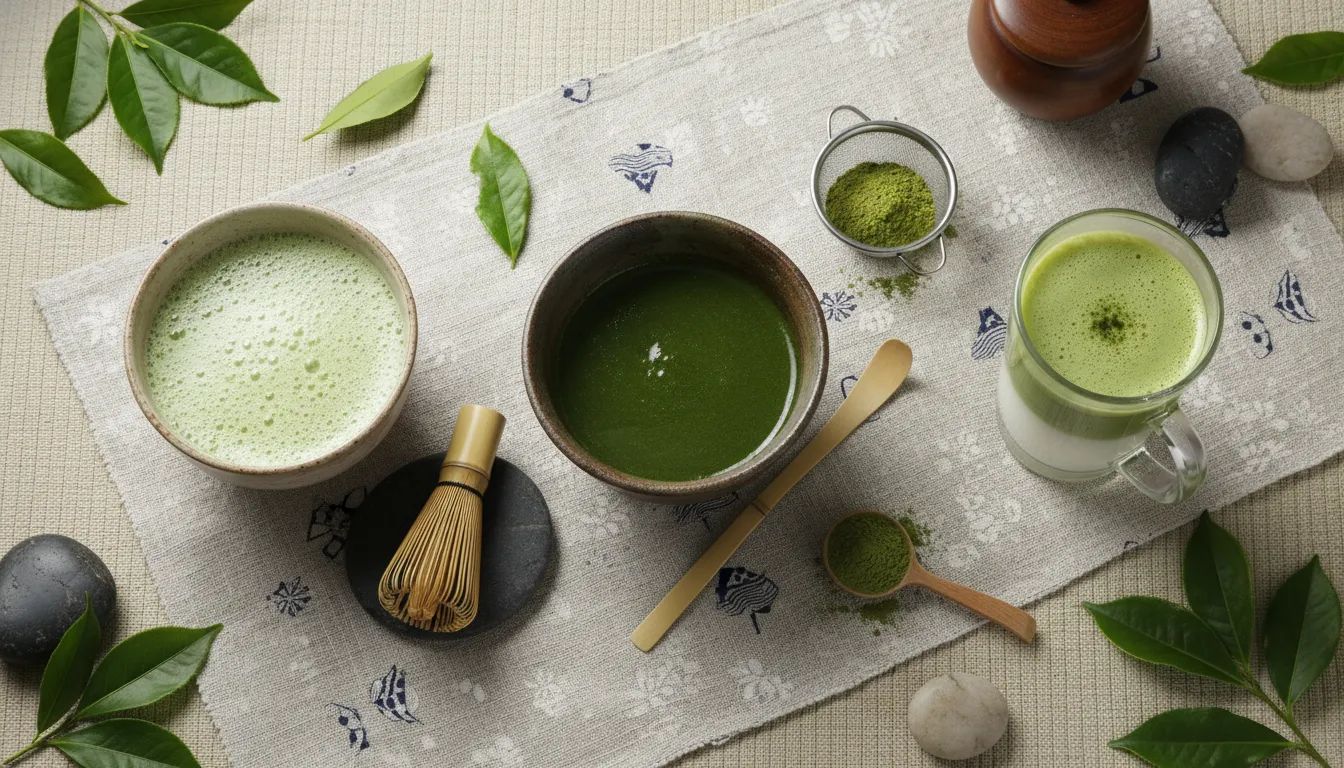
Choose tea tools designed for a consistent matcha ritual.
Choose a bamboo whisk and tea tools to make your preferred ratio repeatable.
How to adjust your matcha ratio to taste
Adjust your matcha ratio one variable at a time. Keep the powder fixed and change water volume first, using less for a richer bowl or more for a lighter one. If bitterness remains, lower the water temperature before reducing matcha so you can preserve the tea's body and aroma.
The beauty of the Japanese tea ritual lies in its precision. Standard usucha preparation typically uses 2 grams of matcha to 60-80 mL of hot water. However, these numbers are just a starting point. Finding your perfect matcha ratio is a matter of adjusting one variable at a time. Whether you prefer a bold umami profile or a light cup, small changes in measurements create a different sensory experience.
Balancing strength and flavor
To create a stronger brew, you can increase the powder or reduce the water. A traditional bamboo scoop, known as a chashaku, measures about one gram of matcha. Using two scoops for a standard bowl provides a good balance for most people. If you find the taste too mild, try adding a half scoop more. For those who enjoy a rich texture, ceremonial koicha uses roughly double the powder of thin tea. This results in a thick consistency that highlights the natural sweetness of the leaves.
If the flavor feels too intense, you may want a lighter ratio. Start with 1.5 grams of powder instead of the usual 2 grams. You can also increase the water volume to 100 mL to mellow the profile. This approach helps beginners who are still learning to like the concentrated taste of ceremonial green tea. By keeping your powder measurement the same and only changing the water, you can find the exact strength you enjoy most.
Controlling bitterness with temperature
The heat of your water is just as important as the amount of powder you use. Using warm water between 160 and 175 degrees Fahrenheit helps you avoid bitterness. Boiling water can scald the delicate stone-ground leaves. This ruins the smooth finish. High heat can also alter the ratio of bioactive compounds like theanine and caffeine. Research shows that L-theanine in matcha helps balance caffeine to provide a calm energy boost. Using correct temperatures ensures you get the full benefits of the whole leaf.
If your tea tastes bitter at lower temperatures, the issue might be your whisking technique. Sifting your powder through a fine sieve before adding water is a crucial step. It helps you prevent clumps. Once the water is added, use a bamboo whisk to move in a "W" or "M" pattern. This motion suspends the particles evenly and creates a stable microfoam. A proper froth improves the mouthfeel and releases the full aroma. You can find authentic tools for this process in our accessories collection to help refine your daily practice.
Refining the ritual for milk
When preparing a latte, the matcha ratio needs to be more concentrated. This helps the tea stand up against the milk. many experts recommend a ratio of about 4 grams of matcha to 40-60 mL of water. This creates a strong base that keeps its character once you add 160 mL of milk. Using the same ceremonial grade matcha you use for thin tea will ensure your latte remains smooth. Experimenting with these ratios turns a simple drink into a personal wellness practice.
Tools that make every bowl more consistent
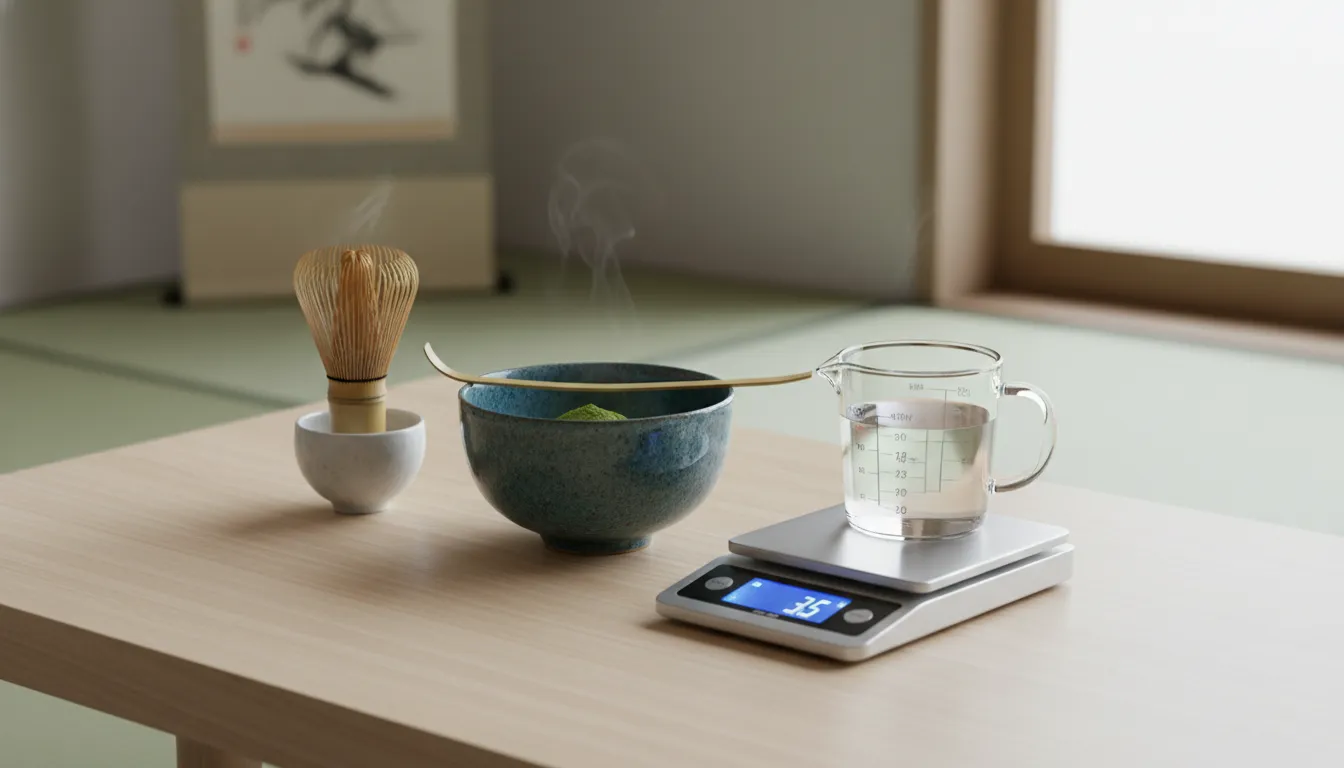
Consistency in matcha preparation turns a daily habit into a mindful ritual. While you can estimate your measures, using specific tools ensures your bowl tastes the same every time. This precision helps you master the matcha proportions for both thin and thick preparations. The right gear lets you copy the exact flavor profile you enjoy most.
Measuring for the perfect matcha ratio
A digital scale is a helpful tool for any tea lover. Many people use a spoon, but powder density can change based on storage. Weighing your tea in grams allows you to follow a precise tea preparation guide. A standard thin tea or usucha usually requires 2 grams of powder for every 60 to 80 mL of water. Using a scale removes the guesswork and helps you find the strength you like best.
A traditional bamboo scoop called a chashaku also helps with measuring. Each scoop holds roughly one gram of matcha powder. Using two scoops for a standard bowl is a simple way to maintain your dose. This tool is carved from a single piece of bamboo and is a staple in the tea ritual. It allows you to handle the delicate powder with care and respect.
Traditional whisks and bamboo tools
The chasen, or bamboo whisk, is the most important tool for creating texture. A high quality chasen features 70 to 120 delicate prongs that suspend the fine particles evenly in the water. This process creates a stable microfoam that defines the mouthfeel and aroma of your ceremonial matcha bowl. A metal whisk often fails to produce the same fine, creamy layer that a bamboo whisk provides.
Whisking technique is just as vital as the tool itself. You should move your wrist in a quick W or M pattern rather than a circular motion. This movement introduces air into the tea and breaks up any remaining small particles. The result is a smooth drink with a vibrant green color and a thick head of froth. Mastering this motion takes practice, but the right bamboo whisk makes it much easier.
Sifting and the role of the chawan
A fine sifter and a tea bowl called a chawan are also key for a smooth texture. Matcha powder is very fine and can easily form small clumps. Sifting the powder into your bowl before you add hot water helps it dissolve better and prevents a grainy mouthfeel. A wide, deep chawan provides the necessary space for vigorous whisking without splashing. These tools ensure every sip is silky and help you connect to the farm heritage in Uji.
Using these tools helps you get the most out of every serving. Matcha is a functional food that contains high levels of L-theanine and antioxidants. Studies show that the ratio of compounds like caffeine and theanine can influence how the tea affects your focus. By using the right tools, you ensure that every cup delivers the same calm energy and rich flavor.
Common matcha ratio mistakes and how to fix them
Preparing the perfect bowl of matcha is a delicate ritual. Even with high-quality leaves from our farm in Uji, a small error in your matcha ratio can lead to a bad cup. Understanding how to fix these common issues will help you master the tea ceremony at home.
Solving clumps and texture issues
One common mistake is skipping the sifting process. If your tea feels grainy, the issue likely started before you added water. Using a fine sieve to sift matcha before brewing is crucial to break up clumps. This step allows the water to reach every particle of the stone-ground tencha evenly. It ensures a smooth, froth-ready consistency for your bowl.
Texture also depends on your whisking method. A bamboo whisk, or chasen, with 70 to 120 prongs is designed to suspend matcha particles. To create a stable foam, whisk quickly in a "W" or "M" pattern. If your foam looks flat, you may be using too much water. Try sticking to the koicha proportions of 2 grams of powder to 60 or 80 mL of water.
Managing bitter flavors and burnt aroma
If your matcha tastes too bitter, the problem might be your water temperature. Using boiling water is a common error that can scald the powder. According to Matcha.com, the best temperature for preparation is between 160°F and 175°F. Water above 180°F risks burning the tea, which dulls the aroma and creates a harsh taste.
You can also fix bitterness by changing how much powder you use. While a standard Sorate brewing instructions gives a good baseline, you can use less tea if the flavor is too strong. Using filtered water also helps. It prevents mineral flavors from hiding the natural sweetness and umami of the tea leaves.
Fixing watery or weak lattes
Watery lattes often happen when the matcha base is too thin. To ensure your latte has a rich flavor, use a more concentrated ratio. Many tea masters recommend using 4 grams of matcha with 40 to 60 mL of water. This creates a thick base that keeps its taste once you add milk. It helps the tea stand up to the sweetness of the dairy or nut milk.
For cold drinks, remember that ice will dilute the tea as it melts. An iced matcha latte usually needs about 240 mL of milk to balance the ice. If you find your drink loses its bright color and taste, try using more powder. You can also use less water in your first whisking step to keep the umami profile strong.
Explore SORATE matcha when you are ready to put these ratios into practice.
Frequently Asked Questions
What is the perfect ratio of matcha to milk?
For a standard latte, use about 4 grams of matcha with 40-60 mL of hot water. This creates a concentrated base that stays flavorful when you add milk. According to a matcha ratio guide, you should balance this mixture with 160 mL of steamed milk. This ratio ensures the earthy tea notes remain prominent without being overwhelmed by the dairy or alternative milk.
How do you determine the matcha ratio in grams?
Measuring matcha by weight with a digital scale is the most accurate method for consistent results. If you do not have a scale, you can use a traditional bamboo scoop called a chashaku. Each scoop of this traditional tool typically holds about one gram of powder. Using two scoops provides the standard amount for a thin tea preparation known as usucha.
What is the best matcha ratio for an iced latte?
Iced lattes require a slightly different balance than hot drinks because the ice eventually melts and dilutes the tea. Start with 4 grams of matcha whisked into 40-60 mL of hot water. You should then add approximately 240 mL of cold milk to maintain a rich texture. Research indicates that iced preparations benefit from this higher milk volume to ensure the drink stays creamy.
How does water temperature affect the matcha ratio?
Water temperature does not change the physical ratio, but it significantly impacts how the tea tastes. You should use water between 160 and 175 degrees Fahrenheit for the best extraction. According to the experts at Matcha.com, using boiling water can scald the delicate powder. This mistake releases bitter notes and destroys the subtle umami flavors that define high-quality ceremonial grade matcha.
Ready to perfect your daily matcha ritual?
Using the wrong amount of water or powder leads to a bitter taste and a thin texture that hides the delicate umami flavor. Inconsistent ratios prevent you from achieving the perfect froth and rich mouthfeel that defines high quality ceremonial grade tea. Every day you spend guessing your measurements is a missed opportunity to enjoy the calm and focused ritual of an authentic ceremony. Starting with the correct measurements today ensures that every bowl you whisk delivers the deep profile stone-ground leaves were meant to provide. You can find more tips on how to prepare the perfect cup by reading our detailed Sorate preparation guide.
Ready to prepare your next bowl? Shop authentic Japanese matcha and choose a tea for your daily ritual.


