


The Ultimate Matcha Latte Recipe: Tools, Techniques, and Tips
A great matcha latte recipe transforms morning coffee routines into a meditative ritual. The difference between a dull, clumpy drink and a vibrant, cafe-quality cup comes down to three things: the grade of your matcha, the whisking technique, and the milk you choose. Master these elements and you will never settle for a coffee shop latte again.
Shop Sorate's premium matcha collection for farm-direct ceremonial-grade powder sourced from Uji, Kyoto.
A matcha latte recipe starts with sifting two teaspoons of high-quality matcha, whisking with water at 175F in a zig-zag motion until frothy, then pouring over steamed milk. The key is using ceremonial-grade powder for a smooth, naturally sweet base that blends without bitterness.
What Tools Do You Need for the Perfect Matcha Latte?
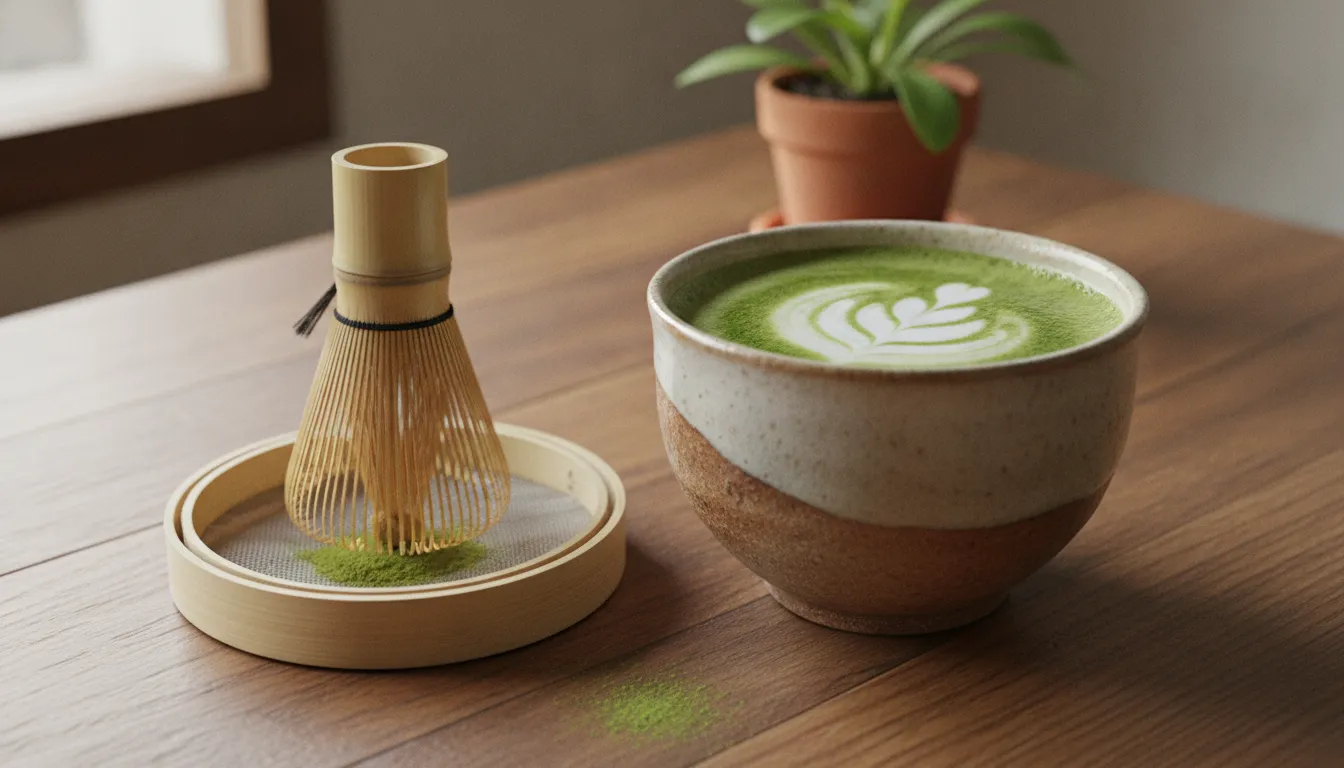
Every matcha latte recipe relies on a few essential tools to break down the fine stone-ground powder and create that signature creamy froth. Matcha is denser than other teas because the whole leaf is ground into a fine powder, which means it does not dissolve the way loose-leaf tea does — it suspends. Without the right equipment, you end up with clumps sinking to the bottom of your cup and a thin, watery texture on top.
Traditional tools for authentic texture
The bamboo whisk, or chasen, is the gold standard for preparing matcha. Hand-carved from a single piece of bamboo, its fine tines aerate the tea and produce a thick foam that metal utensils simply cannot replicate. The chasen is designed specifically for this purpose: the tines flex and cut through the liquid, breaking apart any remaining particles while incorporating tiny air bubbles. Pair your whisk with a wide ceramic bowl called a chawan. Its broad base gives you room to execute the signature M-shaped whisking motion without splashing. A fine-mesh sifter is equally important — matcha clumps during storage due to its static charge, and pressing it through a sieve before adding water is the only reliable way to eliminate dry pockets. A complete matcha tool set makes daily preparation effortless and honors the tea tradition that has been refined over centuries in Japan.
Modern alternatives for busy mornings
Not every morning leaves time for a full tea ceremony. An electric milk frother blends matcha and water in seconds with minimal cleanup, producing a respectable foam with almost no effort. A shaker bottle or mason jar works well for cold drinks: just add matcha and warm water, seal tightly, and shake vigorously for 30 seconds. For larger batches, a high-speed blender handles several servings at once and keeps the matcha evenly suspended so it does not settle between pours. Each of these tools trades some of the traditional texture for speed and convenience, but all can produce a satisfying latte.
Choosing the Best Matcha for Lattes
The single most important ingredient in any matcha latte recipe is the matcha itself. Low-quality powder produces a dull, muddy gray-green color and a bitter, astringent taste that no amount of milk can mask. Investing in premium-grade matcha transforms the entire drinking experience.
Ceremonial versus culinary grade
Ceremonial-grade matcha uses the youngest shade-grown leaves from the first harvest. These leaves are de-veined, de-stemmed, and stone-ground into an ultra-fine powder with a naturally sweet, umami-rich flavor profile. It blends seamlessly into milk without bitterness and produces a vivid emerald color. Culinary-grade matcha, by contrast, comes from later harvests and includes more stem and vein material, giving it a stronger, more astringent taste suited for baking, smoothies, and cooking. For drinking, always choose ceremonial grade. The difference in flavor and texture is immediately noticeable.
What to look for in quality matcha
Visual inspection tells you most of what you need to know about matcha quality. Premium powder displays a vibrant, electric green color — if it looks dull, yellowish, or brownish, it is old or poorly processed. The texture should feel like cornstarch or baby powder between your fingers. Origin matters too: the best matcha comes from the Uji region of Kyoto, Japan, where the combination of misty climate, mineral-rich soil, and generations of cultivation expertise produces superior leaf quality. Sorate sources directly from a family farm in Uji, ensuring freshness and traditional stone-grinding methods in every tin.
How Do You Whisk Matcha Like a Pro?
The whisking motion is the heart of any matcha latte recipe. A bamboo whisk is purpose-built for this task, but the technique matters even more than the tool. Here is the process that ensures a smooth, frothy result every time.
- Sift first. Press two teaspoons of matcha through a fine-mesh strainer into your bowl. This single step eliminates the clumps that form during storage and guarantees a silky texture.
- Add water at 175F. Measure two ounces of water heated to 175 degrees Fahrenheit. Boiling water scorches the leaves and creates a harsh bitterness that ruins the flavor. If you do not have a thermometer, let boiled water sit for two minutes. Sorate's water temperature guide offers more detail.
- Whisk in an M or W motion. Hold the chasen between your palms and move your wrist rapidly in a zig-zag pattern — not circles, which push the matcha to the sides instead of aerating it. Continue for 20 to 30 seconds until a layer of fine bubbles covers the surface.
- Pour over milk. Add the frothy matcha base to your choice of steamed or cold milk. The foam should sit on top like a cap, blending as you drink.
Three Ways to Make a Matcha Latte Without a Whisk
You can still enjoy a smooth matcha latte recipe when your bamboo whisk is packed away or you are traveling. These three methods use everyday kitchen tools and produce excellent results.
- Shaker bottle or mason jar. Add matcha and a splash of warm water to the jar, seal tightly, and shake vigorously for 30 seconds. The mechanical agitation breaks up clumps and creates a light froth. Pour over milk and ice for a quick iced latte that is ready in under a minute.
- Electric milk frother. Place matcha and warm water in a mug, immerse the frother wand at a slight angle just below the surface, and run it for 15 seconds. Move it up and down gently to incorporate air. Top with hot milk for a creamy finish.
- Hand blender. Combine matcha and warm water in a tall container and blend for 5 to 10 seconds. Add milk and blend another 5 seconds. This method works best for making multiple servings at once and produces the smoothest texture among the three alternatives.
Milk Matters: Finding the Best Pairing for Your Matcha Latte
The milk you choose defines the body, mouthfeel, and overall character of your latte. Matcha's earthy, savory notes pair differently with each type of milk, so your choice matters. Here is how popular options compare:
| Milk Type | Flavor | Foam Quality | Best For |
|---|---|---|---|
| Oat milk | Creamy, mildly sweet | Excellent | Hot and iced lattes |
| Whole dairy milk | Rich, neutral | Excellent | Traditional hot lattes |
| Almond milk | Nutty, light | Fair | Iced lattes |
| Soy milk | Neutral, creamy | Good | Hot and iced lattes |
Heat milk to 140 to 150 degrees Fahrenheit before frothing for hot drinks. This temperature range brings out the natural sugars in the milk and creates a stable foam without scalding the proteins. Oat milk and whole milk produce the most consistent foam for latte art. For iced lattes, cold milk poured directly over ice preserves the clean, refreshing taste.
Hot Matcha Latte Recipe: Step by Step
This classic hot matcha latte recipe produces a rich, comforting cup with a silky foam cap. The process takes about five minutes from start to finish.
- Sift two teaspoons of ceremonial-grade matcha into a bowl.
- Add two ounces of water heated to 175F.
- Whisk in a zig-zag motion for 20 to 30 seconds until a thick foam forms on top.
- Heat six to eight ounces of milk to 140-150F and froth until creamy and doubled in volume.
- Pour the matcha base into a warmed mug.
- Gently pour the steamed milk over the back of a spoon to preserve the foam layer.
- Sweeten with honey or maple syrup if desired, and enjoy immediately.
Iced Matcha Latte Recipe: Step by Step
An iced matcha latte recipe is bright, refreshing, and perfect for warm weather. The trick is whisking the matcha with hot water first — adding matcha powder directly to cold milk guarantees clumps.
- Sift two teaspoons of ceremonial-grade matcha into a bowl.
- Add two ounces of water at 175F and whisk until frothy and smooth.
- Fill a tall glass with ice cubes.
- Pour six to eight ounces of cold milk over the ice.
- Slowly pour the whisked matcha over the milk. It will float on top and create a beautiful layered effect.
- Stir gently before drinking. Add simple syrup, honey, or vanilla extract to taste.
Frequently Asked Questions
Which milk is best for a matcha latte?
Oat milk and whole dairy milk produce the best texture and flavor. Oat milk offers a creamy, mildly sweet profile that complements matcha's earthy notes without overpowering them. Whole milk provides stable foam and a rich body that works well for latte art. Soy milk is a good neutral alternative and foams better than almond or coconut milk.
Can I make a matcha latte without a bamboo whisk?
Yes, absolutely. An electric frother, shaker bottle, or blender all produce smooth, enjoyable results. Each tool requires slightly different timing — the frother needs about 15 seconds, the shaker needs 30, and the blender needs just 5 to 10 — but all can deliver a clump-free drink.
How do you prevent clumps in a matcha latte?
Always sift the matcha through a fine-mesh strainer before adding water. This is the single most effective step. Then create a thick paste by mixing the sifted matcha with a small amount of warm water before whisking in the rest. Sifting plus the paste method eliminates every dry pocket.
What is the best water temperature for matcha?
175 to 180 degrees Fahrenheit is the ideal range. Water that is too hot scorches the delicate tea leaves and produces a burnt, bitter flavor. Water that is too cool fails to dissolve the powder properly. If you do not have a thermometer, let a kettle of boiled water sit for two minutes before pouring.
Ready to Make the Perfect Matcha Latte at Home?
You now have everything you need to make a cafe-quality matcha latte recipe in your own kitchen. The right matcha, the proper technique for whisking, the ideal milk temperature — these small details add up to a drink that rivals any specialty coffee shop. The ritual itself becomes a moment of calm in a busy day, a few minutes devoted to creating something beautiful and delicious.
Start with premium ceremonial-grade matcha and a bamboo whisk, and your morning latte will never be the same. Shop Sorate's premium matcha collection for farm-direct ceremonial-grade matcha from Uji, Kyoto. Every tin is stone-ground in small batches and shipped fresh from a family farm with generations of tea-growing expertise.


