


Learning how to brew sobacha is simple. Measure roasted buckwheat groats, pour hot water over them, let the infusion steep, and strain it when the aroma reaches the level you want. Start with 1 tablespoon of groats for 8 ounces of water, approximately 90-95 C, and a 3-5 minute steep.
To brew sobacha at home, use 1 tablespoon of roasted buckwheat groats per 8 ounces of water. Heat the water to approximately 90-95 C, steep for 3-5 minutes, then strain or pour the infusion away from the groats. Use 3 minutes for a lighter cup and move toward 5 minutes for a deeper toasted flavor.
This preparation guide focuses on the practical method. For the ingredient's background and flavor profile, read Sorate's guide to what sobacha is. Once you know the starting ratio, you can adjust one variable at a time and build a cup that suits your palate.
What You Need to Brew Sobacha
Sobacha is made with roasted buckwheat groats rather than tea leaves. The groats are the source of the infusion's warm, nutty aroma, so choose a product prepared for brewing. Sorate's Sobacha is described on its product page as a roasted buckwheat infusion with toasty, nutty, and caramel notes. That makes it useful for a straightforward, ingredient-led brewing ritual.
Roasted buckwheat groats
For one 8-ounce serving, begin with 1 tablespoon of dry groats. If you are using a larger teapot, scale the groats and water together. Keeping the ratio consistent gives you a dependable baseline. Once you have tasted the first cup, change only the amount of groats or the steep time so you can tell what produced the difference.
A kettle and heatproof vessel
Use a kettle and a teapot, infuser, heatproof cup, or small measuring jug. A vessel with a filter or spout makes it easier to separate the brewed liquid from the groats. If you prefer a more hands-on setup, place the groats in a fine infuser and lift it out at the end of the steep.
A strainer and serving cup
The groats should have room for water to move around them. Avoid packing them tightly into a small ball infuser. A fine strainer keeps the small pieces out of the cup. A second cup or small pitcher lets you pour the full infusion away from the groats when it reaches the flavor you prefer.
Before you begin, smell the dry groats. A fresh portion should offer a clear roasted aroma. This small sensory check gives you a reference for the fragrance that develops once hot water is added.
How to Brew Sobacha Step by Step
The method below is designed for one 8-ounce serving. It uses a practical ratio and temperature range, while leaving room for personal adjustment. A traditional recipe from Just One Cookbook's sobacha guide also demonstrates a saucepan method, so you can choose between a single-cup infusion and a larger batch.
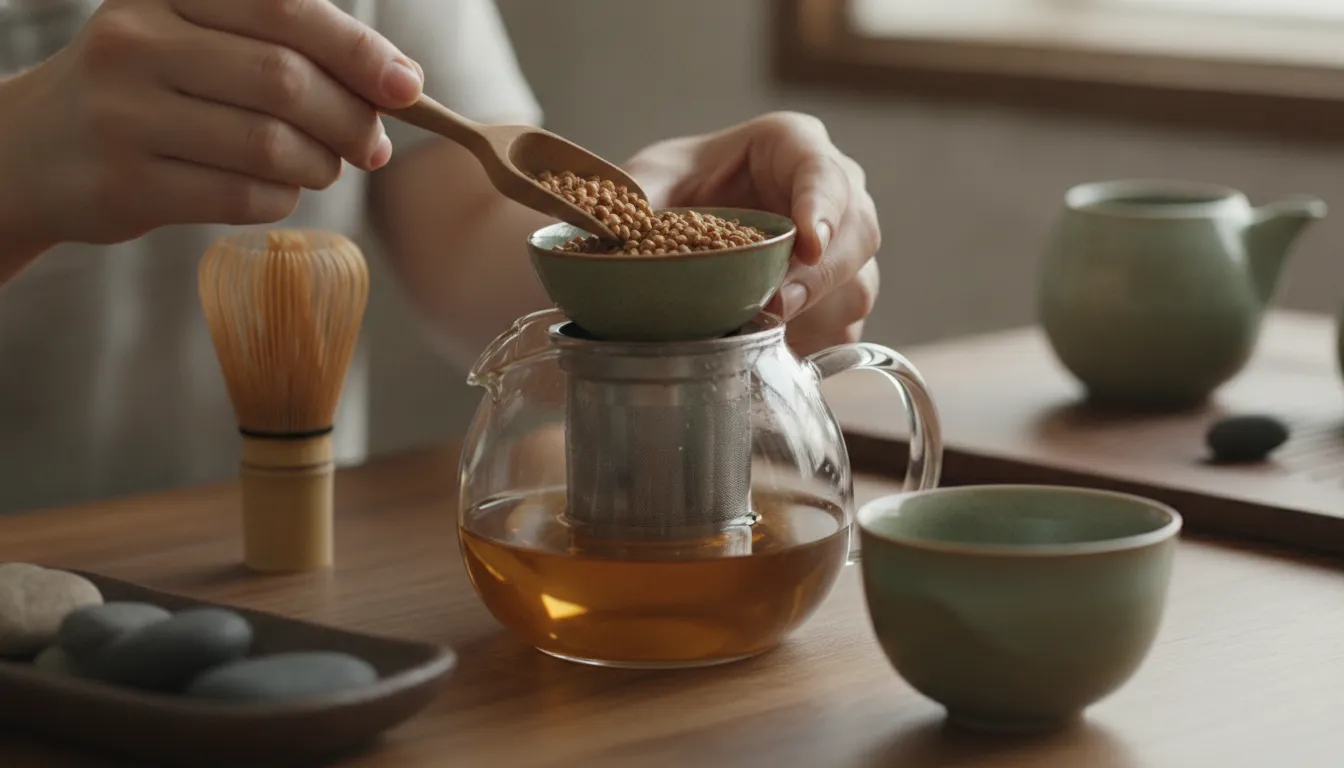
- Measure the groats. Place 1 tablespoon of roasted buckwheat groats in your infuser, teapot, or heatproof cup. This starting amount is matched to 8 ounces of water.
- Warm the vessel. Rinse the cup or pot with a little hot water, then discard it. Warming the vessel helps the brewing water stay closer to its intended temperature.
- Heat fresh water. Bring the water to approximately 90-95 C. If your kettle does not show temperature, let fully boiled water cool briefly before pouring.
- Pour evenly. Cover the groats completely with the 8 ounces of hot water. Pouring steadily helps all of the groats contact the water.
- Steep for 3-5 minutes. Start tasting at 3 minutes. Continue toward 5 minutes if you want a more developed roasted flavor.
- Strain completely. Lift out the infuser or pour the liquid into a serving cup. Do not leave the groats submerged while you drink, because the flavor will continue to change.
- Taste and adjust. If the cup is too light, use a little more groat or a longer steep next time. If it is too strong, shorten the steep or use slightly less groat.
The finished cup should smell warm and toasted, with a rounded buckwheat character. It does not need to be intense to be satisfying. The most useful method is the one you can repeat, taste, and adjust without changing several factors at once.
What Ratio, Temperature, and Steep Time Should You Use?
For a dependable starting point, use 1 tablespoon of roasted buckwheat groats for 8 ounces of water, approximately 90-95 C, and a 3-5 minute steep. These settings create a clear baseline. From there, adjust the amount of groats for strength and the steep time for depth. Water temperature should remain relatively consistent while you compare results.
| Style | Groats | Water | Steep | Cup profile |
|---|---|---|---|---|
| Lighter | 2 teaspoons to 1 tablespoon | 90-95 C | 3 minutes | Gentler roast. |
| Standard | 1 tablespoon | 90-95 C | 4 minutes | Balanced toasted character. |
| Deeper | 1 tablespoon, slightly rounded | 90-95 C | 5 minutes | More pronounced roast and body. |
How to make a lighter cup
Start with the standard amount and pour the infusion off at about 3 minutes. If that is still more concentrated than you prefer, reduce the groats slightly on the next brew. Shortening the contact time is often the easiest first adjustment. It preserves the same basic ingredient-to-water relationship.
How to make a stronger cup
Let the standard amount steep closer to 5 minutes, or use a slightly rounded tablespoon in the next serving. Make one change at a time. Adding much more groat and extending the steep together can make it difficult to identify which adjustment shaped the cup.
Why pouring off matters
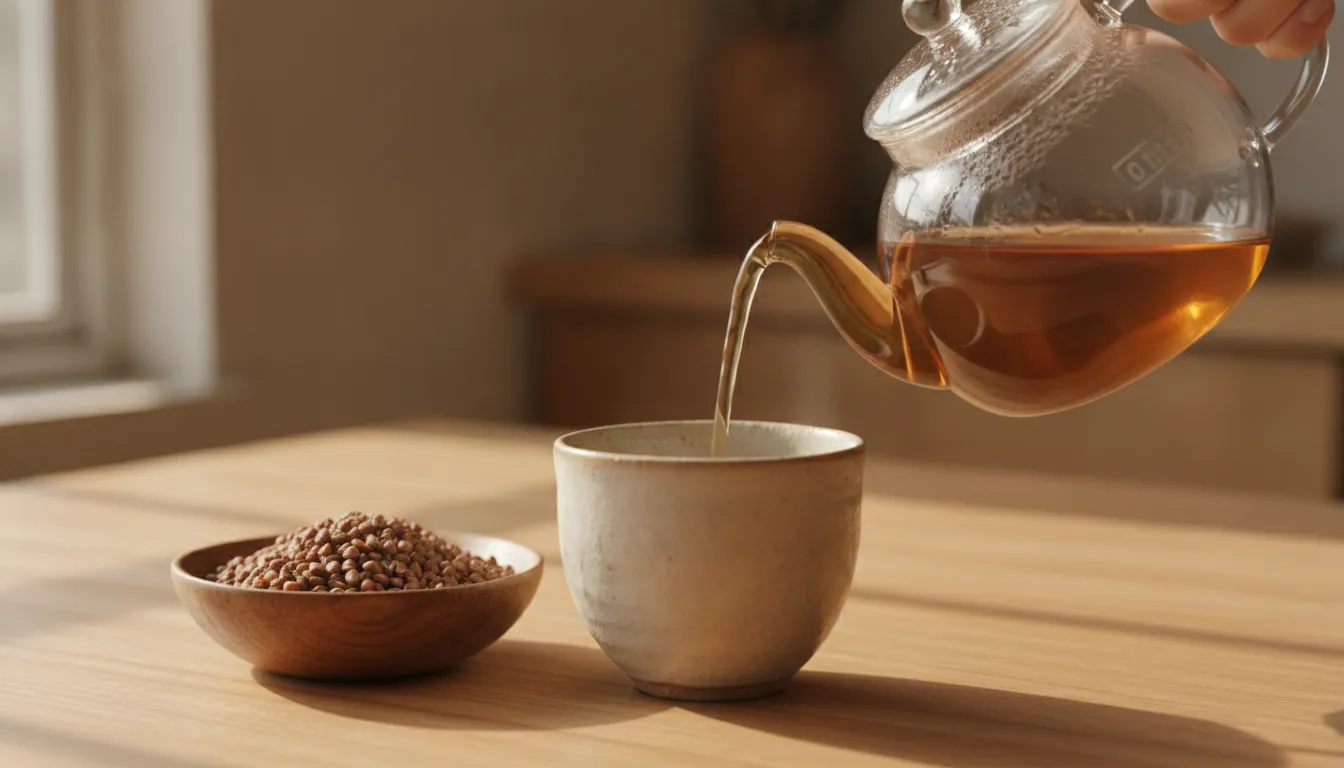
Straining is part of the recipe, not just a serving detail. Once the infusion tastes balanced, separate the liquid from the groats. If the groats remain in hot water, the flavor can become heavier by the final sip. A teapot with a built-in filter or a separate serving vessel makes this step easy.
Can You Brew Sobacha More Than Once?
You can try a second infusion with the same roasted buckwheat groats. The second cup may be softer and lighter than the first, so treat it as an experiment rather than a fixed promise. The result depends on the original ratio, the first steep time, the vessel, and how completely you poured off the first infusion.
How to make a second infusion
Leave the used groats in the infuser or teapot, then add fresh water at approximately 90-95 C. Steep slightly longer than the first time. If the original infusion was 3 minutes, begin the second at a little beyond that point and taste when the aroma develops. Pour the liquid off completely once it reaches a pleasant level of flavor.
When to stop
Stop when the infusion becomes noticeably faint, watery, or flat. There is no need to force another serving if the groats no longer provide the warm roasted character you want. Fresh groats will give you a clearer result than repeatedly extending a tired infusion.
How Do You Adjust Sobacha to Your Taste?
Use the first cup as a baseline, then adjust one part of the method at a time. If the aroma is faint, check the amount of groat and the water temperature before simply adding more steep time. If the flavor is too forceful, pour off earlier or reduce the amount slightly. Keeping a short note of the ratio and steep makes it easier to recreate a favorite cup.
If the cup tastes thin
Confirm that you used enough groats for the amount of water. A pale, quiet infusion may need the standard 1 tablespoon ratio rather than a longer steep. Also check that the water was hot when it met the groats and that the vessel was not unusually large for the amount you measured.
If the cup tastes too intense
Shorten the steep on the next brew or use fewer groats. You can also add a little hot water to the finished cup, but changing the original method gives you a more repeatable result. Pouring the infusion away from the groats as soon as it tastes right prevents the final portion from becoming more concentrated.
If the aroma seems muted
Smell the dry groats before brewing and keep them protected from moisture and strong kitchen odors. Use fresh water and warm the vessel first. A clean setup helps you distinguish the character of the sobacha from flavors left behind by a previous brew.
For another preparation reference, Sorate's brewing instructions collection can sit alongside this sobacha-specific method. The general principle is the same: use a clear starting point, then let taste guide the next adjustment.
Sobacha and Mugicha: Which Roasted Infusion Should You Brew?
Sobacha and mugicha are both roasted grain infusions, but they are made from different ingredients. Sobacha uses roasted buckwheat groats and has a nutty, earthy character. Mugicha is made from roasted barley and has its own deeper roasted-grain profile. Keeping the ingredients distinct helps you choose based on flavor rather than treating them as interchangeable teas.
Choose sobacha for roasted buckwheat flavor
Sobacha is a good choice when you want the aroma of toasted buckwheat to lead the cup. The groats also make the preparation visually clear, since you can see the brewing ingredient in the infuser or pot. Use the standard ratio in this guide, then adjust the steep if you want a lighter or more pronounced roast.
Choose mugicha for roasted barley flavor
Mugicha is a roasted barley infusion, not green tea or matcha. It offers a different grain character from sobacha, so it belongs in a separate part of the tea ritual. If you want to compare them, brew each with clean equipment and taste them without adding other flavors. Sorate's tea collection is a useful place to continue exploring the shop's Japanese tea offerings.
How Should You Serve and Store Sobacha?
Serve sobacha warm in a clean cup, or let the infusion cool and pour it over ice. Taste it plain first so you can notice the roasted buckwheat aroma before adding anything else. A small teapot, glass cup, or simple serving bowl can all suit the preparation. The important part is to strain the liquid away from the groats when the flavor is ready.
Store unused groats in a clean, dry, airtight container away from steam, direct sunlight, and strong kitchen aromas. Close the container after measuring and use a dry spoon. If the aroma has faded noticeably, brew a small test serving before changing your ratio. Keeping the ingredient dry and protected helps you evaluate the method more consistently.
Make the ritual your own
Sobacha does not require elaborate equipment. A measured portion, hot water, a few quiet minutes, and a vessel that lets you strain cleanly are enough. If you are building a broader tea setup, Sorate's tea accessories collection offers tools that can support different brewing rituals. You can also explore the brand's story and approach to Japanese tea as you learn more about the products.
Shop Sorate Sobacha for your next brew
Frequently Asked Questions
What is the best ratio for brewing sobacha?
Start with 1 tablespoon of roasted buckwheat groats for every 8 ounces of water. Adjust the groat amount slightly if you want a lighter or fuller cup.
What temperature should water be for sobacha?
Use water at approximately 90-95 C. If you do not have a thermometer, let freshly boiled water cool briefly before pouring.
How long should sobacha steep?
Steep sobacha for 3-5 minutes. Begin tasting at 3 minutes, then continue toward 5 minutes for a deeper toasted flavor.
Do you strain sobacha after brewing?
Yes. Pour the infusion away from the groats or remove the infuser when the flavor is balanced so the tea does not continue steeping.
Can you drink sobacha hot or iced?
Yes. Serve it warm, or let the brewed infusion cool and pour it over ice. Taste it plain first to appreciate the roasted buckwheat character.


