


A smooth bowl of matcha does not require a traditional bamboo whisk to enjoy every morning.
Choose Sorate matcha for your next tea ritual.
Common kitchen items can create the same frothy texture you love. This makes it easy to enjoy premium tea during a busy work day or a trip.Knowing how to make matcha without a whisk allows you to enjoy a smooth, frothy drink using a glass jar or a milk frother. While the bamboo chasen is the gold standard, modern tools can copy the rapid movement needed to break up clumps and add air. The most effective method involves sifting the powder first to ensure it dissolves evenly in water that is about 175 degrees Fahrenheit. Proper agitation is needed to improve the sensory profile by preventing clumping and ensuring a fine suspension of tiny tea particles. By shaking a sealed jar for thirty seconds, you can achieve a creamy foam that honors the high quality of premium Uji tea.
How To Make Matcha Without A Whisk: The best way to make matcha without a whisk
You can make a smooth bowl of Sorate matcha even if you do not have a bamboo whisk. If you are new to the powder, start with Sorate's guide to what matcha is and how it differs from steeped tea. While the chasen is the best tool for the task, other items in your kitchen can help you get a great foam. The goal is to mix the powder and water so well that no clumps remain. This fast movement is what creates the creamy texture and brings out the full flavor of the tea. Without a good mix, the tea can taste gritty or bitter.
Before you start, always use a fine sifter. Sifting the powder is the most vital step to avoid lumps in your cup. Even the best whisk or blender will struggle if the tea starts in big clumps. You should also use water at 175 degrees to protect the leaves and keep the taste sweet. If the water is too hot, it can burn the tea and make it taste harsh. Using the right heat and tools ensures a high quality drink every time.
Shaking in a jar or bottle
The jar method is great for travel or when you are on the go. You only need a clean jar or a shaker bottle with a tight lid. First, sift your matcha powder into the jar to keep it light. Add about two ounces of warm water to the base. Seal the lid tight and shake it hard for about 20 to 30 seconds. This method works well for preparing matcha at home when you are in a rush.
Shaking creates a thin layer of foam on top of the liquid. It may not be as thick as the froth from a whisk, but it mixes the tea well. This is a very clean way to make your drink because you can sip right from the jar. It is also a safe way to mix your tea if you do not want to buy new tools yet. Many people use a simple mason jar for this task.
Using a handheld milk frother
A small electric frother is a fast and easy tool for any kitchen. It spins very fast to pull air into the liquid in seconds. This mimics the traditional whisking method quite well and breaks up all the tea. To use it, put your sifted matcha and hot water in a tall mug. Hold the frother at an angle near the top of the water. Turn it on for 15 seconds until a thick foam forms on the surface.
The frother is the best way to get a lot of bubbles without much work. It is easy to clean and small enough to keep in a drawer or bag. Just be sure to use a tall cup so the tea does not splash out while it spins. If you use a shallow bowl, the tea might fly out and make a mess.
The blender for large batches
If you want to make many drinks at once, use a blender. A blender is very strong and can mix the tea in a few seconds. It is a great choice for making a creamy latte with milk. Add your water and tea to the blender and pulse it a few times. This will give you a very smooth drink with no green spots. Once the tea is mixed, you can pour it over ice for a cold treat.
A blender can also help if you want to mix in other items like honey or maple syrup. The high speed makes sure everything blends into one smooth drink. It is the most powerful way to make your tea when a whisk is not near. Most home blenders will work fine for this task.
| Method | Froth Level | Speed | Best For |
|---|---|---|---|
| Shaker Jar | Low | Fast | Travel and gym |
| Milk Frother | High | Very Fast | Daily morning tea |
| Blender | Medium | Fast | Iced lattes |
| Bamboo Whisk | Highest | Medium | The tea ritual |
Start with the right matcha-to-water ratio
Before you learn how to make matcha without a whisk, you must get the base recipe right. Sorate's broader guide to how to make tea offers more context for building a careful daily practice. A good ratio is the first step toward a smooth drink. For most people, a standard cup of thin tea, known as usucha, uses about 1 to 1.5 teaspoons of matcha powder. You should mix this with 2 to 4 ounces of water. This small amount of water helps you create a thick liquid that you can later top off or mix with milk for a latte.
Sift your powder to stop clumps
Matcha powder is very fine and often forms small balls due to static. These clumps are hard to break apart even with a traditional whisking method. When you do not have a whisk, sifting becomes even more important. Use a fine-mesh strainer to push the powder into your bowl or jar. This simple act ensures that every grain of tea can meet the water directly, which makes it much easier to mix by hand or with a jar.
Use the best water temperature
Water that is too hot will make your tea taste bitter and burnt. It can also damage the high level of antioxidants found in the leaves. The best temperature for preparing matcha at home is about 80°C (175°F). If you do not have a thermometer, let boiling water sit for two minutes before you use it. This cooler water helps pull out the sweet and savory notes of the tea without any harsh bite.
Start with a smooth tea paste
One of the best ways to avoid dry spots in your tea is to start with a paste. Add just a tiny splash of water to your sifted powder first. Use a spoon to rub the water into the tea until it looks like thick green paint. This step ensures there is no dry powder left at the bottom. Once the paste is smooth, you can slowly add the rest of your water. This method is a key part of how to make matcha without a whisk because it does the hard work of mixing before you ever start shaking or stirring.
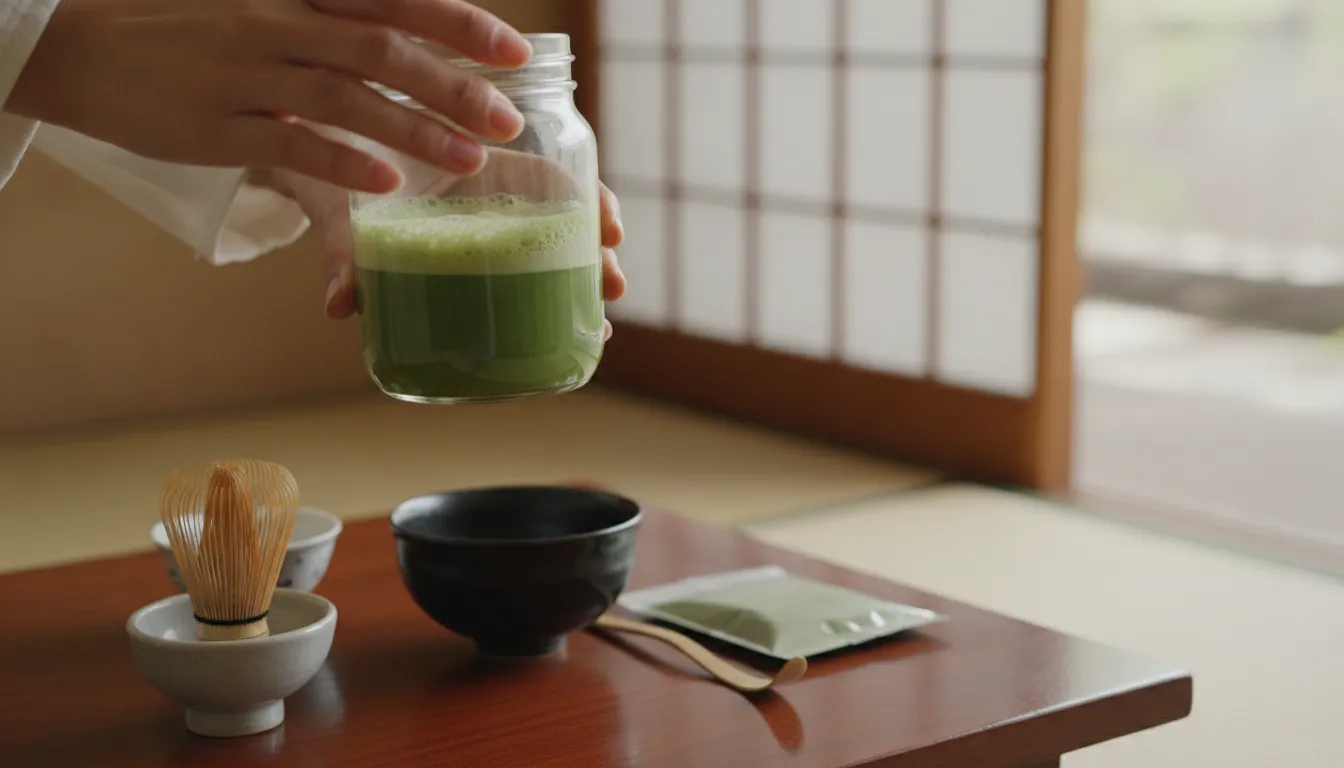
How do you make matcha in a sealed jar or shaker?
A classic bamboo whisk is the best way to mix fine Sorate green tea. For a closely related portable technique, see Sorate's glass bottle matcha preparation tips. It makes a thick, smooth foam that is hard to beat. But you may find yourself in a spot where you do not have one. You might be at work, in a hotel, or at the gym. In these cases, a jar with a tight lid is a smart fix. This path is a fast way to learn preparing matcha at home without a big cost. It is also the best way for many people to start their tea ritual.
Picking a safe jar
Not every jar is safe for shaking tea. You need a vessel that can hold a seal under a bit of force. A mason jar or a gym bottle works best for this task. Do not use thin plastic that might warp or leak. It is also key to watch your water heat. Never use boiling water in a sealed jar. Steam builds up fast and can cause the lid to fly off. This can lead to a big mess or burns. Use water that is about 175 degrees F to keep the process safe. This heat level also protects the light taste of the tea.
The steps for a smooth mix
Using a jar is one of the easiest ways to get a fast cup. While it feels simple, you still need to follow a few rules to get the best result. Here is how to make matcha without a whisk using a shaker:
- Sift one to two grams of tea powder through a fine sieve into the jar.
- Pour two ounces of warm water into the jar to start the base.
- Check that the lid is straight and screw it on as tight as it can go.
- Hold the jar with both hands and shake it for at least thirty seconds.
- Pause to let the air out by slowly turning the lid a small bit.
- Add more water or your choice of milk to fill the rest of the jar.
- Give it one last short shake to blend all the parts of the drink.
Knowing the foam trade-off
When you shake tea, you aim to keep the powder in the water. Fine tea bits do not melt like sugar or salt. Instead, they float in the cup. High levels of agitation are needed to keep these bits from sticking together. Shaking a jar creates a light foam on top. It will have larger bubbles than the traditional whisking method. The taste stays rich, even if the foam is a bit thin. This way is great for cold tea as well. You can add ice and cold water to the jar for a cool drink.
If you want a latte, the jar is a perfect tool. You can froth your milk and tea at the same time. The fast motion of the shake adds air to the milk. This makes it light and gives it a nice feel in your mouth. You do not need to buy a frother to enjoy a cafe style drink. Once you finish, just rinse the jar with warm water. This stops the tea from drying and marking the glass. It is a quick and clean way to enjoy your daily tea.
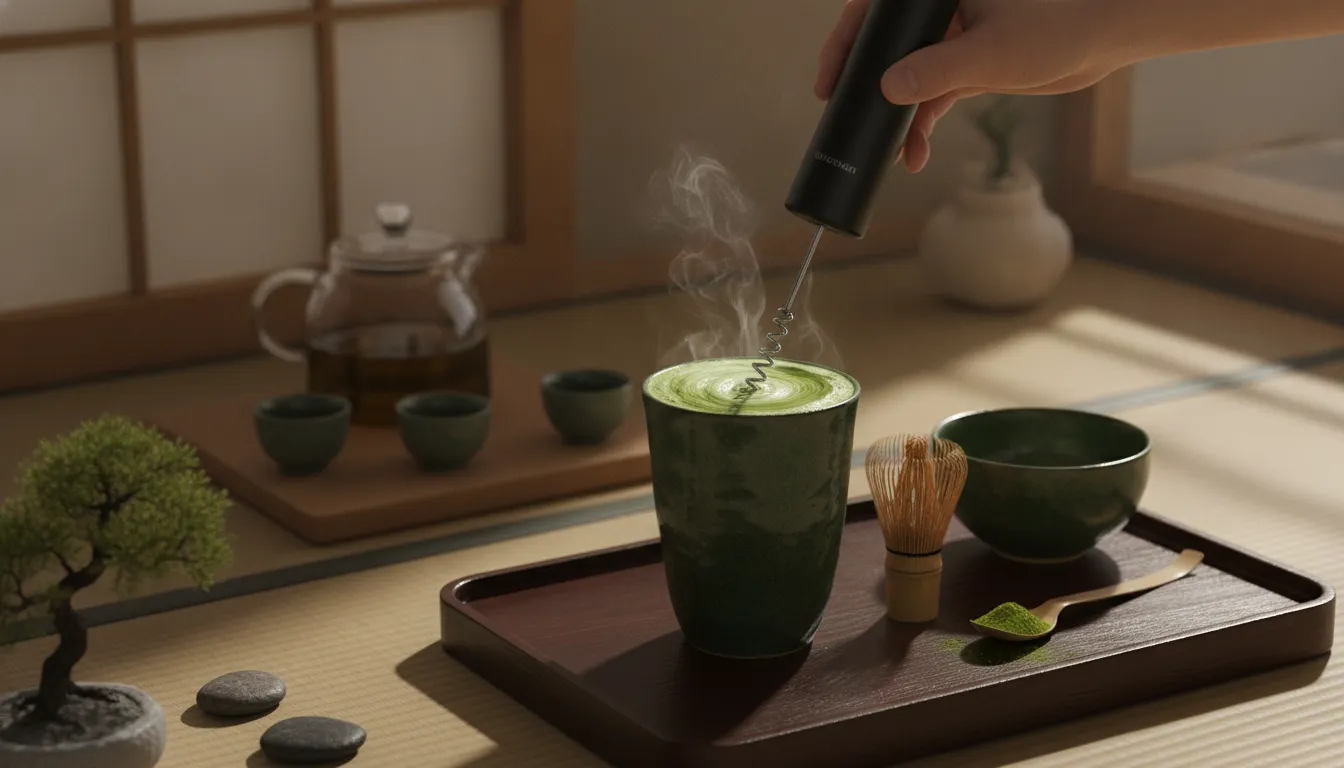
How do you use a milk frother for matcha?
A milk frother is a fast way to get a smooth, foamy Sorate matcha drink. Whichever tool you use, setting aside a few focused minutes can help you begin creating your own daily ritual. It is a top choice when you need to know how to make matcha without a whisk. This tool uses a small metal coil that spins fast. This force helps break up small lumps and mixes the tea into the water. While it lacks the history of a bamboo whisk, it is a handy tool for your daily tea ritual.
Prep your cup and powder
Start by sifting your powder into a tall glass or a wide mug. Sifting is a key step because it removes hard lumps before you add liquid. Add a small amount of hot water to create a thick paste. Research shows that proper agitation is needed to keep tea particles in the liquid. If you do not mix it well, the tea will settle at the bottom of your cup.
Whisk with the frother
Place the head of the frother in the cup before you turn it on. Keep the coil near the bottom to avoid messy splashes. Once you start the motor, move the tool up and down slowly to pull air into the drink. This creates the light, creamy foam that people love. You only need to froth for about 15 to 30 seconds to get a great result. This quick way helps you enjoy your tea when you do not have a traditional whisking method at hand.
Clean your tool fast
Matcha can dry fast and stick to the small metal coil. To keep it clean, rinse the head under warm water right after you finish your drink. You can also turn the frother on in a cup of clean, soapy water to remove any stuck bits. Dry the tool well before you store it. Taking care of your tools ensures that every bowl of tea you make tastes its best.
Why is your matcha clumpy, bitter, or too foamy?
Preparing a bowl of Sorate matcha should be a calm and joyful ritual. That focus reflects the spirit described in Sorate's lessons from the tea room. But it can be a letdown if the drink is full of lumps or tastes too sharp. These issues often happen when the tea is not mixed well or the water is too hot. You can fix most of these problems by changing a few small steps in your routine.
Fixing clumps without a whisk
Matcha powder is very fine and tends to stick together. If you skip sifting, you will likely find green lumps at the bottom of your cup. Even when learning preparing matcha at home without a whisk, a sifter is a must. Sifting breaks up the natural clumps that form in high-quality tea powder.
After sifting, try making a smooth paste before you add all the liquid. Mix your powder with just a tiny splash of water and stir it well. This step helps the tea blend better with the rest of the water later on. This method is the best way to keep your drink smooth if you are not using a bamboo tool.
If you enjoy lattes, you might face more clumps when adding milk. Mixing powder directly into cold milk often leads to lumps that will not go away. It is best to mix your tea with water first to make a thin concentrate. This liquid will blend much better with your milk of choice, whether it is hot or cold.
Why is my matcha bitter?
The most common cause of bitter tea is using water that is too hot. Many people think boiling water is best for tea, but it can burn the delicate matcha leaves. Water temperature affects how flavor compounds release into your drink. If the water is above 175 F, it often makes the tea taste harsh or grassy.
Research shows that water temperature changes how the tea tastes and how many nutrients stay in the cup. High heat can damage the healthy parts of the tea and boost the bitter notes. Aim for water that is around 80 C to get a sweet and balanced flavor. This temperature keeps the tea gentle and pleasant to drink.
Managing the foam and texture
A great bowl of matcha usually has a thick layer of tiny bubbles on top. This foam comes from quick and steady movement during the mixing stage. If your tea has large bubbles or no foam at all, you might not be stirring hard enough. The goal is to get the tea to stay in the water instead of sinking.
A traditional whisking method creates the best foam, but other tools can help too. If you use a jar, shake it for at least 15 to 30 seconds to get enough air into the liquid. If the tea feels thin or you see sediment at the bottom, your agitation was likely too weak. Proper mixing ensures a balanced taste in every sip.
When you mix matcha, you are making a suspension where the tea stays in the liquid. If you do not move the tool fast enough, the tea will settle at the bottom. This can make the first few sips taste weak and the last sip taste very strong. Fast movement is needed to keep the tea mixed well throughout the whole cup.
Use these tips to fix common issues:
- Always use a fine mesh sifter to remove lumps first.
- Keep your water below the boiling point to avoid a burnt taste.
- Start with a small amount of liquid to form a thick paste.
- Shake or stir with speed to build a fine and lasting foam.
What do you give up when you skip the chasen?
Using a bamboo whisk, or chasen, is the classic way to make Sorate matcha. Learning about Sorate's origin adds context to the farm, craft, and tradition behind each bowl. While you can learn how to make matcha without a whisk, the bamboo tool offers a unique feel. A chasen has many thin prongs that break up clumps of tea powder. This creates a very fine, silk-like foam that fast tools struggle to match. The bamboo does not just mix the tea; it whips air into the water to change the texture of the drink. When you skip this tool, you miss out on the tiny bubbles that give matcha its creamy body.
The texture of the foam
The foam on top of a bowl of matcha is more than just a look. It affects how the tea tastes on your tongue. A chasen creates tiny bubbles that stay in the liquid longer. Research shows that mixing and shaking change how people enjoy the taste and feel of the tea. Without a whisk, you might get a drink that feels thin or flat. You may also find small bits of powder that did not mix well. These clumps can taste bitter. A good whisking tool helps the tea powder stay in the water instead of sinking to the bottom.
The mindful ritual
Making matcha is a slow, calm act. When you use an old whisking way, you take time to focus on the task. The sound of the bamboo against the tea bowl is part of the charm. Fast frothers or jars are quick and easy, but they skip this peace. If you want a quick drink, a jar works fine. But if you want to connect with the past of the tea, the chasen is the best choice. This ritual helps you slow down and enjoy the scent of the fresh tea leaves.
Care and upkeep
One thing you gain by skipping the whisk is ease of care. Bamboo whisks are soft and thin. You must soak them in warm water before use to make the prongs less stiff. You also need to dry them well to stop mold or cracks. They wear out over time, so you will need a new one every few months. Fast tools or jars are much easier to clean. You can just rinse them with soap and put them away. For many people, this time saved is a big plus. Still, for a real bowl of tea, many prefer the old ways of the tea room.
If you feel ready to step up your game, you can look at tea tools to help you. The whisk is a great step toward a better cup of tea. It helps you get the best from your finest powder. Even if you start without one, the bamboo tool is a goal for any tea lover. Using the right tools shows respect for the work of the farmers who grew the tea.
Frequently Asked Questions
Can I use a fork to mix matcha if I have no other tools?
You can use a fork, but it is not the best way to mix your tea. A fork lacks the many fine prongs of a traditional bamboo whisk. It will struggle to break up small lumps or add air to the liquid. This often leaves a thin drink with green spots at the bottom. If you are in a rush, a jar or a small frother will give you a much smoother result.
Is it possible to make matcha with cold water?
Yes, you can mix your powder with cold water or milk. This works well if you use a tool with a lot of power like a blender. Strong mixing is key to keeping the tea bits floating in the cold liquid. Cold liquids can be slower to combine with compacted powder, so sift first and shake or blend thoroughly. Using a jar to shake the drink hard for one minute can also help you get a smooth, cold treat.
How does the taste change when using a frother instead of a whisk?
A frother makes a drink that tastes very similar to tea made with a whisk. The main change is in the feel of the foam. A frother creates larger bubbles, while a whisk makes a fine micro-foam. According to researchers, the way you mix the tea affects how it feels in your mouth. As long as you sift the powder first, the flavor should stay sweet and rich without any grit.
Can I use a blender to make a large batch of matcha lattes?
A food blender is the best tool for making large amounts of tea at once. It can mix two or more cups of liquid in just a few seconds. The high speed helps blend the powder into milk or cream for a very smooth latte. A blender is an efficient way to prepare tea for a group because it mixes a larger volume evenly. It helps every cup have a similar rich flavor and foam.
Are you ready to enjoy authentic matcha at home?
Waiting for a whisk should not keep you from fresh tea, as poor tools lead to bitter clumps and a thin, weak drink. Every day you wait is a lost chance to find calm, and you may never start a better morning routine if you delay now. You can start your tea ritual now with simple kitchen tools to get a great result and stop settling for instant tea in your cup. It is time to treat yourself to the same high quality you find at our tea house from the comfort of your own home. Our team is here to help you find the best way to bring this traditional Japanese practice into your daily life with ease and joy.
Ready to shop authentic Japanese matcha and tea accessories? Request our authentic matcha to start your ritual.


