


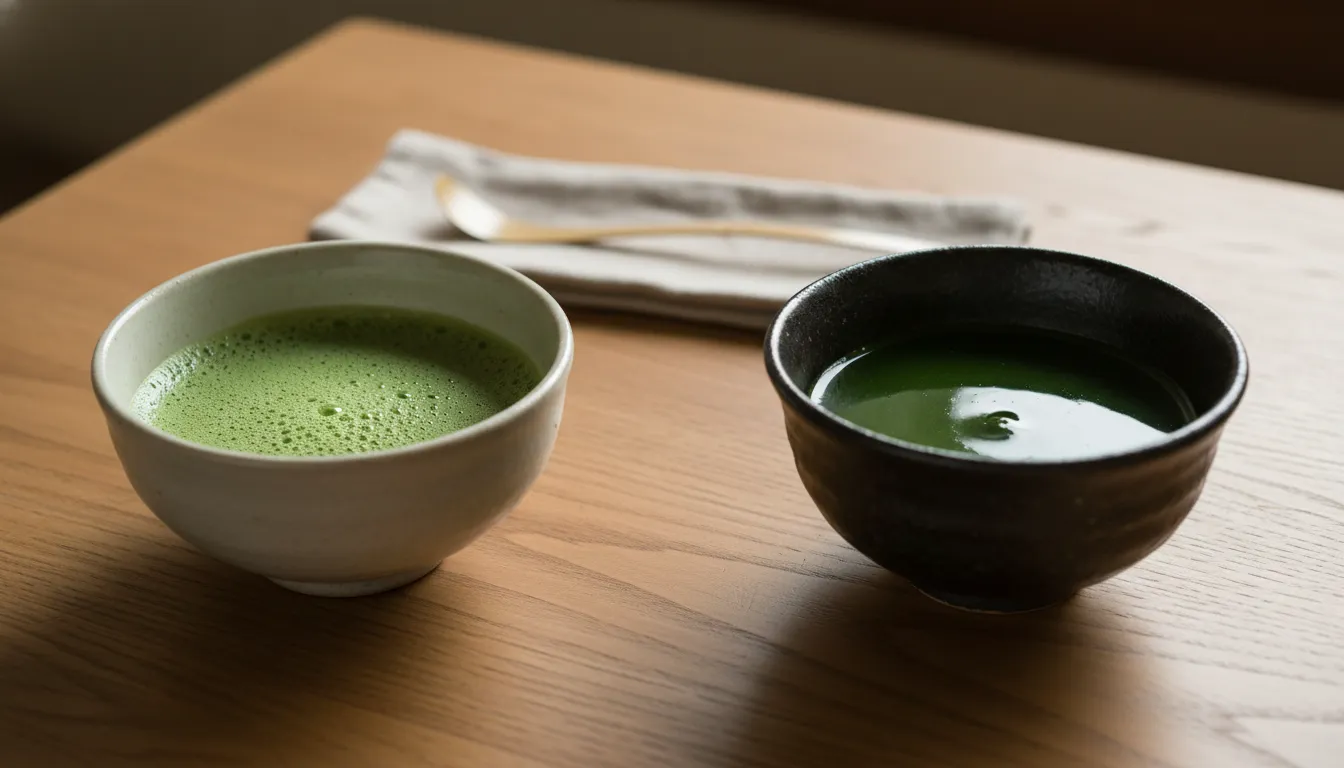
A single matcha can become two remarkably different bowls. In the usucha vs koicha tradition, one preparation is light, flowing, and softly foamed; the other is dense, glossy, and deliberately unfoamed. Learning both reveals how ratio and motion transform matcha without changing the tea itself. It also offers a more attentive way to appreciate the aroma, texture, sweetness, umami, and finish of premium matcha.
Usucha and koicha are not grades, flavors, or separate products. They are established preparation styles within the Japanese tea tradition. Usucha means "thin tea," while koicha means "thick tea." The names sound simple, but each style asks for a different relationship between powder, water, whisk, and pace.
This guide explains the practical and sensory differences, then shows how to prepare and taste each style at home with respect for the larger tradition. To explore teas intended for traditional preparation, begin with Sorate's matcha collection, sourced with an emphasis on the craft and character of Japanese tea.
Usucha vs koicha at a glance
Usucha is a light, fluid matcha whisked briskly to create fine foam, while koicha is a thick, concentrated matcha slowly kneaded until glossy. Koicha generally uses about twice as much powder and half as much water as usucha, so the finished tea is roughly four times as concentrated.
| Point of comparison | Usucha | Koicha |
|---|---|---|
| Meaning | Thin tea | Thick tea |
| Typical starting ratio | About 1 gram matcha to 70 milliliters water | About 2 grams matcha to 35 milliliters water |
| Texture | Light, fluid, and softly frothy | Dense, smooth, and syrup-like |
| Motion | Whisked briskly | Kneaded slowly |
| Surface | Fine foam is welcome | Glossy, without foam |
| Experience | Open, aromatic, and approachable | Concentrated, focused, and lingering |
The measurements are useful starting points rather than rigid rules. Matcha, water, bowl shape, and personal taste all affect the result. The essential distinction is the relationship between concentration and technique: usucha is whisked for an airy texture; koicha is worked into a unified, glossy texture.
What is usucha?
Usucha is matcha prepared as a thin, flowing tea with a fine layer of foam. It uses a relatively generous amount of water and is whisked rapidly, giving the tea a light body and lively surface. The style is approachable for daily practice but still rewards precise measuring, sifting, and whisking.
How thin tea expresses matcha
"Thin" describes consistency, not quality. Because usucha contains more water than koicha, its aroma opens readily and its flavor moves quickly across the palate. A well-prepared bowl can show sweetness, bitterness, vegetal notes, umami, and a clean finish without feeling heavy.
Usucha is often the most practical entry point for someone learning traditional matcha preparation. Its quick whisking motion helps develop control of the chasen, while the visible foam provides immediate feedback. Fine, even bubbles usually indicate that powder and water have been mixed thoroughly. Large bubbles are not a disaster, but they can make the surface feel coarse.
A useful usucha starting ratio
Begin with about 1 gram of sifted matcha and 70 milliliters of water. Use warm rather than boiling water, since excessive heat can make delicate flavors seem harsh. From that baseline, adjust one variable at a time. Slightly more powder creates a fuller bowl; a little more water creates a gentler one.
Sifting matters because matcha is extremely fine and readily forms small clumps. A sieve separates those clumps before water is added, helping the whisk create a smooth suspension. Drink usucha soon after preparation, because suspended matcha naturally begins to settle if left standing.
What is koicha?
Koicha is a thick, highly concentrated preparation of matcha with a smooth, glossy texture and no foam. It uses more powder and much less water than usucha. Instead of whipping air into the tea, the preparer slowly kneads powder and water together until the mixture becomes cohesive and even.
Why koicha feels so different
Koicha moves slowly in the bowl and lingers on the palate. With less water to soften the experience, the matcha's aroma, sweetness, umami, bitterness, and finish become more direct. That concentration is why matcha choice matters especially for koicha. The tea should remain balanced and pleasant when prepared at high strength.
A successful koicha is not merely thick. It should feel unified rather than chalky, and rich rather than aggressively bitter. It is often described as syrup-like, although its exact consistency depends on the matcha and ratio. The surface should appear glossy, without the froth sought in usucha.
Koicha and the tea tradition
Koicha is closely associated with formal tea practice and a deliberate pace. Preparing it at home can deepen appreciation for the tea, but making a thick bowl is not the same as conducting a formal tea ceremony. Ceremony includes learned forms, utensils, hospitality, and context far beyond a recipe.
That wider context is part of what gives the bowl meaning. Sorate's relationship with a family-owned farm in Uji, Kyoto reflects the connection between tea, place, and practice. Read about Sorate's birthplace in Uji to understand more of the setting behind the tea.
How do you prepare usucha and koicha?
Prepare both styles by warming the bowl and whisk, drying the bowl, and sifting measured matcha. For usucha, add more water and whisk quickly until fine foam appears. For koicha, add less water and slowly knead until the tea is smooth, thick, glossy, and free of dry pockets.
Tools for both preparations
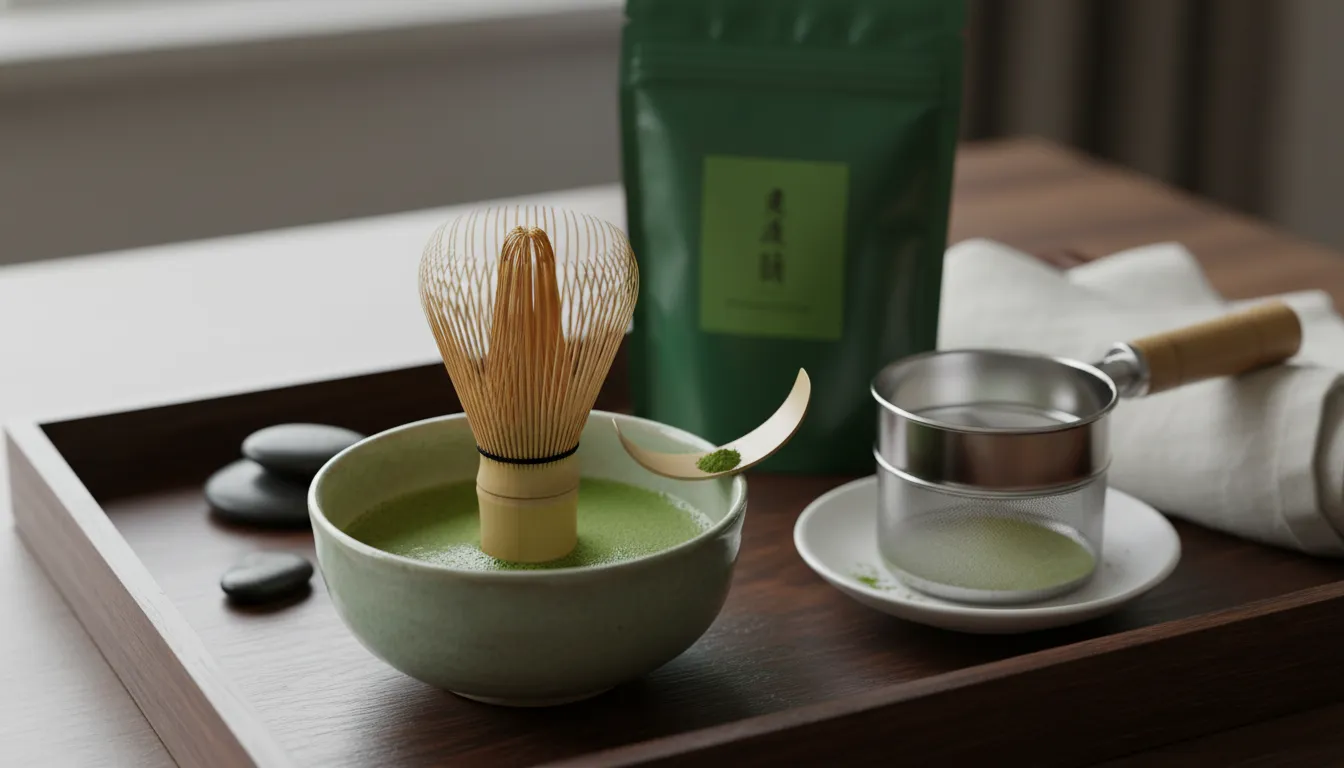
A thoughtful setup makes either method easier. Gather a chawan or matcha bowl, a chasen bamboo whisk, a fine sieve, a scoop or scale, and a way to measure water. A kettle and a small cup for cooling or pouring water also help. Sorate's tea accessories offer a place to assemble the essentials for a consistent ritual.
Start by pouring hot water into the bowl and briefly soaking the whisk's tines. This warms the chawan and softens the bamboo. Empty the bowl, then dry it completely before sifting in the matcha. A wet bowl can cause powder to stick before it is evenly mixed.
Usucha method
- Measure and sift about 1 gram of matcha into a dry, warmed bowl.
- Add about 70 milliliters of warm water.
- Use a light, brisk back-and-forth motion from the wrist. Avoid grinding the whisk against the bowl.
- Once the tea is even, bring the whisk closer to the surface to refine the foam.
- Lift the whisk gently and drink the tea while freshly prepared.
The aim is a smooth, flowing bowl with fine foam, not maximum foam at any cost. If the tea tastes harsh, try slightly cooler water. If it feels weak, add a little more matcha on the next attempt. Change only one factor so you can understand its effect.
Koicha method
- Measure and sift about 2 grams of matcha into a dry, warmed bowl.
- Add a small portion of roughly 35 milliliters of warm water.
- Use the chasen to slowly combine the powder and water, pressing through any dry pockets.
- Add the remaining water gradually as needed, continuing a slow kneading motion.
- Stop when the tea is cohesive, smooth, and glossy, without trying to create foam.
Koicha asks for patience. If all the water is added at once, dry clumps can become difficult to remove. Adding water in stages gives greater control. If the tea seems too dense, work in a very small amount of water rather than abruptly diluting the bowl. Sorate's brewing instructions provide a concise reference for both preparations.
How does usucha vs koicha change the tasting experience?
Usucha emphasizes lift, aroma, and an easy flow, while koicha emphasizes concentration, texture, and a lingering finish. Preparing the same matcha both ways reveals traits that can be subtle in one bowl and unmistakable in the other. The comparison is one of the most useful exercises for learning how matcha behaves.
Taste the same tea side by side
Begin with usucha to understand the matcha's broader shape. Notice its aroma before sipping, then observe sweetness, bitterness, umami, texture, and aftertaste. After a short pause, prepare a smaller serving as koicha. The concentrated bowl may reveal savory depth or sharp edges that were less obvious before.
Use simple notes rather than trying to find elaborate tasting language. Record the amount of powder, amount and temperature of water, and your impression of the finish. Repeating the exercise across several sessions is more informative than judging a matcha from a single bowl.
Choose matcha by balance, not color alone
Color can be part of evaluating matcha, but it does not tell the whole story. Aroma, texture, flavor balance, and finish matter in both preparations. Koicha is particularly revealing because its concentration leaves little room for roughness. A matcha enjoyable as usucha is not automatically ideal as koicha.
Freshness and storage also shape the experience. Keep matcha sealed away from heat, light, moisture, and strong odors. If it has been chilled, allow the unopened container to approach room temperature before opening so condensation is less likely to reach the powder.
When should you choose usucha or koicha?
Choose usucha for an approachable daily bowl or when serving people who are new to matcha; choose koicha for a slower, focused tasting of a matcha you already know. Neither style is inherently better. The right preparation depends on the tea, the occasion, and the experience you want to create.
For a daily ritual
Usucha suits a morning practice, an afternoon pause, or a welcoming bowl for guests. Its lighter texture is easy to sip, and the method provides frequent practice with sifting and whisking. Because it uses less powder per serving, it also makes repeated comparison practical without turning the exercise into a formal event.
A dedicated preparation space can help the ritual feel intentional even when it is brief. Keep the tools clean, dry, and easy to reach. Those building a home practice can explore Sorate's matcha kits and sets for a coordinated starting point.
For focused appreciation
Choose koicha when you want to slow down and place the character of one matcha at the center. Since every quality becomes more pronounced, begin with a tea you have already enjoyed as usucha. A small sweet served before koicha can create contrast with the concentrated tea, but the matcha should remain the focus.
Approach either preparation with curiosity rather than a demand for perfection. The forms come from a living Japanese tea tradition that deserves respect. Sorate's approach to Japanese tea offers further context for the brand's emphasis on ritual, sourcing, and a direct connection to the farm.
Common preparation mistakes
Clumps in the bowl
Clumps usually begin before whisking. Sift the powder into a completely dry bowl and break up any remaining small pieces. For koicha, add water gradually and work it into the powder in stages. For usucha, make sure the whisk moves through the whole mixture before refining the surface foam.
Using water that is too hot
Boiling water can make matcha's sharper notes more forceful. Let freshly heated water cool before pouring. If the tea tastes harsh, lower the temperature on the next bowl while keeping the ratio steady. Warm water should still release aroma and help the powder mix without overwhelming its subtler qualities.
Whisking koicha like usucha
A fast whisk introduces air and works against koicha's desired texture. Slow down and use the chasen to combine rather than froth. Conversely, moving too slowly when making usucha may leave the surface flat and the suspension uneven. Match the motion to the intended texture.
Chasing appearance over taste
A beautiful bowl is satisfying, but foam height or a perfectly glossy surface does not guarantee balance. Taste first, then adjust the next serving. A slightly imperfect-looking usucha can be delicious, and a dense koicha may need a touch more water even if it appears visually correct.
Frequently asked questions about usucha and koicha
Is koicha stronger than usucha?
Yes. Koicha uses more matcha and less water, so its flavor and texture are substantially more concentrated. Strength does not mean it should taste simply bitter, however. Matcha suited to koicha should remain smooth and balanced when prepared at that higher concentration.
Can you use the same matcha for usucha and koicha?
You can prepare the same matcha both ways, and doing so is an excellent tasting exercise. Still, not every matcha is equally suited to koicha. A powder that tastes pleasant as usucha may become too sharp or astringent when prepared at koicha concentration.
Does koicha have foam?
No. Koicha is slowly kneaded rather than briskly whisked, so the desired finish is smooth and glossy, without a cap of foam. Foam is associated with usucha, where quick whisking incorporates air into the lighter mixture.
Two preparations, one attentive practice
The difference between usucha and koicha begins with a ratio, but it reaches beyond measurement. Usucha brings lightness, aroma, and an energetic whisking motion. Koicha brings concentration, texture, and a slower, deliberate pace. Preparing both encourages close attention to the matcha, the tools, and the moment.
Start with usucha, learn how a tea responds, then prepare a small koicha when you want to experience its character more directly. Let each bowl guide the next. Explore Sorate's premium Japanese matcha collection and begin your own comparison of these two traditional expressions.


