


Boiling water can turn delicate matcha bitter before the first sip. A measured, gentler temperature protects its balanced umami, noble aroma, and vivid green color.
Explore Sorate matcha for your next tea ritual
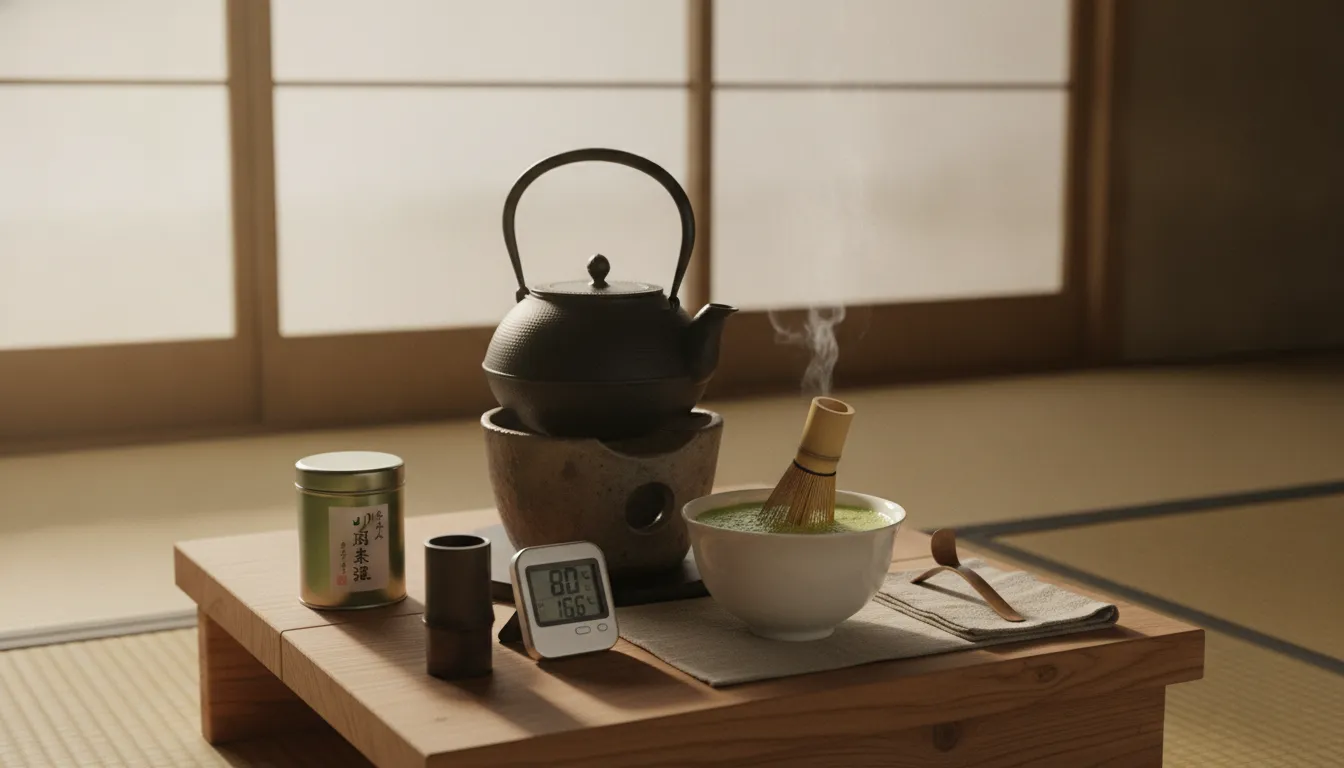
Matcha water temperature should usually fall between 160 and 175 F (70 and 80 C), with 170 F (about 75 C) as a reliable starting point. This range is warm enough to disperse the fine powder and develop a smooth taste, yet gentle enough to limit harsh bitterness. For usucha, or thin matcha, aim near 165 to 170 F; for concentrated koicha, use cooler water near 150 to 160 F. If the bowl tastes bitter or looks dull, lower the temperature before changing anything else. If it tastes weak, feels flat, or resists mixing, raise the temperature slightly and confirm the matcha-to-water ratio to restore balanced flavor and creamy texture.
The right setting depends on the matcha, the preparation style, and your taste. The best matcha water temperature at a glance gives you a calm, practical starting point before you fine-tune each bowl with quiet confidence. The path begins with a clear temperature range.
The best matcha water temperature at a glance
For most bowls, start with a matcha water temperature of 160-175 F (70-80 C). This range is warm enough to open the tea's aroma and flavor. It also gives you room to adjust before excess heat brings out more bitterness.
Quick temperature guide
The right setting depends on how you plan to serve the matcha. A lighter bowl can take warmer water, while thick koicha often tastes more balanced at the cooler end. The table offers a calm starting point, not a rigid rule.
| Preparation | Starting temperature | Why it works |
|---|---|---|
| Standard matcha | 160-175 F (70-80 C) | Balances aroma, umami, and mild bitterness |
| Usucha, thin tea | 165-170 F (74-77 C) | Supports a light body and fine foam |
| Koicha, thick tea | 150-160 F (66-70 C) | Keeps the dense tea smooth and rounded |
| Matcha latte | 160-170 F (70-77 C) | Makes a strong base without harshness |
| Iced matcha | 160-170 F (70-77 C), then chill | Helps disperse the powder before adding ice |
Why 160-175 F is a useful start
Matcha is whisked into water rather than steeped and removed. This makes the balance of water, powder, and heat easy to notice in each sip. The National Center for Complementary and Integrative Health overview of green tea notes that green tea comes from the Camellia sinensis plant.
Within this starting range, warmer water tends to bring a firmer taste. Cooler water often gives the bowl a softer feel, though the powder may take more care to mix. After choosing the temperature, follow a steady matcha whisking method to create an even texture.
Adjusting the range to taste
If the first bowl tastes sharp, lower the water temperature by a small step. If it tastes muted, raise the temperature or review the matcha-to-water ratio. Change one part at a time, so you can learn what suits that matcha.
Water just off the boil needs time to cool before it meets the powder. A thermometer gives the clearest reading, but a temperature-controlled kettle also keeps the ritual consistent. With practice, the starting range becomes a guide for reading each bowl rather than a fixed command.
Why water temperature changes the taste of matcha
Matcha water temperature shapes what reaches the palate first. Warm water can bring forward a rounded balance, while hotter water often makes bitterness feel more direct. Cooler water tends to create a softer cup, though the powder may need more patient whisking.
Sweetness, umami, and bitterness
A well-balanced bowl lets sweetness, savory umami, and gentle bitterness sit together. If the water feels too hot, sharper notes can cover the matcha's quieter sweetness. When it is cooler, sweetness and umami may seem clearer, but the cup can feel less full.
Pay attention to the order of each sensation. Bitterness may appear at the front of the sip, while sweetness can linger after swallowing. Umami often feels broad and savory rather than sugary. If one note dominates, shift the temperature slightly during the next preparation.
Treat these shifts as tasting cues, not rigid rules. Begin with warm water, taste slowly, and adjust the next bowl in one small direction. The quality and amount of powder also matter, so change only the temperature when comparing bowls. This calm method makes it easier to find your preferred balance.
Aroma in the bowl
Heat also changes how quickly aroma rises from the bowl. Hotter water can give an immediate burst, yet some delicate notes may pass before the first sip. With cooler water, the aroma can unfold more quietly as you drink.
Take a brief pause before tasting. Notice the scent above the bowl, then compare it with the flavor on the tongue. This small step keeps temperature testing grounded in the senses and the pace of the tea ritual.
Texture and foam
Temperature changes the way a prepared bowl feels, even when the powder and water amounts stay the same. A warmer bowl may feel more open and brisk. A cooler bowl may seem denser or gentler, especially when sipped slowly.
Foam is useful as a visual cue, but it is not the only sign of a thoughtful bowl. A smooth surface can still hold a taste that feels too sharp or muted. Let the sip, not the foam alone, guide the next adjustment.
Foam depends on whisking as well as temperature. Rather than chasing a thick cap of bubbles, look for a fine, even surface and a smooth sip. Sorate's guide to the complete whisking ritual shows how temperature fits into the full whisking ritual.
Use the same bowl, whisk, powder amount, and motion when testing. Then compare one warmer bowl with one cooler bowl. Keep the setting that brings sweetness, umami, aroma, texture, and gentle bitterness into the clearest balance. For more practice, explore Sorate's ceremonial grade matcha with the same simple tasting approach.
How to prepare matcha at the right temperature
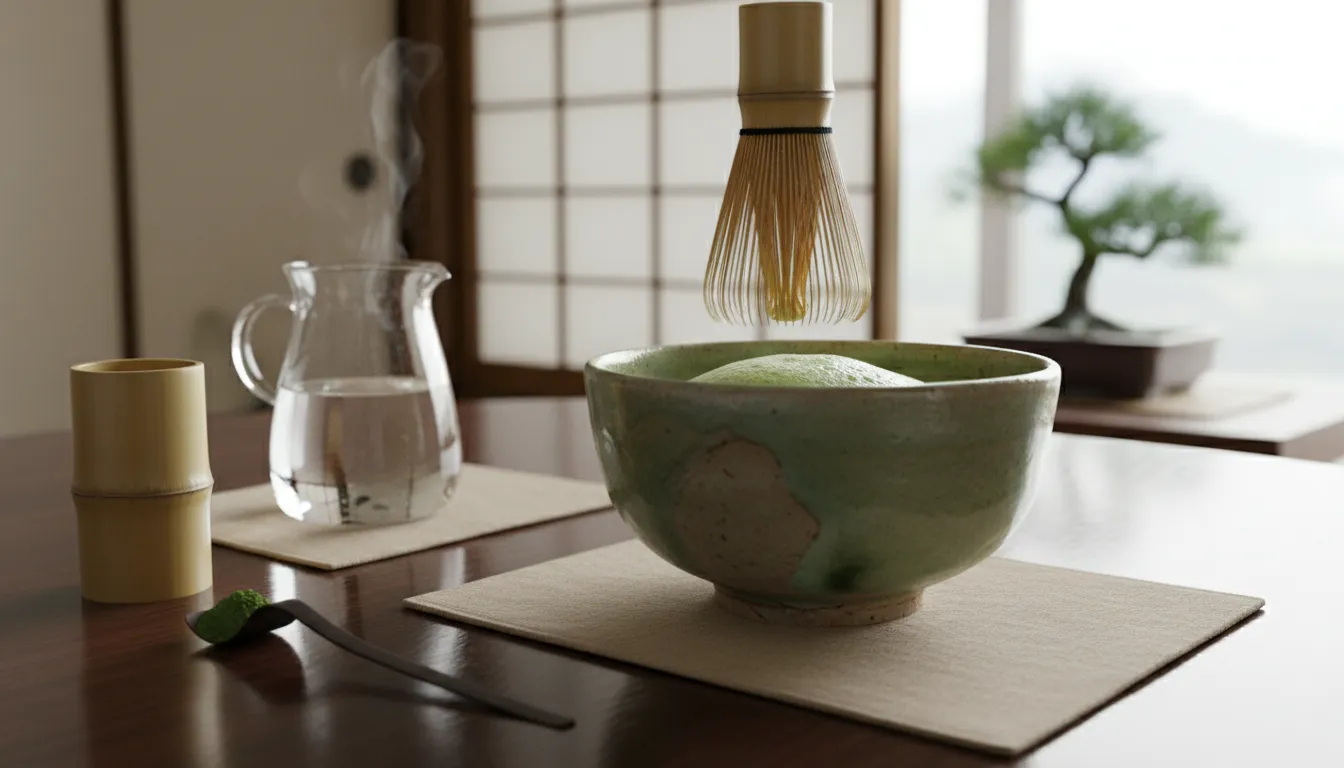
A calm setup makes temperature control easier. Gather a matcha bowl, fine sieve, bamboo whisk, thermometer, kettle, measuring cup, and clean towel before heating the water.
Matcha is powdered green tea, rather than an infusion made by removing leaves. The National Center for Complementary and Integrative Health notes that green tea comes from the Camellia sinensis plant. Since you drink the suspended powder, careful measuring and whisking shape each sip.
Set the water temperature
For a balanced starting point, set a temperature-controlled kettle to 160 to 175 F, or 70 to 80 C. If using a standard kettle, boil fresh water and let it cool. Check it with a thermometer before pouring.
The exact matcha water temperature can shift with the tea and your taste. Start near the middle of the range. Use cooler water next time if the bowl tastes too bitter. Use slightly warmer water if the flavor seems muted.
The preparation sequence
- Pour hot water into the bowl and let it stand for about one minute. This warms the bowl, helping the water stay steady during whisking.
- Discard the warming water, then dry the bowl well. A dry surface helps the sifted matcha stay loose instead of forming damp clumps.
- Sift the matcha into the bowl. For a standard serving, begin with about two grams, or roughly two bamboo scoops.
- Measure about 60 to 70 milliliters of water at your chosen temperature. Pour a small amount over the powder, then stir gently into a smooth paste.
- Add the remaining water. Whisk briskly from the wrist in a quick zigzag motion until a fine, even foam forms across the surface.
- Lift the whisk slowly from the center. Drink soon after whisking, before the suspended powder begins to settle at the bottom.
Choose a Sorate matcha kit for a complete preparation ritual
Keep the whisk light against the bowl. Pressing hard can slow the motion and may damage the bamboo tips. Sorate's guide to the guide to temperature and whisking technique offers more detail on wrist movement and foam.
Adjust the next bowl
Taste the matcha before changing several parts of the method. If it is bitter, lower the water temperature first. If it feels thin, add a little more powder or use less water next time.
Keep a short note of the tea, temperature, powder amount, and water volume. Small changes are easier to judge when the other parts stay fixed. This steady approach respects the character of Sorate matcha and helps you repeat a bowl you enjoy.
How can you cool water without a thermometer?
You can cool just-boiled water for matcha without measuring an exact temperature. The simplest approach is to watch, pour, wait, and learn how your usual tools behave. Use the same kettle, bowl, and water amount each time. That consistency makes your results easier to repeat.
Let the kettle rest
After the water boils, switch off the kettle and open its lid. Let the water rest while you sift the matcha and prepare the chawan. An open kettle lets heat escape faster than a closed one. The pause also fits naturally into a calm preparation ritual.
Avoid treating any wait time as a fixed rule. A full metal kettle holds heat in a different way than a small glass kettle. Room temperature also changes the pace. For an exact reading, temperature must be checked with a measuring tool, as shown in the NIST guide to temperature measurement.
Pour between vessels
Pour the boiled water into an empty cup or pouring vessel before adding it to the chawan. Each transfer exposes more water to the air and warms the vessel. That process cools the water without asking you to count minutes. A wider vessel will often cool water faster than a narrow one.
For more cooling, transfer the water once more into a second clean vessel. Keep the number of pours the same when a bowl tastes balanced. Then follow Sorate's water-cooling and whisking guidance as you whisk. This keeps cooling and whisking within one steady sequence.
Use touch and taste as guides
Before pouring, hold your hand near the outside of the vessel without touching hot surfaces. Strong rising heat means the water may need more time. Use care, since the vessel and steam can still burn. Never test hot water with a finger.
Taste gives the clearest feedback once the bowl is safe to drink. If the matcha seems harsh, cool the next batch a little longer. If it feels flat, shorten the rest or use fewer transfers. Keep brief notes while trying a authentic Japanese matcha, since each matcha can respond differently.
Troubleshooting matcha by taste and texture
A bowl that tastes or feels wrong often points to one variable that needs attention. Change only one detail at a time. This makes the cause easier to find and keeps the preparation calm and consistent. Research on matcha shows that brewing conditions affect the compounds drawn from the tea.
Bitter or weak flavor
If matcha tastes harsh or bitter, the water may be too hot. Let the water cool further before the next bowl. If the bitter edge remains, use slightly less powder or a little more water. Keep the other steps unchanged while testing the new ratio.
Weak or flat matcha can come from water that is too cool. Raise the matcha water temperature by a small amount, then taste again. Also check the ratio before adding more heat. Too much water can mute the tea even when its temperature is well chosen.
A dull aroma may also point to matcha that has lost freshness after opening. Keep the powder sealed and away from heat, moisture, and light. Fresh ceremonial matcha should have a clear aroma before water reaches the bowl.
Clumps and uneven texture
Clumps usually call for a change in technique rather than hotter water. Sift the powder into a dry bowl before adding water. Then add a small amount of water and whisk until the mixture looks even. Add the remaining water only after the clumps are gone.
If grit settles quickly, check whether dry powder remains along the bowl's edge. Draw it into the water before whisking with a quick, light motion. Avoid pressing the whisk hard against the base. Sorate's guide to the matcha preparation guide also explains how temperature, ratio, and whisking work together.
Flat matcha or poor foam
A thin layer of foam is not always a flaw, since the desired texture depends on the style of preparation. For a light, foamed bowl, first make sure the powder is sifted. Whisk from the wrist with fast strokes, rather than stirring in slow circles.
Poor foam can also result from too much water, too little powder, or a worn bamboo whisk. Warm the bowl and whisk first, but dry the bowl before adding powder. This helps the whisk move freely without leaving moisture that can form clumps.
If the foam forms but fades fast, test a slightly cooler bowl of water and repeat the same whisking motion. Compare the taste as well as the surface. The aim is a smooth, balanced bowl, not foam for its own sake.
Find matcha accessories for a more consistent bowl
Should different matcha drinks use different temperatures?
Different matcha drinks benefit from different starting temperatures. A thin bowl, thick tea, latte, and iced matcha each place different demands on flavor and texture. Research reviews confirm that brewing conditions affect the compounds extracted from matcha, so matcha water temperature should suit the drink rather than follow one fixed rule.
Usucha and koicha
Usucha, or thin tea, is whisked with more water and is meant to feel light and balanced. A useful starting point is 165 to 170 F. Koicha uses much less water, which makes each note more intense. Starting near 150 to 160 F can help keep its thick texture smooth, according to this guidance for usucha and koicha.
These ranges are starting points, not strict limits. Prepare two small bowls with the same matcha and ratio, then change only the water temperature in small steps. Notice the sweetness, savory depth, bitterness, aroma, and finish. This simple comparison shows how a specific matcha responds without masking its character.
Matcha lattes
For a latte, begin by making a small matcha base with warm water. The base should taste clear and balanced before milk is added. If it tastes harsh on its own, milk or sweetener may hide the issue rather than fix it. A gentler starting temperature often gives you more control.
Keep the powder, water amount, and whisking method steady while testing temperature. Sorate's guide to the ideal matcha water temperature also explains how ratios and whisking shape the finished bowl. Once the base tastes right, add your preferred warm milk and note how the matcha carries through.
Iced matcha
Iced matcha still benefits from a warm starting step. Whisk the powder with a small amount of warm water first, then pour it over ice or cold milk. This method gives the matcha space to blend before the drink cools. Avoid using extra-hot water merely to offset the ice.
Test iced versions in small batches because dilution changes as ice melts. Use the same matcha, ice amount, and serving size during each trial. Then adjust the starting water temperature by a small amount and taste again. The goal is not one universal number, but a method that respects the matcha in each drink.
Frequently Asked Questions
What temperature should water be for matcha?
For most matcha, aim for water between 160 F and 175 F (70 C to 80 C). This range helps draw out balanced umami while protecting the tea's delicate aroma and color. A reliable standard starting point is 170 F (about 75 C), which aligns with the middle of the recommended range. Sorate's guide to whisking matcha identifies as a balanced temperature. Adjust slightly cooler if the bowl tastes too bitter.
Does water temperature affect matcha quality?
Yes. Water that is too hot can make matcha taste harsh and bitter, while also dulling its aroma and green color. Water that is too cool may leave the flavor muted and make the powder harder to whisk smoothly. Temperature does not change the matcha's original grade, but it strongly shapes how its flavor, color, aroma, and texture appear in the prepared bowl.
Why does my matcha taste bitter?
If matcha tastes bitter, first lower the water temperature by 5 to 10 F and prepare another bowl. Avoid boiling water. Bitterness can also come from using too much powder or too little water, so keep the ratio consistent. Sorate's whisking guide notes that both water above 176 F (80 C) and an incorrect matcha-to-water ratio can cause bitterness.
Is 70 C good for matcha?
Yes. Water at 70 C (158 F) is a good cooler option for ceremonial matcha, while 170 F (about 75 C) remains the reliable standard starting point used throughout this guide. It is warm enough to bring forward umami and aroma without the sharper bitterness often caused by hotter water. Taste the prepared bowl before changing the temperature. If it seems muted, try slightly warmer water; if it seems bitter, try slightly cooler water.
What is the best water temperature for usucha versus koicha?
Usucha, or thin matcha, is often prepared at 165 to 170 F (about 74 C) for a light body and fine foam. Koicha, or thick matcha, generally benefits from cooler water at 150 to 160 F (about 66 to 71 C). This helps manage bitterness in its concentrated texture. These ranges are starting points; refine them according to the matcha and your taste.
Ready to make every bowl of matcha more balanced?
Using water that is too hot can dull matcha's aroma and bring forward harsh bitterness, making careful whisking feel less rewarding. Waiting to adjust your routine means repeating the same avoidable problems each time you prepare a bowl. Start with the right temperature today, and your very next bowl can offer a smoother introduction to the traditional matcha ritual.
Ready to refine your daily preparation with matcha chosen for an authentic tea experience? Explore Sorate's authentic Japanese matcha to begin practicing a more thoughtful bowl now and build a consistent ritual over time. Choose your matcha now so your next practice begins with leaves suited to the care you bring to preparation, and contact Sorate for guidance.


