


Matcha farms in Japan shape far more than the view from a tea field. The timing of shade, the care given to new shoots, the spring harvest, and the handling of the leaf all influence what eventually reaches a chawan. To understand matcha, it helps to follow the work backward, from the bowl to the farm and from the finished powder to the family and landscape behind it.
Explore Sorate's matcha collection from Uji, Kyoto
How does a Japanese matcha farm produce matcha?
Japanese matcha is made from tea leaves grown for tencha, a shade-grown leaf that is steamed, dried without rolling, sorted, and then ground into a fine powder. A typical farm-to-bowl journey includes field preparation, covering the tea plants before harvest, picking tender shoots, processing the fresh leaf into tencha, and carefully milling that tencha. The region, cultivar, harvest timing, and farmer's methods all contribute to the finished matcha.
That sequence is the useful starting point for anyone researching matcha farms in Japan. A farm is not simply a place where green leaves grow. It is where a series of decisions begins. Each decision narrows the path from a living plant to a powder that can be whisked with water.
Where are matcha farms in Japan?
Matcha is associated with several Japanese tea-growing areas, not one single town. Uji and the wider Kyoto region are closely linked to tea ceremony culture and covered-tea traditions. Nishio in Aichi is widely recognized for matcha production. Shizuoka, Kagoshima, and Fukuoka's Yame area also have tea farms and producers working with shaded leaves and matcha-related styles.
These regional names are useful, but they do not tell the entire story. A tea field's slope, soil, rainfall, temperature changes, cultivar, covering method, harvest date, and processing choices can vary from one farm to the next. Two teas from the same prefecture may still have noticeably different characters because the people and practices behind them are different.
Uji is especially meaningful to Sorate. The brand sources directly from a family-owned farm in Uji, Kyoto, keeping the relationship between the grower, the leaf, and the tea ritual at the center of its work. For the personal history of that connection, read Sorate's story of its birthplace in Uji. This guide stays focused on the farm practices that carry tea from field to bowl.
What happens before the matcha harvest?
Tea plants are perennial crops, so a matcha harvest is prepared well before workers pick the newest leaves. Farmers manage the field through the seasons, maintaining the plants, watching weather patterns, and deciding how the next flush should be grown. The goal is not simply to produce the largest amount of leaf. For tencha, the farmer is also preparing a leaf that can be processed cleanly and express the intended style.
Cultivar and field conditions
A cultivar is a cultivated variety of the tea plant. Farmers select cultivars for reasons that can include local climate, field performance, harvest timing, and the character they want in the finished tea. Elevation, drainage, wind, and the movement of light across a field also matter. These factors do not create a guaranteed quality score, but they give the farmer a set of conditions to work with.
Shading the tea plants
Several weeks before harvest, many farms producing tencha cover the tea plants with shade structures or nets. Traditional and modern systems differ, and the length and degree of covering can vary. The reduced light changes how the new leaves develop, which is one reason shaded leaves are treated differently from leaves destined for ordinary sencha.
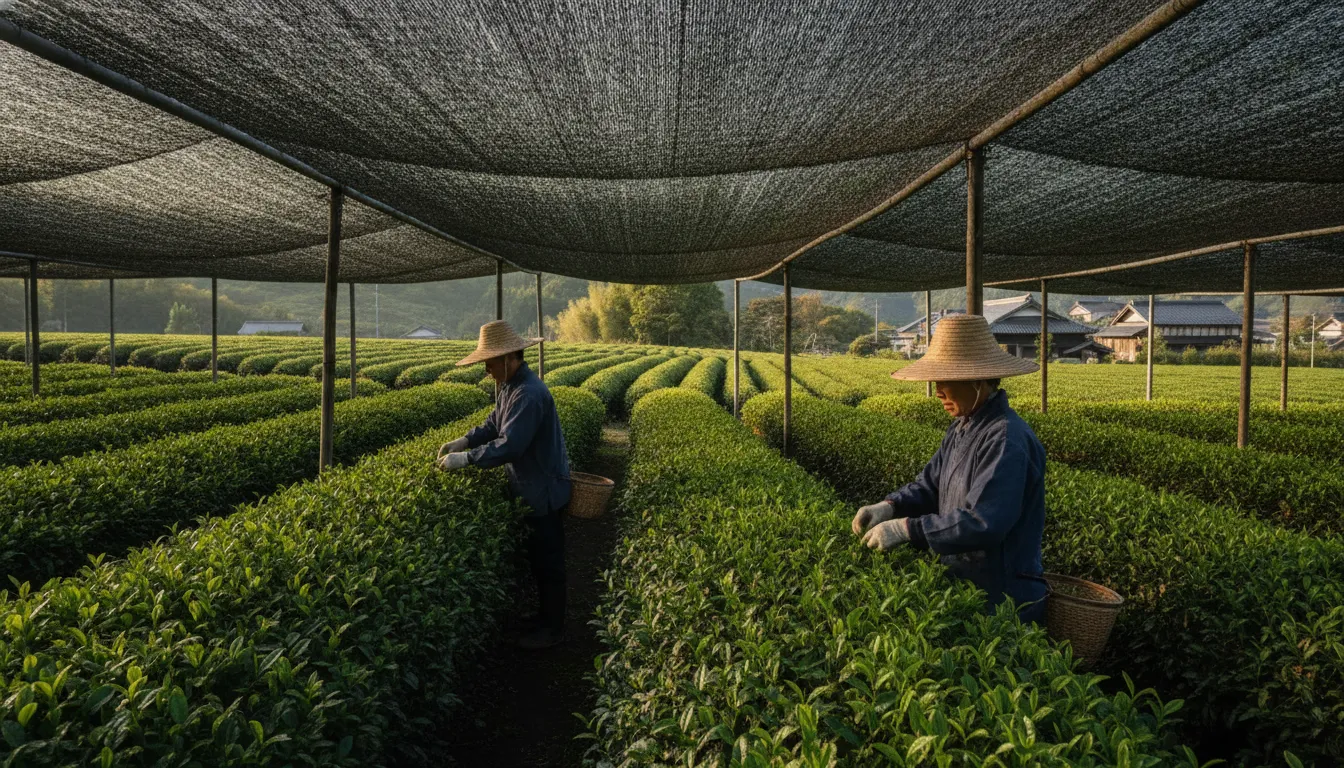
Covering a field also adds practical work. Farmers must install, maintain, and remove the covering at the right time, while continuing to monitor the plants for weather and field conditions. In Uji and other historic tea areas, cover cultivation is part of a long tradition, but each farm still applies the method to its own landscape and crop.
How is matcha harvested in Japan?
Harvest timing is one of the most important decisions on a matcha farm. The first harvest of the season is often called ichibancha, but the term describes timing, not a promise that every first harvest will taste the same. Weather, cultivar, location, shading, and the farmer's picking standard all shape the resulting leaf.
When the new shoots are ready, workers pick the leaves according to the farm's method. Some producers emphasize hand-picking for particular lots, while others use carefully managed mechanical harvesting for different products. The important point is traceability: the way a leaf is picked should be understood together with what happens to it immediately afterward.
Fresh tea leaf is delicate. Once picked, it must move promptly into processing so the desired green character can be preserved. This is why a matcha farm is often connected to a nearby processing facility or works with a trusted local partner. Growing and making the leaf are separate stages, but they are linked by time.
How does fresh tea leaf become tencha?
To make tencha, fresh leaves are steamed soon after harvest to stop unwanted oxidation, then dried in a way that keeps the leaf flat rather than rolling it into the needle shape associated with many other Japanese green teas. Stems and veins are later separated from the dried leaf. The resulting material is tencha, the leaf base that can be milled into matcha.
This is where the farm story becomes a processing story. The field determines how the leaf was grown, while the processing team determines how that leaf is stabilized, dried, sorted, and prepared for the mill. If you want a deeper explanation of this specific leaf, read Sorate's guide to what tencha is and how it becomes matcha.
| Stage | What happens | Why it matters |
|---|---|---|
| Field preparation | Farmers manage the plants, soil, weather exposure, and seasonal growth. | Creates the conditions for the next flush of leaves. |
| Cover cultivation | Tea plants are shaded before harvest when the intended tea style calls for it. | Changes how the new shoots develop and how they will be processed. |
| Harvest | New shoots are picked at a chosen point in the season. | Connects the harvest date and picking standard to the finished lot. |
| Leaf processing | Fresh leaf is steamed, dried flat, and sorted into tencha. | Prepares the leaf for clean, consistent milling. |
| Stone milling | Prepared tencha is ground slowly into a fine powder. | Completes the transformation from leaf material to matcha. |
The table is a map, not a checklist for ranking one farm against another. Farms may use different equipment and timing while producing thoughtful tea. The most useful questions are about the complete path, not one isolated technique.
Trace the shaded leaf's journey through Sorate's tencha guide
Why is stone milling part of the farm-to-bowl journey?
After tencha has been sorted, it can be ground into matcha. Traditional stone mills turn the dried leaf slowly between carefully shaped surfaces, producing a fine powder over time. Milling is a finishing stage, but it is not an afterthought. The mill must handle the leaf gently enough to create the desired texture without turning the process into a race.
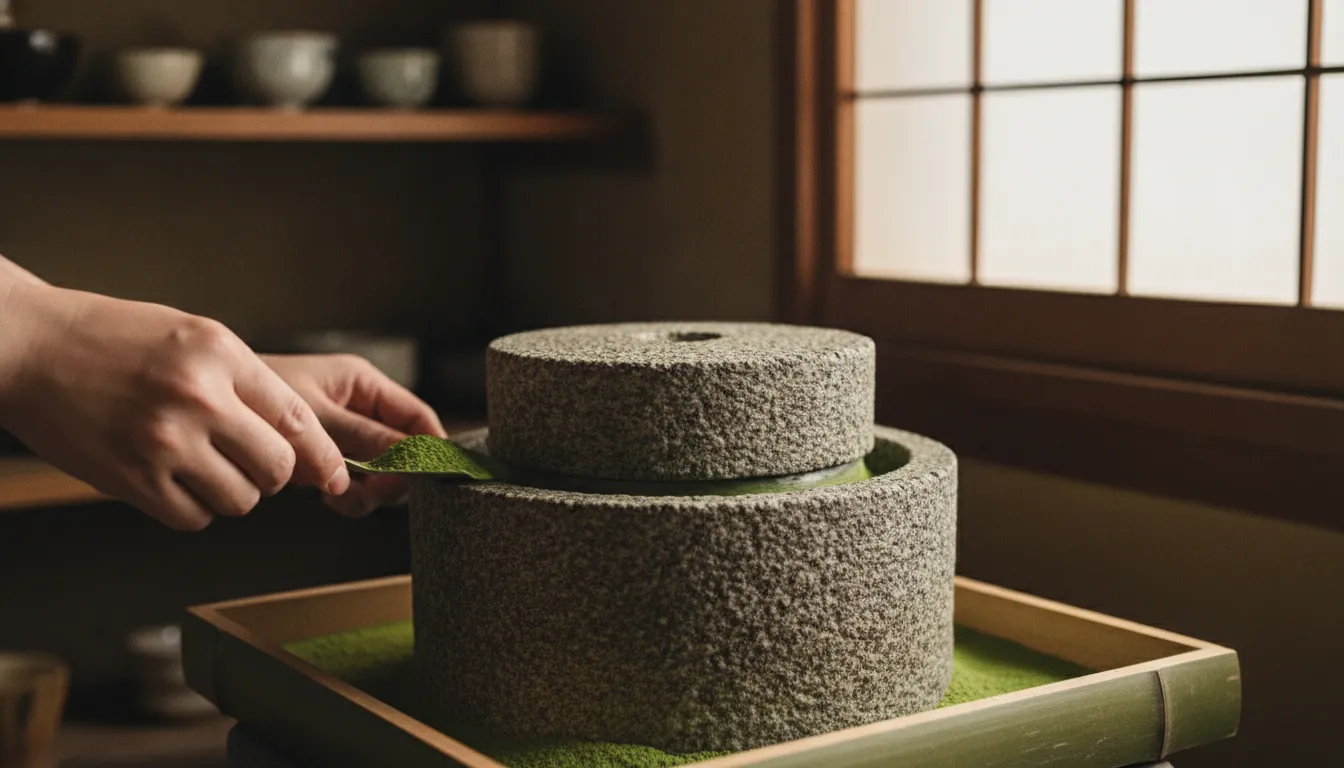
Not every matcha story needs to become a technical comparison of milling equipment. What matters here is the connection: a farm's cultivation decisions remain present in the material that enters the mill. The powder is the final form of a leaf that was shaded, harvested, steamed, dried, sorted, and prepared with a particular purpose.
For a focused look at milling methods and the questions to ask when comparing them, see Sorate's guide to stone-ground and machine-ground matcha.
What should you look for when choosing matcha from a Japanese farm?
A farm name or regional label can be a helpful beginning, but it should be followed by more specific details. When shopping for matcha, look for information that helps you understand the route from field to finished powder.
- Origin: Does the producer name the prefecture, town, or farm relationship?
- Leaf material: Is the matcha made from shade-grown tencha?
- Harvest: Does the description identify a harvest season or first harvest?
- Cultivar: Is the tea variety listed when the producer has chosen to share it?
- Processing: Does the producer explain steaming, drying, sorting, or milling?
- Storage: Is the powder protected from heat, light, air, and moisture after milling?
No single detail proves everything about a tea. Together, these details make the product more legible and help you connect a label to the work of the farm. Sorate's about page offers more context on the brand's relationship to Japanese tea culture and direct farm sourcing.
How do you bring the farm story into the bowl?
Once matcha is in your kitchen, the farm-to-bowl journey becomes part of a simple ritual. Open the package carefully, keep the powder protected from heat, light, air, and moisture, and use a clean bowl and whisk. There is no need to turn the moment into a complicated tasting exercise. Notice the color, aroma, texture, and finish, then consider how those qualities connect to the origin and processing notes provided by the producer.
The deeper lesson is that a bowl of matcha is not an anonymous green powder. It carries a place, a season, a cultivar, a harvest decision, and many careful hands. Learning about matcha farms in Japan gives you a more respectful way to read those details and appreciate the work behind the ritual.
Shop Sorate's Uji matcha for your next tea ritual
Frequently asked questions about matcha farms in Japan
Where does Japanese matcha come from?
Japanese matcha comes from tea-growing areas across Japan, including Uji and the wider Kyoto region, Nishio in Aichi, Shizuoka, Kagoshima, and Yame in Fukuoka. The farm's cultivar, field conditions, shading, harvest, and processing determine the character of a particular matcha.
What makes a tea farm suitable for matcha?
A farm producing matcha generally grows and processes tea leaves intended to become tencha. That means the plants may be shaded before harvest and the leaf is later steamed, dried without rolling, sorted, and prepared for milling. The exact method varies by producer and tea style.
Is all matcha from Uji?
No. Uji is one of Japan's most recognized tea regions, but matcha is also produced in other Japanese tea-growing areas. Uji's importance comes from its long history, tea culture, and cultivation and processing traditions, not from being the only place where matcha is made.
How can I learn more about a matcha farm?
Start with the producer's origin, cultivar, harvest, shading, and processing notes. A transparent producer should help you understand the path from field to finished powder. You can also compare the product details with the brand's story and sourcing information.


