


Fresh matcha can lose its vivid color and quiet sweetness faster than expected. The difference often comes down to four everyday threats: air, light, heat, and moisture.
How to store matcha starts with placing the powder in an opaque, airtight container in a cool, dark, dry location. Air, light, heat, and moisture speed the loss of freshness and quality, weakening the color, aroma, and delicate flavor that make fresh matcha distinctive. For everyday use, reseal the container promptly and keep it away from stoves, sunny windows, coffee, and spices. If you refrigerate matcha, let the sealed container reach room temperature before opening it, which helps prevent damaging condensation. This simple routine protects your tea from its four main storage threats and preserves the careful work behind every serving. For its finest color and aroma, plan to enjoy opened matcha within a few weeks.
Whether your tin belongs in the pantry or refrigerator depends on how quickly you drink it and how steady your kitchen stays. The next section, How to store matcha: the quick answer, turns those choices into a simple daily routine. Here's how:
How to store matcha: the quick answer
Store matcha in a tightly sealed, opaque container in a cool, dark, dry place. Keep it away from the stove, sunny windows, damp areas, and foods with strong scents. This simple setup limits the five main threats: air, light, heat, moisture, and odors.
These threats can dull matcha's green color, soften its aroma, and change its flavor. Research on green tea links storage temperature with sensory quality, including freshness, aroma, and color brightness. That makes a stable, cool setting central to preserving green tea quality.
The five storage threats
Matcha is finely ground, so every scoop has a large surface area exposed to its surroundings. Good storage does not require special tools. It requires a sound container and a consistent place to keep it.
| Threat | What it does | How to prevent it |
|---|---|---|
| Air | Speeds oxidation and weakens fresh flavor. | Reseal the container tightly after each use. |
| Light | Fades the vivid green color. | Use an opaque tin or a dark cupboard. |
| Heat | Speeds changes in flavor and color. | Choose a cool spot away from heat sources. |
| Moisture | Causes clumps and may support mold. | Use dry tools and prevent condensation. |
| Odors | Can give the powder unwanted scents. | Keep it sealed and away from spices or coffee. |
A practical pantry setup
For daily use, keep the original matcha tin or another airtight, opaque container in a cool cupboard. Do not leave it on the counter. Clear glass is suitable only when it stays fully protected from light.
Open the tin only long enough to measure a serving, then close it at once. Always use a clean, dry scoop. These habits support proper matcha storage without adding needless steps to the tea ritual.
Cold storage without condensation
Cold storage can help when matcha will not be used soon. Yet opening a cold tin can draw moisture onto the powder. Let the sealed container reach room temperature before opening it, then return it to storage after use.
For matcha used often, a cool pantry may be simpler because it avoids repeated temperature shifts. Whatever place you choose, consistency matters. Protecting the powder each day helps preserve the color, aroma, and flavor tied to matcha freshness.
Choose an airtight, opaque container
The right container limits the two threats that reach matcha each time you handle it: air and light. Choose a small, opaque tin with a lid that closes firmly. A purpose-built tea caddy is ideal, but any clean, food-safe container can work if its seal is sound.
An airtight seal slows contact with oxygen, which can change a tea's aroma, flavor, and color. Research on tea storage describes oxidation as a reaction between air and tea compounds that causes noticeable sensory changes. This makes the container a key part of protecting tea quality.
Why opaque walls matter
Avoid keeping matcha in a clear jar, especially on a counter or open shelf. Clear glass lets light reach the powder, even when the lid seals well. An opaque tin blocks that light while also keeping the powder out of view between servings.
If a glass jar is your only option, place it inside a fully dark cupboard. Keep it away from a sunny window and other bright areas. For a more reliable routine, use an opaque caddy and return it to its dark storage spot after each use.
Less air inside the container
Container size matters after opening. A large tin holding a small amount of matcha leaves more air around the powder. Move the remaining tea into a smaller airtight container as the supply drops, or divide a large purchase into small sealed portions from the start.
Open only the portion you are using. This keeps the rest sealed and makes it easier to preserve matcha freshness. Before closing the tin, check the rim for powder that could weaken the seal. Then press or twist the lid shut at once.
Dry tools and quick resealing
Use a clean, fully dry scoop whenever you measure matcha. Even a damp utensil can bring moisture into the container and cause clumps. Never hold the open tin above steam from a kettle or bowl.
Plan each serving before opening the container. Set out your bowl, scoop, and strainer first, then measure what you need. Close the lid before you begin whisking. These simple habits keep the matcha exposed for less time and make proper matcha storage part of the daily ritual.
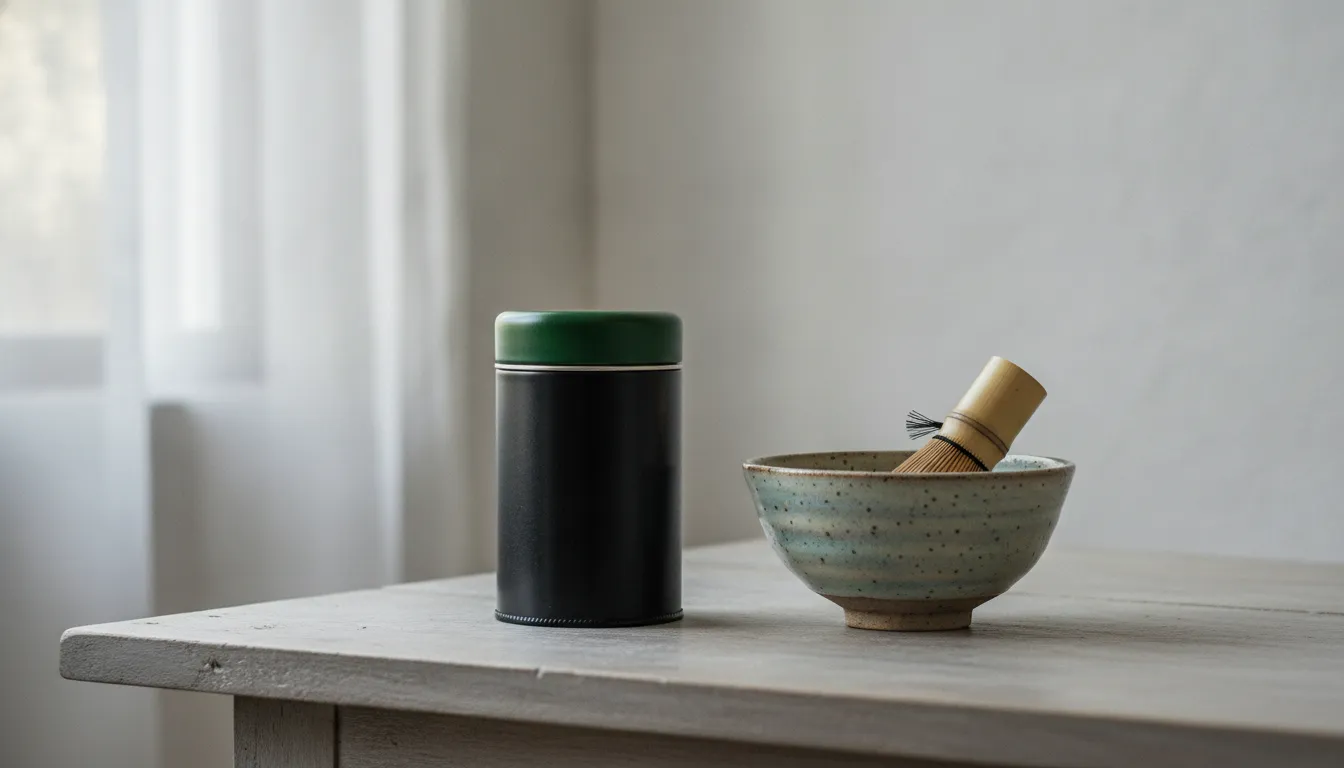
Should you store matcha in the refrigerator?
Refrigeration can help protect matcha from heat, but it is not the right choice for every tin. A cool, dark, and dry cupboard can work well for matcha used often. The refrigerator is more useful when your kitchen stays warm or humid, or when you use the powder slowly.
Temperature matters because stored green tea can lose freshness, aroma, and color brightness over time. Research on green tea storage and sensory quality also supports keeping tea at a lower temperature. Yet cold storage introduces moisture and odor risks that need careful handling.
When a cupboard is enough
Choose a cupboard when you prepare matcha often and can keep it away from heat, light, and steam. The space should not sit beside a stove, oven, dishwasher, or sunny window. Store the powder in its original opaque tin or another tightly sealed container.
This approach makes daily preparation simple because the matcha stays near room temperature. It also avoids repeated warming and cooling, which can raise the risk of condensation. For a broader storage routine, follow these proper matcha storage practices.
Your rate of use should guide the choice. A small tin used each morning may stay fresh in a good cupboard. Matcha reserved for occasional bowls may gain more protection from steady refrigeration.
When refrigeration makes sense
Use the refrigerator when your home stays warm, the kitchen grows humid, or you will keep the matcha for longer. Place the sealed tin inside a second airtight bag or container. This extra layer helps block moisture and nearby scents.
Before opening refrigerated matcha, let the sealed container reach room temperature. Opening it while cold can cause condensation to form on the fine powder. Moisture may lead to clumps and can harm its aroma, color, and taste.
Avoid moving one tin in and out of the refrigerator throughout the day. Instead, keep a small working amount in a cool cupboard and refrigerate the sealed reserve. This method suits larger purchases because the main supply faces less air and less temperature change.
Climate also changes the balance. In a cool, dry home, refrigeration may add needless handling. During a hot, humid summer, the stable cold may offer useful protection if the package stays sealed.
Protection from refrigerator odors
Matcha readily takes on scents from its surroundings. A loose lid can leave delicate tea tasting like onions, cheese, spices, or other strong foods. Keep the tin tightly closed, then place it inside a clean, odor-free outer container.
Store that container away from foods with strong aromas and from areas where spills are likely. Never leave an open matcha tin in the refrigerator. These careful habits protect the tea ritual and support lasting matcha freshness.
How to prevent condensation in stored matcha
Refrigeration can help protect matcha, but opening a cold tin lets moisture reach the powder. A cold tin meets warm kitchen air, and water can form on its surface. Research on green tea also shows that lower storage temperatures help preserve sensory quality.
Before opening the tin
Do not rush the move from refrigerator to tea bowl. Use the same simple routine each time, so the sealed tin can warm without drawing damp air inside.
Remove the matcha tin from the refrigerator, and keep the lid fully closed. Set it in a cool, shaded place away from the stove.
Let the sealed tin reach room temperature before opening it. Warmup time will vary with the tin size and room conditions.
Check the outside of the tin for moisture. If it feels damp, wipe it dry and wait until the surface no longer feels cold.
Use a clean, dry scoop to measure the matcha. Never let steam, wet fingers, or a damp utensil touch the powder.
Measure only the amount needed for the current bowl. Keep the lid nearby, so the tin stays open for as little time as possible.
Wipe the rim if any powder prevents a tight seal. Close the inner and outer lids at once, then return the tin to cold storage.
Dry tools and a calm workspace
Moisture can enter even after the tin has warmed. Wash the chashaku, spoon, or sifter well before the tea ritual, then let each tool dry fully. Do not hold an open tin above a steaming kettle or a freshly rinsed bowl.
Clumps may signal that humidity has reached the powder, so prevention matters more than trying to fix damp matcha. An opaque, tightly sealed tin supports proper matcha storage by limiting contact with air and light as well.
Returning matcha to the refrigerator
Reseal the tin as soon as measuring is complete. Before returning it, confirm that the lid sits evenly and no powder blocks the seal. Place it away from strong-smelling foods, since matcha can take on nearby odors.
A steady routine also reduces repeated temperature swings. If matcha is used several times each day, portion a small amount into a separate airtight tin. Keep the larger supply sealed and cold, which helps protect overall matcha freshness.
How can you tell if matcha is still fresh?
A printed date offers useful context, but it cannot show how matcha was handled after opening. Instead, check four things before preparing a bowl: color, aroma, flavor, and texture. Storage conditions shape these qualities, so learning how to store matcha also makes changes easier to spot.
Green tea can lose freshness, aroma, and color brightness during storage, according to research on its sensory quality. A quick check of the powder and prepared tea can reveal those shifts. Compare the matcha with what you noticed when the tin was first opened.
Color and aroma
Fresh matcha should look vivid green rather than muted olive, yellow-green, or brownish. As matcha meets light and air, oxidation can turn its bright color dull. Check the powder in soft daylight, then promptly close the tin and return it to a dark place.
A fresh aroma should be clear and grassy, not faint or marked by nearby pantry scents. Matcha can absorb odors, so an unfamiliar smell may reflect storage conditions rather than age alone. Following proper matcha storage helps protect both its scent and color.
Flavor and mouthfeel
Prepare a small bowl with the same amount of powder, water temperature, and whisking method you normally use. This gives you a fair comparison. Matcha that has lost freshness may taste flatter and show less of its familiar umami and sweetness.
Texture offers another clue. Fine powder should whisk into the water without hard, damp-looking lumps. Moisture can cause clumping, so inspect any clumps before trying to break them apart. Clumping alone does not tell you whether a matcha is fresh or suitable to drink.
A simple freshness check
Use the same short review each time you open the tin. It helps you notice gradual changes that a printed date cannot capture. Record the opening date on the container, but let the matcha's condition guide your quality check.
- Look for a vivid green color without a dull or brown cast.
- Smell the dry powder for a clear aroma and any absorbed pantry odors.
- Inspect the powder for hard clumps or signs that moisture entered the tin.
- Whisk a small bowl and note whether its usual aroma, umami, and sweetness remain.
One changed trait may have a simple cause, such as absorbed odors or a different preparation method. Several changes together give a clearer sign that quality has faded. Sorate's approach to matcha freshness also explains why careful handling matters from sourcing through the final bowl.
Store opened and unopened matcha differently
Opened and unopened matcha face different risks, so they should not share the same storage plan. An unopened package still has its factory seal, which limits contact with air, moisture, and nearby odors. Once that seal breaks, each use brings fresh air and a chance for moisture to enter.
Sealed matcha for later
Keep unopened matcha in its original sealed package, away from light, heat, and strong kitchen smells. Lower storage temperatures can help preserve green tea's sensory quality, according to a study of stored green tea. That does not mean every unopened tin belongs in the freezer.
Freezing makes the most sense when a sealed package must wait for long-term use. The package must block both moisture and odors, since opening or damaged packaging removes that protection. Before breaking the seal, let the whole package reach room temperature. This pause helps keep condensation away from the powder.
One open package at a time
After opening matcha, return it to a tight, opaque container after each serving. Keep that container in a cool, dark, dry place where it will not be forgotten. If you refrigerate it, let the closed container warm before opening. Moving cold powder straight into warm air can invite condensation.
A simple rotation habit protects flavor without turning tea storage into a complex system. Finish the open package before starting another, and mark the opening date on the lid. Place the tin you plan to use next behind it. These small cues make it easier to use older matcha first.
Check the tea with your senses rather than relying on a rigid shelf-life promise. Fresh matcha should retain a bright color, clear aroma, and lively taste. A dull shade or faint aroma can show that quality has slipped. Good storage slows these changes, but it cannot stop them forever.
Buy for your ritual
Choose an amount that fits how often you prepare matcha. A daily ritual can support a larger tin, while an occasional bowl may call for a smaller package. Explore the Sorate matcha collection with your actual pace in mind. The right amount is one you can enjoy while its aroma and character remain clear.
If you buy several packages, keep the extras sealed and open them in order. Do not keep opening each one to compare them, since every opening adds exposure. For a new ritual, matcha kits and sets can also help define a steady preparation routine. A consistent routine makes buying, opening, and rotating matcha easier to manage.
Make freshness part of your matcha ritual
Freshness is not separate from preparation. It begins when you put the tin away and continues when you reach for it the next day. A calm, repeatable routine helps protect the aroma, color, and taste that make each bowl worth noticing.
A quiet place for the tin
Choose one cool, dark, and dry place for your matcha, then return the tin there after each use. Keep it away from a sunny window, a warm stove, and foods with strong scents. Research on green tea storage links lower temperatures with better sensory quality over time.
If you refrigerate matcha, leave the sealed tin at room temperature before opening it. This short pause helps keep condensation away from the powder. It also gives the tin a clear place in your routine, instead of leaving storage to chance.
Careful hands after each bowl
How you handle the tin matters, too. Open it only when your bowl and tools are ready. Use a clean, dry scoop, then close the lid as soon as you have measured the powder. These small actions limit contact with air and moisture.
- Set out your bowl, whisk, scoop, and sifter before opening the tin.
- Measure only the matcha needed for that bowl.
- Wipe stray powder from the rim with a clean, dry cloth.
- Seal the tin and return it to its storage place.
There is no need to rush these steps. Treat them as part of preparing tea, just like sifting the powder or whisking the bowl. The right accessories support smooth movement, while a fixed storage spot makes good care easier to repeat.
Care that honors the source
Good storage is an act of care, not a way to make tea precious or hard to use. It respects the work behind the powder while keeping daily preparation simple. Learning about Sorate's farm in Uji gives that care a clear sense of place.
Before closing the tin, notice the matcha's scent, color, and texture. These simple cues help you follow changes from one bowl to the next. They also turn the practical question of how to store matcha into a calm sensory habit.
Buy an amount that suits the pace of your ritual, then enjoy it while its character remains clear. Sorate's Uji-sourced matcha collection offers a useful starting point for choosing tea with care. Once it arrives, a steady storage routine carries that care into every bowl.
Frequently Asked Questions
Should matcha be stored in the fridge or freezer?
Refrigeration can help preserve matcha, while freezing is better reserved for long-term storage in a fully sealed, moisture-proof package. Before opening chilled matcha, let the closed container reach room temperature. This prevents condensation from wetting the powder. For matcha used regularly, a cool, dark, dry cupboard can also work well.
How do I keep matcha fresh after opening?
After opening, close the matcha tightly after every use and store it away from light, heat, moisture, air, and strong odors. Use a clean, dry spoon so water does not enter the container. For the freshest color and aroma, Sorate recommends enjoying opened matcha within a few weeks.
Why does matcha lose its green color during storage?
Matcha loses its bright green color when light and air expose the powder to oxidation. Heat can speed up further changes in its flavor and appearance. A dull or brownish shade usually signals declining freshness. An opaque, tightly sealed container limits these exposures and helps protect matcha's color, aroma, and taste.
How does moisture affect matcha powder storage?
Moisture can make matcha clump and may allow mold to grow, so the powder must stay dry. Always use a dry utensil and seal the container promptly. If matcha is refrigerated or frozen, let the unopened package warm to room temperature first. Opening it while cold can create condensation inside.
Does matcha expire, or does it just lose flavor?
Matcha usually declines in quality before it becomes unusable. Over time, it can lose its fresh aroma, grassy flavor, and vibrant color, especially after exposure to air, heat, or light. Check the package date and inspect the powder before use. Discard matcha that shows mold, unusual moisture, or an off odor.
Ready to protect every bowl of fresh matcha?
Waiting to replace matcha that has lost its freshness can leave every bowl short on the vivid color, full aroma, and balanced flavor you expect. Starting now gives you a clean reset, so careful storage can protect your new tin and support a consistent daily tea ritual. Choose an amount you will enjoy often, keep it sealed between servings, and avoid letting a special tin sit forgotten in the cupboard.
Ready to begin with matcha selected for your routine? Shop authentic Uji-sourced matcha today, then contact SORATE if you need help choosing an option. A thoughtful choice now makes it easier to open, store, and enjoy your matcha while its character remains clear.


