


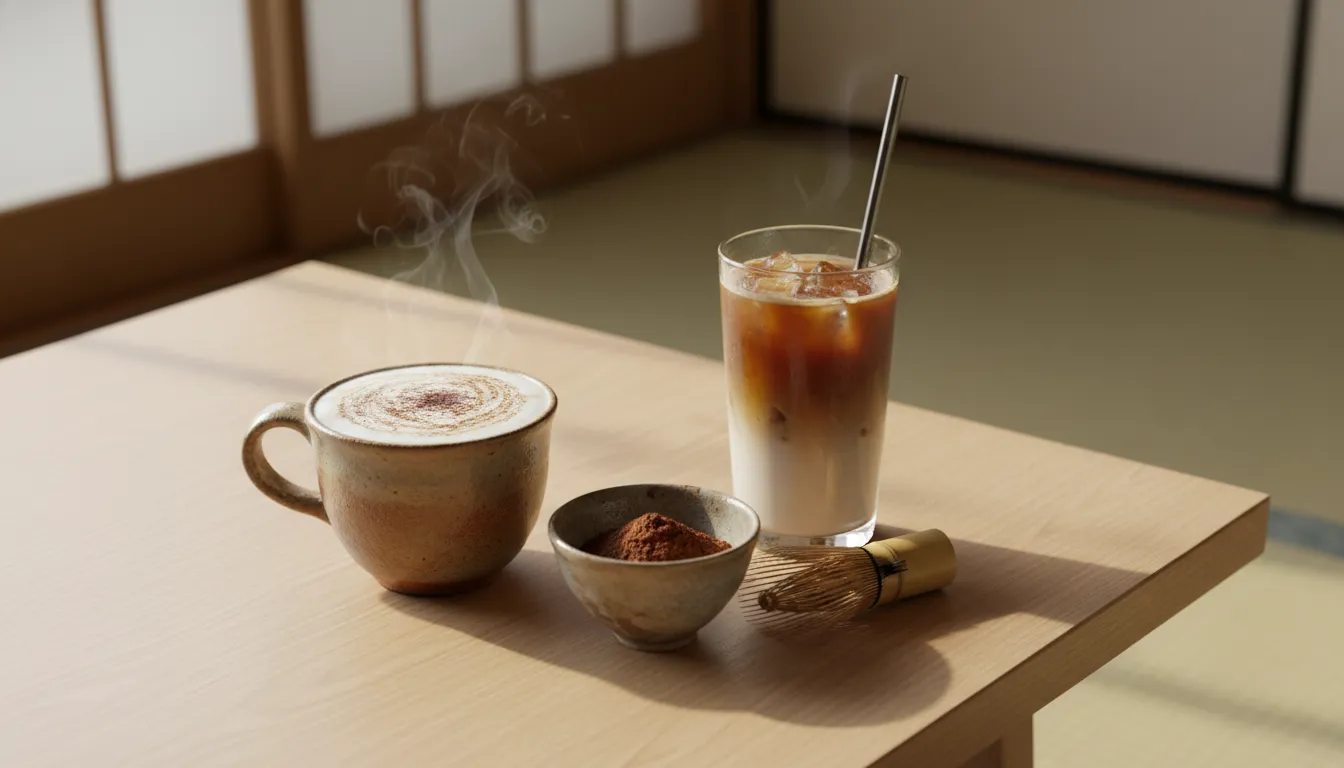
The difference between a memorable hojicha latte and a flat, milky cup often comes down to one minute of preparation. Whisk the roasted Japanese green tea into a smooth concentrate first, and its warm, nutty character stays clear even after the milk is added. With a dependable ratio, the result feels both comforting and distinctly like hojicha.
Explore Sorate's Uji hojicha powder for your next latte.
For one balanced hojicha latte, whisk 2 teaspoons of hojicha powder with 2 ounces of warm water, then add 6 ounces of milk. Serve it warm, or pour it over a full glass of ice. Add sweetener only after tasting.
This guide gives you a reliable base recipe, clear hot and iced methods, and easy ways to tune each cup to your taste. It also explains how to avoid the small errors that can hide hojicha's roasted character.
The hojicha latte ratio that works
A useful starting ratio is one part prepared hojicha concentrate to three parts milk. For a single cup, that means 2 teaspoons of hojicha powder, 2 ounces of warm water, and 6 ounces of milk. This makes the roasted tea easy to notice while leaving room for the milk's soft texture.
A balanced starting point
Measure the powder rather than scooping by eye. A small change can have a clear effect because the tea is concentrated. Mix the powder and water first, then add milk. Trying to stir dry powder straight into a full cup of milk often leaves small clumps.
| Style | Hojicha powder | Warm water | Milk |
|---|---|---|---|
| Light | 1.5 teaspoons | 2 ounces | 6 ounces |
| Balanced | 2 teaspoons | 2 ounces | 6 ounces |
| Bold | 2.5 teaspoons | 2 ounces | 6 ounces |
How to adjust the ratio
If the drink tastes too mild, add a little more powder in the next cup rather than cutting the water. Enough water helps the powder spread into a smooth concentrate. If the roast is stronger than you like, add another ounce or two of milk. Change only one part at a time, so you can learn which ratio suits you.
The same base works for hot and iced drinks. For an iced version, a bold concentrate can help offset melting ice. For a warm cup, the balanced ratio is often the best place to begin.
Why the concentrate matters
Hojicha powder is made from finely milled tea, so it behaves differently from a soluble drink mix. The particles need to be suspended evenly in water before they meet the milk. Starting with a small concentrate gives the whisk room to move and makes it easier to see whether any dry pockets remain.
Use a bowl rather than a narrow cup when possible. Sift the powder, add the water, and whisk from the wrist in quick strokes. When the surface looks even and the aroma begins to rise, the concentrate is ready. This simple sequence improves both texture and flavor without requiring specialized equipment.
Why Sorate hojicha powder suits a latte
Sorate's hojicha powder is a roasted green tea powder from Uji, Kyoto, made from bancha gathered during the fourth harvest. Its flavor carries hints of smoked chocolate and caramel alongside the familiar toasted character of hojicha. Those rounded notes remain noticeable when the tea is mixed with milk, making the powder a natural choice for both hot and iced lattes.
Powder also lets you prepare the whole drink without steeping and straining loose leaves. Whisking it first matters because the fine tea does not dissolve like sugar. Instead, the whisk distributes it evenly through the concentrate so each sip carries the roast.
How to make a hot hojicha latte
A hot hojicha latte starts with a smooth tea concentrate, followed by gently warmed milk. Whisking first keeps the roasted tea evenly distributed, while stopping the milk before it boils protects its soft texture. The full drink takes only a few minutes once the ingredients are measured.
Ingredients and tools
- 2 teaspoons hojicha powder
- 2 ounces warm water
- 6 ounces milk of your choice
- Optional sweetener, to taste
- A small bowl, whisk, and cup
Hot hojicha latte steps
- Sift the hojicha powder into a small bowl to break up firm clumps.
- Add the warm water. Whisk in quick strokes until the tea looks smooth and a light foam appears.
- Warm the milk gently in a small pan or milk frother. Stop before it boils.
- Pour the prepared hojicha into your cup, then add the warm milk.
- Taste the latte before adding a small amount of sweetener.
Water that is warm rather than boiling is easier to work with and helps protect the drink's gentle character. A bamboo whisk is a graceful choice, but a small kitchen whisk or handheld frother can also make a smooth concentrate. The goal is to blend the powder fully, not create a large cap of foam.
A calmer way to serve it
Take a moment to notice the toasted aroma before the first sip. Hojicha is distinct from matcha, yet both can be part of a thoughtful daily tea practice. If you want to explore another Japanese tea ritual, visit Sorate's matcha collection.
How to make an iced hojicha latte
For a balanced iced hojicha latte, whisk a slightly bold concentrate with 2 to 2.5 teaspoons of hojicha powder and 2 ounces of warm water. Pour it over 6 ounces of cold milk and a full glass of fresh ice, then stir before drinking to control dilution.
An iced hojicha latte keeps the same roasted depth in a cool, clean drink. The main challenge is dilution. A full glass of ice chills the latte fast, but slowly melting ice can make a weak drink if the tea base starts too light.
Make the tea concentrate
Sift 2 to 2.5 teaspoons of hojicha powder into a bowl. Add 2 ounces of warm water and whisk until smooth. Let the concentrate rest for a minute while you fill a tall glass with ice. This brief pause keeps very warm tea from melting too much ice at once.
Build the drink in layers
Pour 6 ounces of cold milk over the ice. Add the hojicha concentrate slowly, then stir well before drinking. The layers look attractive for a moment, but mixing gives you the right tea-to-milk balance in every sip.
If you use sweetener, mix it into the warm hojicha concentrate before adding the tea to the glass. This helps it dissolve. A syrup also blends more easily into a cold drink than coarse sugar.
Keep iced hojicha from tasting watery
Start with the bold ratio if you know the drink will sit for a while. You can also make ice cubes from milk, though their texture may change as they melt. The simplest answer is to make a smaller drink and enjoy it soon after mixing. Do not add extra powder to a finished cold latte, since it is likely to clump.
Which milk pairs best with hojicha?
Whole milk makes a full, soft hojicha latte, while oat milk adds a rounded texture and soy milk provides a balanced, fairly neutral base. Almond milk is lighter and nutty. Start with unsweetened milk so you can taste how it complements the roasted tea before adding sweetener.
There is no single best milk for every hojicha latte. Choose based on the texture and flavor you enjoy. Hojicha's toasted notes can work with dairy milk and many plant-based choices, but each one changes the final cup.
Dairy milk
Whole milk gives the cup a full body and soft finish. Lower-fat milk makes a lighter drink and may let more of the roast come through. Warm dairy milk gently. Too much heat can flatten its sweetness and make the latte less pleasant.
Oat, soy, and almond milk
Oat milk can add a round texture and mild grain note. Soy milk often gives good body with a fairly neutral base. Almond milk is lighter and brings its own nutty taste. That taste can suit hojicha, but it can also take the lead in a delicate cup.
Use an unsweetened version when testing a new milk. It lets you judge the tea and add sweetness with care. If you prefer foam, choose a milk made for steaming, since formulas vary in how well they froth.
Let the tea guide the choice
Prepare two small cups with the same hojicha concentrate and different milks. Taste them side by side before adding sweetener. This quiet comparison is more useful than any fixed rule. To explore the wider range of Japanese green tea, browse Sorate's tea collection.
How to fix common hojicha latte problems
For a smoother hojicha latte, sift the powder and whisk it with warm water before adding milk. If the cup tastes weak, return to the 2:2:6 recipe before adding more powder. If it tastes harsh, add milk and use slightly less powder in your next cup.
Most problems come from the mix, the ratio, or the temperature. Small changes are usually enough. Keep notes for two or three cups, and you will soon have a personal recipe that is easy to repeat.
Clumps or a gritty texture
Sift the powder before adding water. Use a wide bowl so the whisk can move freely, and whisk the powder with only the warm water first. If clumps remain, press them against the side of the bowl and whisk again. Adding dry powder straight to cold milk makes smooth mixing much harder.
A weak or watery cup
Check your measurements before adding more tea. Too much milk or ice can hide the roast. Return to the balanced 2:2:6 recipe, then move to 2.5 teaspoons of powder for a bolder result. With an iced latte, make the concentrate first and pour it over fresh ice just before serving.
A harsh or overly strong taste
Add one or two ounces of milk and taste again. Next time, reduce the powder slightly and avoid very hot water. Sweetener can soften a cup, but it should not be used to cover a poor ratio. Aim for balance before sweetness.
Flat foam
Foam is optional, not a measure of quality. If you want more, use fresh milk suited to frothing and warm it gently. Keep the whisk or frother near the surface for a short time, then blend the foam into the milk. A calm, silky texture suits the drink better than a stiff mound.
Make the hojicha latte ritual your own
Once the base recipe feels natural, small changes can make the cup personal without hiding the tea. Try a little maple syrup, honey, or simple syrup. A small amount is often enough because milk already brings a soft sweetness.
Simple flavor variations
A touch of vanilla can round out the roast. A light dusting of cinnamon can add warmth, but use it with care. Strong syrups and heavy spice blends may cover the part of hojicha that makes the drink distinct. Taste the plain latte first, then add one flavor at a time.
A thoughtful daily pause
The process can matter as much as the recipe. Measure the powder, whisk the concentrate, and notice how the aroma changes as milk enters the cup. Sorate's connection to a family-owned farm in Uji, Kyoto, reflects the value of knowing where tea comes from. Read more about Sorate's birthplace in Uji.
A favorite cup or dedicated whisk can make the daily practice feel more intentional. Sorate's tea accessories and tea gifts offer ways to share or deepen that ritual.
Bring the roasted tea ritual home with Sorate hojicha powder.
Hojicha latte questions
What does a hojicha latte taste like?
It has a toasted, nutty character with a smooth finish from the milk. The exact taste changes with the powder-to-milk ratio and your choice of milk. A balanced cup keeps the roasted tea clear without making it harsh.
Can I make a hojicha latte without a bamboo whisk?
Yes. A small kitchen whisk or handheld milk frother can blend the concentrate. Sifting the powder first is the most useful step. Whisk it with a small amount of warm water before adding milk.
Can I prepare hojicha concentrate ahead of time?
You can prepare a small amount ahead for the same day and keep it covered in the refrigerator. Whisk or shake it again before use because the powder may settle. Freshly whisked concentrate gives the most even texture.
How much sweetener should I add?
Start with no sweetener, taste, then add a small amount. Different milks bring different levels of sweetness. The goal is to support the roasted tea, not cover it.
Is hojicha the same as matcha?
No. Both are Japanese green teas, but hojicha is known for its roasted character, while matcha has its own distinct preparation and taste. Treat each as a separate tea experience rather than using the names as substitutes.
Begin your hojicha latte ritual
A memorable latte starts with a clear ratio and a few calm steps. Use the balanced recipe first, then adjust one part at a time until the cup feels like yours. Explore Sorate's Japanese teas to bring an authentic, thoughtful tea ritual into your day.


