


A chilled glass can reveal a side of cold brew green tea that hot water may rush past: a gentle aroma, a rounded texture, and a clear expression of the leaf. With only tea, filtered water, a covered vessel, and time, you can prepare a refreshing cup while bringing the attentive spirit of Japanese tea ritual into an everyday routine.
Explore Japanese green teas for your first cold brew.
The method is forgiving, but thoughtful choices make a noticeable difference. Sencha offers brightness, Gyokuro brings concentrated savory depth, and Genmaicha layers roasted rice over green tea. The guide below gives you a reliable starting recipe, then shows how to adjust it according to the tea and the experience you want.
What is cold brew green tea?
Cold brew green tea is loose-leaf green tea infused in cold water, usually in the refrigerator, and strained before serving. Because extraction happens slowly, the finished cup often tastes softer and less brisk than a hot infusion. The method works especially well with Japanese teas such as Sencha, Gyokuro, and Genmaicha.
Cold brewing is not simply hot tea cooled over ice. In a cold infusion, the leaves remain in cool water from beginning to end. The gradual process gives you time to observe how aroma, color, and flavor develop. It is practical enough for a weekday pitcher, yet it rewards the same focus you might bring to preparing a small hot pot.
How cold water changes the cup
Water temperature affects how quickly tea compounds move from the leaf into the water. Hot water extracts rapidly, which can produce an expressive cup but can also emphasize briskness when the ratio or timing is off. Cold water extracts more slowly. The result often presents sweetness, umami, and delicate aromatics with a smoother finish.
This does not make one method better than the other. A hot infusion can show energy and structure, while a cold infusion can highlight restraint and texture. Trying both with the same leaves is an instructive way to understand a tea.
Why Japanese green teas suit the method
Japanese green teas offer distinct profiles that remain recognizable when chilled. Sencha can be fresh and lively. Shade-grown Gyokuro is prized for savory depth. Genmaicha combines green tea with roasted rice for a warm, nutty aroma. Cold brewing lets each style speak clearly without requiring specialized technique.
Sorate's connection to a family-owned farm in Uji, Kyoto, gives useful context to the ritual behind the cup. You can read more about the farm and Uji origin before choosing a tea to explore.
How to make cold brew green tea
To make cold brew green tea, combine about 10 grams of loose leaves with 1 liter of cold filtered water in a covered glass vessel. Refrigerate for four to eight hours, tasting as the tea steeps. Strain completely, then serve chilled. Adjust leaf quantity or steeping time in the next batch to refine the strength.
This baseline recipe is designed to be easy to repeat. A kitchen scale gives the most consistent results, but perfection is not required. If you do not have one, begin with roughly two level tablespoons of many loose-leaf teas per liter, then use taste as your guide.
Tools and ingredients
- 10 grams of loose-leaf Japanese green tea
- 1 liter of fresh, cold filtered water
- A clean glass pitcher, jar, or cold-brew bottle with a lid
- A fine-mesh strainer or suitable tea filter
- A clean serving glass and optional ice
A covered vessel limits exposure to refrigerator aromas. Glass is helpful because it is easy to clean and allows you to watch the leaves open. If you want a dedicated brewing piece, browse Sorate's tea accessories for tools that support a considered daily ritual.
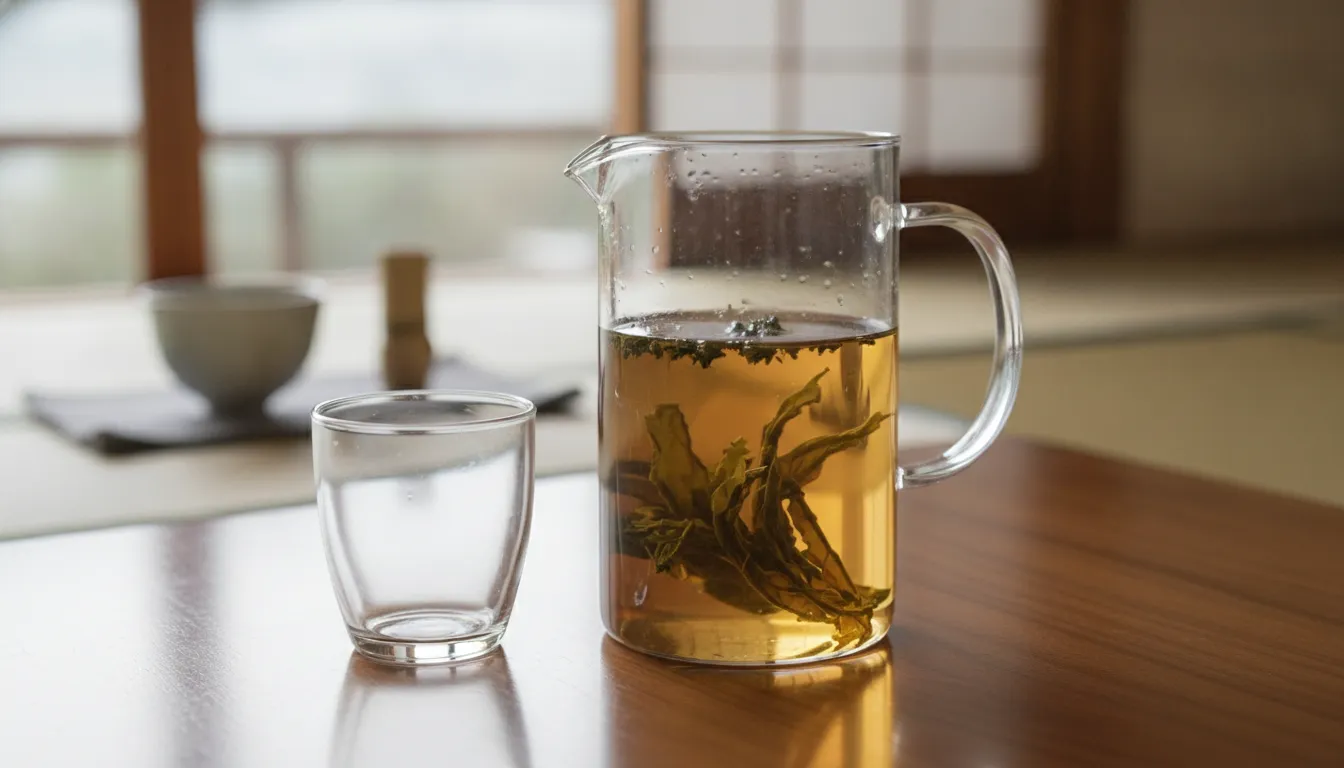
Numbered cold brew method
- Measure the leaf. Place 10 grams of tea in a clean vessel. Use slightly less for a lighter cup or slightly more for greater intensity.
- Add the water. Pour 1 liter of cold filtered water over the leaves. Stir or swirl once so all leaves are wet.
- Cover and chill. Seal the vessel and place it in the refrigerator. Keep it away from foods with strong aromas.
- Taste while steeping. Begin tasting after four hours. Continue until the tea has the aroma, body, and finish you prefer.
- Strain completely. Remove all leaves once the tea is ready. Fine particles can be caught with a second pass through a finer filter.
- Serve or store. Pour the tea as is or over a small amount of ice. Refrigerate any remainder in a clean, sealed vessel.
How to adjust your next batch
Change only one variable at a time. If the tea tastes thin but balanced, add more leaf in the next batch. If it has enough body but needs more aroma, extend the steep slightly. If it feels too intense, dilute the finished cup or shorten the next infusion. Keeping a brief note of tea, ratio, and time turns experimentation into a repeatable practice.
Sencha, Gyokuro, or Genmaicha: which should you choose?
Choose Sencha for a bright, balanced introduction to cold brewing; Gyokuro for a concentrated, savory, slow-sipping cup; or Genmaicha for an approachable infusion with roasted rice aroma. Each tea responds differently to time and ratio, so begin with a small batch and taste before committing to a full pitcher.
The best tea is not necessarily the rarest one. It is the leaf whose character fits the moment. A bright Sencha can refresh alongside lunch, Gyokuro can anchor a quiet tasting, and Genmaicha can offer an inviting roasted profile for guests who are new to Japanese green tea.
Sencha for a fresh, balanced brew
Sencha is an excellent starting point because its profile can include fresh green notes, gentle sweetness, and a clean finish. Begin around 10 grams per liter and taste between four and six hours. If you prefer more body, increase the leaf before greatly extending the time. Serve it without additions first so you can understand its natural balance.
Gyokuro for savory depth
Gyokuro deserves a more concentrated, attentive approach. Its shade-grown character is associated with pronounced umami and a rich mouthfeel. For a pitcher, the baseline recipe works well, but a smaller, stronger infusion can create a focused tasting experience. Chill it thoroughly, pour modest servings, and notice how its flavor changes as the glass warms slightly in your hand.
Genmaicha for roasted warmth
Genmaicha combines tea leaves with roasted rice, creating a profile that can suggest toasted grain and nuts. Those comforting aromas remain distinctive in a cold infusion. Start tasting around three to four hours because the roasted character can become clear relatively quickly. Genmaicha is a friendly choice for meals and for drinkers who find grassy flavors unfamiliar.
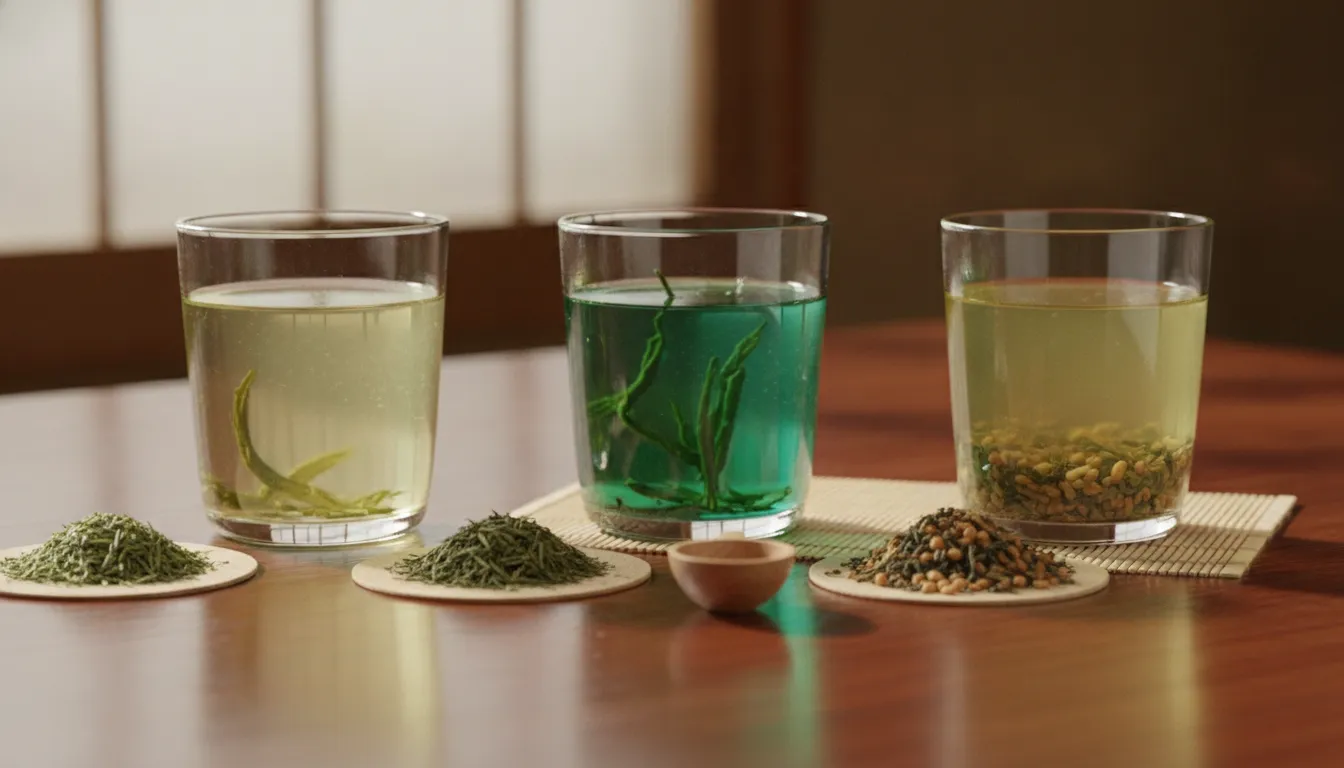
Cold brew tea comparison
| Tea | Typical character | Starting steep | Best occasion |
|---|---|---|---|
| Sencha | Fresh, balanced, clean | 4 to 6 hours | Everyday pitcher |
| Gyokuro | Savory, rich, layered | 6 to 8 hours | Focused tasting |
| Genmaicha | Roasted, nutty, welcoming | 3 to 5 hours | Meals and sharing |
These times are starting points, not rigid rules. Leaf size, water, ratio, and personal preference all affect the result. Sorate offers curated tea kits and sets if you want to compare styles or build a more complete preparation ritual.
Choose a Japanese tea and begin your cold brew ritual.
How to fix weak, bitter, or cloudy cold brew
Weak cold brew usually needs more leaves or more time. An overly intense or bitter cup needs less leaf, a shorter steep, or dilution with cold water. Cloudiness often comes from fine particles or mineral-heavy water. Use filtered water, strain carefully, and adjust one variable per batch for clearer, more balanced results.
Cold brewing is forgiving because you can taste the tea as it develops and stop when it reaches the right point. Troubleshooting becomes easier when you resist changing everything at once. Return to the baseline ratio, identify the main issue, and make one measured adjustment.
If the tea tastes weak
First, make sure every leaf is fully wet and the vessel has remained cold. Give the tea another hour, then taste again. If the flavor stays thin, strain it and use more leaf next time. Adding a large amount of extra time can flatten delicate aromas, so increasing the ratio is often the more controlled change.
If the tea tastes bitter or too intense
Strain the leaves immediately, then add cold filtered water a little at a time. For the next batch, shorten the infusion or reduce the leaf. A dense Gyokuro brew may be powerful rather than flawed, so try serving a smaller portion before deciding to dilute it. Avoid judging a tea solely by color because a pale cup can still carry substantial flavor.
If the tea looks cloudy
Cloudiness is often caused by fine particles passing through the strainer or by minerals in the water. Filter the finished tea again through a finer mesh and compare a future batch made with filtered water. A cloudy appearance does not automatically mean the tea is unusable, but discard any infusion with an unusual odor or one that has been mishandled.
How to serve and store cold brewed tea
Serve cold brewed tea well chilled in a clean glass, either neat or over a small amount of ice. Strain out the leaves before storage and keep the finished infusion sealed in the refrigerator. For its clearest aroma and flavor, prepare manageable batches and enjoy them promptly rather than keeping a large pitcher for days.
Presentation can be simple and still feel intentional. A clear glass shows the tea's color, while a modest pour encourages attention to aroma and texture. Before adding citrus, herbs, sweetener, or sparkling water, taste the tea on its own. That first sip gives you a reference point for any customization.
Create a quiet serving ritual
Set out the glass, take the pitcher from the refrigerator, and pour slowly. Notice the aroma before tasting. This short pause is a practical way to carry the attentive quality of Japanese tea preparation into a modern cold brew. It does not require formality. It only asks you to give the leaf and the moment your attention.
For a shared tasting, prepare two teas with the same ratio and serve them side by side. Comparing Sencha with Genmaicha, for example, makes their fresh and roasted characters easy to recognize. Keep portions small so each tea stays cold and the tasting remains focused.
Store it cleanly and safely
Use clean equipment, keep the infusion refrigerated while it steeps, and strain the leaves when the desired flavor is reached. Store finished tea in a sealed container so it does not absorb nearby aromas. Make a quantity you can enjoy promptly. If the tea develops an unusual smell, appearance, or taste, discard it and prepare a fresh batch.
Reuse leaves with care
Some quality whole leaves can offer a pleasant second infusion. Add fresh cold water soon after straining the first batch and return the covered vessel to the refrigerator. Expect a lighter cup and taste it as it steeps. If the leaves have sat warm, lost their aroma, or no longer taste clean, do not reuse them.
Learn how Sorate approaches Japanese tea and ritual.
Frequently asked questions
How long should cold brew green tea steep?
Start with four to eight hours in the refrigerator. Genmaicha can be ready toward the shorter end, while Sencha and Gyokuro often benefit from more time. Taste as it steeps, then strain when the balance suits you. Ratio and leaf style matter, so use time as a guide rather than an absolute rule.
Can you make cold brew green tea overnight?
Yes. An overnight refrigerator steep is convenient, especially for Sencha or Gyokuro. Use a covered vessel, strain the leaves in the morning, and dilute the finished tea with cold filtered water if it tastes stronger than you prefer. For Genmaicha, taste earlier when possible because its roasted character may emerge sooner.
Can you reuse leaves after cold brewing?
Quality whole leaves may produce a pleasant second infusion. Add fresh cold water soon after the first pour, keep the vessel refrigerated, and expect a lighter result. Discard the leaves if their aroma has faded or they have been left warm. The second cup is best treated as an experiment, not a guaranteed repeat.
Why is my cold brew green tea cloudy or bitter?
Cloudiness can come from fine leaf particles or mineral-heavy water, while bitterness can result from too much leaf or an overly long steep. Filter the tea, use fresh filtered water, and adjust one variable at a time in the next batch. If the finished tea is simply too strong, dilute it before discarding it.
Begin with attention, then make the method your own
Cold brewing turns a few simple ingredients into an opportunity to understand Japanese green tea more closely. Begin with the baseline recipe, taste during the steep, and note what changes. Over time, you will learn whether your ideal pitcher is a bright Sencha, a savory Gyokuro, or a roasted Genmaicha.
The most meaningful refinement is not complexity. It is attention: clean water, well-kept leaves, patient tasting, and respect for where the tea comes from. With that foundation, a chilled daily drink can become a small, enduring ritual.


