


Cold brew gyokuro is made by steeping shade-grown Japanese green tea in cool filtered water, usually for six to eight hours. The gentle extraction emphasizes Gyokuro's savory sweetness and smooth texture while keeping bitterness restrained. Start with 10 grams of leaf per 500 milliliters of water, then adjust to taste.
Explore Sorate tea kits and sets to begin a considered cold-brewing ritual.
Gyokuro rewards precision, but the process itself is beautifully simple. A clean vessel, fresh water, quality leaf, and patience are enough to reveal a distinctly layered cup. This guide explains why the method works, how to choose a recipe, and how to refine each batch without losing the quiet character of the tea.
What Makes Cold Brew Gyokuro Distinctive?
Gyokuro's shaded cultivation creates a leaf known for deep umami, gentle sweetness, and a vivid green appearance. Cold water draws out those qualities gradually, producing a concentrated yet composed infusion. Compared with a conventional hot steep, the chilled method usually tastes softer, less brisk, and more clearly savory.
Shade growing shapes the leaf
Before harvest, Gyokuro tea plants are shaded for about three weeks. Reduced sunlight changes how the plant develops and helps preserve the compounds associated with the tea's characteristic savory taste. The finished leaves are typically slender, dark green, and intensely aromatic. This careful cultivation is one reason Gyokuro is treated as a tea for attentive preparation rather than casual oversteeping.
The origin and handling of the leaf matter just as much as the brewing method. Sorate sources Japanese tea directly from a family-owned farm in Uji, Kyoto, a region closely connected with refined tea production. Reading about Sorate's birthplace in Uji offers useful context for the craft behind the cup.
Cold water changes the balance
Water temperature controls the pace and balance of extraction. Hot water works quickly and can draw out brisk, bitter, and aromatic elements in a short steep. Cold water works slowly. Given enough time, it creates a rounded infusion in which sweetness and umami can remain prominent without the sharper edge that appears when delicate leaves meet excessive heat.
The result is not simply hot tea served cold. Proper cold brew gyokuro has its own texture and progression. The first sip may seem quiet, followed by a savory depth, a subtle vegetal note, and a clean finish. For a broader introduction to the tea itself, consult Sorate's complete Gyokuro tea guide.
What Do You Need to Cold Brew Gyokuro?
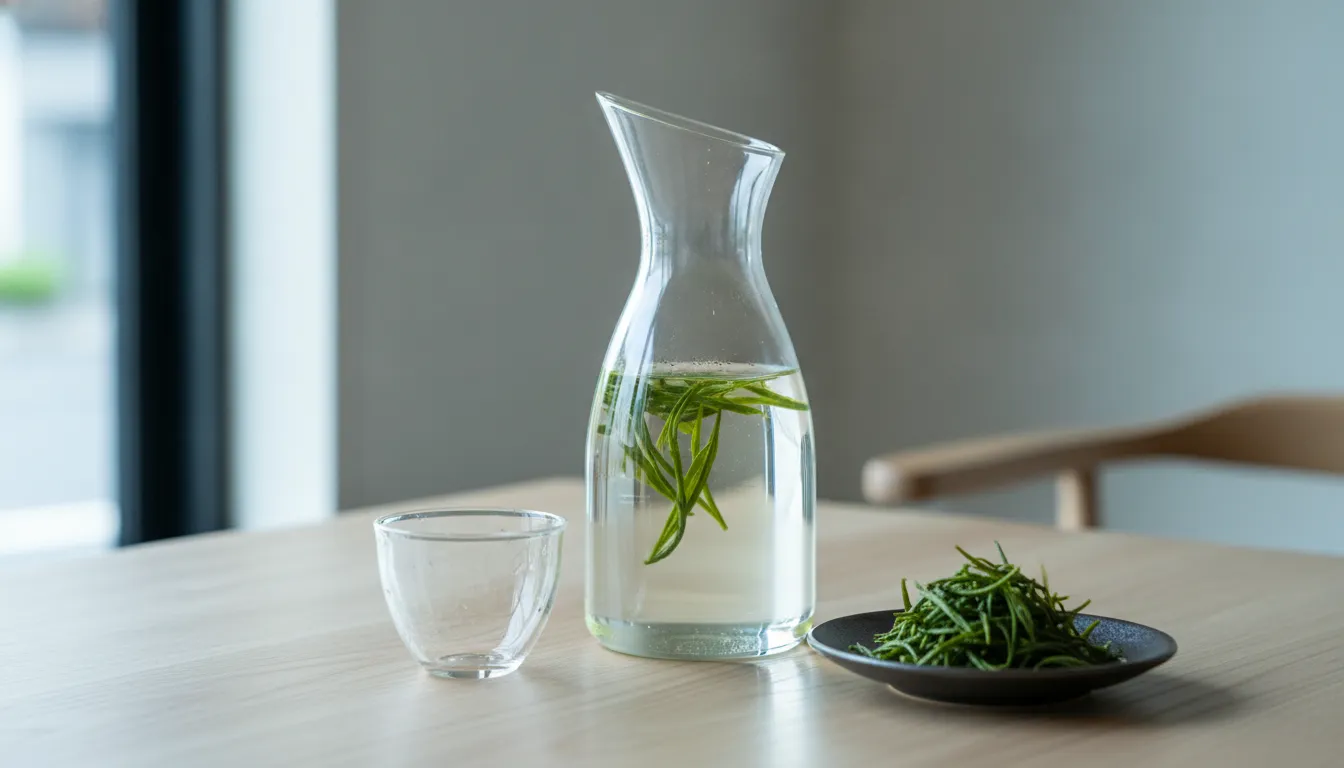
A dependable cold brew requires only four essentials: high-quality Gyokuro, cool filtered water, an odor-free glass or ceramic vessel, and a fine strainer. A digital scale improves consistency. Begin with a covered 500-milliliter vessel so the tea remains protected from other aromas while it rests in the refrigerator.
Choose fresh, well-formed leaves
Cold extraction is revealing. It will not disguise stale aromas or a flat leaf, so begin with Gyokuro that smells fresh and looks deep green. Needle-like leaves are common, although some breakage is natural. Keep the tea sealed away from light, moisture, heat, and strong scents between brewing sessions.
Measure by weight rather than by spoon. Leaf shape and density vary, making volume measurements inconsistent. Ten grams per 500 milliliters is a balanced starting point. For a lighter everyday infusion, use 7 to 8 grams. For a richer, small-format pour, try 12 to 15 grams and taste at intervals.
Use water that lets the tea speak
Because the finished drink is almost entirely water, water quality is immediately noticeable. Use fresh filtered water with a clean, neutral taste. Strongly chlorinated or very hard water can mute the tea's nuance. There is no need to boil water before a refrigerator steep unless your local water guidance requires it.
A lidded glass carafe makes it easy to watch the leaves open. Ceramic also works well if it is clean and odor-free. Avoid vessels that retain flavors from coffee, spices, or fruit. A bottle with an integrated filter is convenient, but any clean jar and fine mesh strainer can produce an elegant result.
Keep the setup precise and simple
- Digital scale: Measures leaves accurately and makes recipes repeatable.
- Covered vessel: Protects the infusion from refrigerator aromas.
- Fine mesh strainer: Separates small leaf particles before serving.
- Clear glassware: Shows the infusion's color and supports small, deliberate pours.
- Timer or note: Helps you compare steeping times from one batch to the next.
Choose Sorate tea accessories for a more intentional preparation and serve.
How Do You Make Cold Brew Gyokuro?
To make a balanced cold brew, combine 10 grams of Gyokuro with 500 milliliters of cool filtered water in a covered vessel. Refrigerate for six to eight hours, taste, then strain completely. Serve the tea cold in small glasses. Record the ratio and time so the next batch can be adjusted deliberately.
Step-by-step refrigerator method
- Clean the vessel and strainer thoroughly, checking that neither carries lingering aromas.
- Weigh 10 grams of Gyokuro and place the leaves in the vessel.
- Add 500 milliliters of cool filtered water, making sure all leaves become wet.
- Cover the vessel and place it in the refrigerator for six hours.
- Taste a small pour. If you want greater depth, continue steeping for up to eight hours.
- Strain the full batch into a clean carafe to stop extraction.
- Serve promptly and keep any remainder refrigerated in a sealed container.
Use tasting, not the clock alone
Six to eight hours is a useful range, not an inflexible rule. Leaf style, water, refrigerator temperature, and personal preference all affect the result. Taste near the earlier end of the range. A finished brew should feel rounded and expressive. If it tastes thin, give it more time. If it feels too dense, dilute the strained tea with a small amount of cold water.
Stirring is usually unnecessary. Letting the leaves rest creates a calm, even extraction and limits fine particles in the pour. If leaves remain dry at the surface, gently swirl the closed vessel once at the beginning. Avoid repeatedly shaking it, which can make the infusion cloudier and harder to assess.
Store and re-steep with care
Once the flavor is where you want it, separate the leaves from the liquid. Leaving them together makes the finished strength less predictable. Cold-brewed tea is best when enjoyed fresh. Keep it covered and refrigerated, and discard it if its aroma, appearance, or flavor seems off.
The leaves may still offer a lighter second infusion. Add fresh cold water, return the vessel to the refrigerator, and taste after several hours. A second steep will not have the same concentration as the first, but it can reveal a gentle, clean side of the leaf. Do not reuse leaves that have been left unrefrigerated for an extended period.
Which Cold Gyokuro Method Should You Choose?
Three methods suit different moments. A refrigerator brew creates a smooth, generous batch with minimal effort. A quick iced brew preserves more briskness and aroma when time is short. Koridashi, made as ice slowly melts over leaves, yields a small and intensely savory pour suited to deliberate tasting.
Refrigerator brew for a polished daily pour
The standard refrigerator method, often described as mizudashi, is the most practical place to begin. Its long, cool steep is forgiving and easy to repeat. Prepare it in the evening for the following morning, or begin in the morning for a late-afternoon serving. The resulting cup tends to be smooth, refreshing, and balanced enough to accompany a quiet meal.
Quick iced brew when time is limited
For a chilled cup in minutes, make a concentrated warm infusion and pour it over ice. Use 10 grams of leaf with about 150 milliliters of water at roughly 140 F (60 C). Steep for about two minutes, strain over a glass filled with ice, and taste as the ice melts. This method is brighter and more brisk than a true cold brew.
Koridashi for a concentrated tasting
Koridashi uses melting ice as the brewing water. Place 5 to 8 grams of Gyokuro in a small, shallow vessel, cover the leaves with ice, and wait until enough has melted for a few small pours. The method takes patience and produces little volume, but it can reveal an especially dense, savory expression. Sip it slowly rather than treating it as a thirst-quenching drink.
| Method | Starting recipe | Time | Cup character | Best use |
|---|---|---|---|---|
| Refrigerator cold brew | 10 g leaf / 500 ml water | 6-8 hours | Smooth, balanced, savory | Daily batch |
| Quick iced brew | 10 g leaf / 150 ml warm water, then ice | About 2 minutes | Bright, aromatic, brisk | Fast preparation |
| Koridashi | 5-8 g leaf covered with ice | 1-3 hours | Dense, sweet, intensely umami | Focused tasting |
Learn more about the craft and character behind Gyokuro, the noble tea, before choosing your next method.
How Can You Adjust Flavor and Fix Common Problems?
Refine cold brew gyokuro by changing one variable at a time. More leaf increases body, while more time deepens extraction. Softer filtered water can improve clarity. If a batch tastes bitter, shorten the steep or dilute it after straining. If it tastes weak, increase leaf weight before extending time substantially.
If the tea tastes weak or flat
First, confirm that the leaves are fresh and the water tastes clean on its own. Then increase the leaf amount by 1 or 2 grams per 500 milliliters while keeping the same steep time. This usually adds definition without making the recipe harder to control. Extending a six-hour brew to eight hours can also help, but time cannot restore character to stale leaf.
A flat cup can also result from serving the tea too cold. Refrigerator temperature suppresses aroma. Pour a small portion and let it rest for a few minutes before tasting again. As it gently warms, the fragrance and sweetness may become more apparent without changing the brew itself.
If the tea tastes bitter or too intense
Bitterness may indicate too much leaf, an overly long steep, warmer-than-intended water, or an agitated infusion. Strain the batch immediately, then add cold filtered water in small amounts until it becomes balanced. For the next brew, reduce the leaf by 1 or 2 grams or taste one hour earlier.
An intense savory profile is part of Gyokuro's identity, so distinguish depth from a true flaw. If the cup is rich but clean, serve smaller portions rather than diluting the entire batch. Small glassware encourages slow tasting and lets the tea's changing finish remain part of the experience.
If the infusion is cloudy
Fine leaf particles, hard water, or vigorous shaking can cloud the tea. Cloudiness is not automatically a sign of poor quality, but it may affect texture. Let the leaves settle, pour gently, and use a finer strainer. If the issue repeats, test a different filtered water source and avoid stirring during the steep.
How Should You Serve Cold Brew Gyokuro?
Serve cold brew gyokuro in small, clear glasses that reveal its color and encourage measured sipping. Pour it straight from the refrigerator, then allow each serving to rest briefly so its aroma can open. Keep pairings delicate, and offer a little water alongside the tea to refresh the palate between pours.
Create a quiet summer ritual
A considered presentation does not require elaborate equipment. Place the strained tea in a simple carafe, use clean glassware, and keep portions modest. Notice the color before sipping, then pay attention to the first savory impression and the finish. The progression matters as much as the immediate flavor.
Cold brew is especially well suited to sharing because it can be prepared in advance. Keep the carafe covered until serving, then pour a small amount for each guest. Explain the method briefly and let the tea lead. The restraint of the preparation reflects the care that began at the farm.
Pair without overwhelming the tea
Choose foods with restrained sweetness and aroma. Plain rice crackers, lightly sweetened wagashi-style confections, mild fruit, or a simple biscuit can complement the tea without masking it. Avoid heavily spiced, smoky, or sugary pairings during a focused tasting. If serving with a meal, consider the tea a delicate course rather than an all-purpose beverage.
Respect the leaf from farm to glass
Cold brewing is a modern, accessible way to appreciate the precision behind Japanese green tea. Measuring carefully, tasting attentively, and serving without distraction allow the leaf's character to remain central. To understand how Sorate connects tea, origin, and ritual, read more about Sorate.
Frequently Asked Questions About Cold Brew Gyokuro
What is the best ratio for cold brew gyokuro?
A balanced starting ratio is 10 grams of Gyokuro to 500 milliliters of cool filtered water. Use 7 to 8 grams for a lighter cup or 12 to 15 grams for a richer infusion. Weighing the leaves is more consistent than measuring them by spoon.
How long should cold brew gyokuro steep?
Steep cold brew gyokuro in the refrigerator for six to eight hours, tasting near the six-hour mark. Continue if the cup needs more depth. Leaf amount, water, and refrigerator temperature affect extraction, so use time as a guide and taste before straining.
Can you cold brew Gyokuro leaves more than once?
Yes. After straining the first batch, add fresh cold water and refrigerate the leaves again for several hours. The second infusion will usually be lighter and more delicate. Reuse only leaves that have been handled cleanly and kept refrigerated.
Is koridashi the same as cold brew gyokuro?
Koridashi is a type of cold preparation, but it differs from a refrigerator brew. Ice melts slowly over the leaves and creates a small, concentrated infusion. Refrigerator cold brew uses a larger volume of cold water and produces a smoother batch for everyday serving.
Begin Your Cold Brew Gyokuro Ritual
Cold brew gyokuro turns a few precise choices into an expressive cup: fresh shade-grown leaf, clean water, a measured ratio, and enough time. Begin with the foundational recipe, taste closely, and adjust only one variable per batch. The goal is not complexity. It is a clear, balanced infusion that honors the leaf.
Explore Sorate tea kits and sets and prepare your own refined cold brew gyokuro ritual.


